

Raising Children
'Every Child Deserves to Be Seen': The Extraordinary Life of Miriam Biton
Born aboard the Egoz immigrant ship, Miriam Biton raised a family of sixteen, educated generations of students, and found healing through a lifetime of serving others
- Miri Ben-David Levy
- | Updated
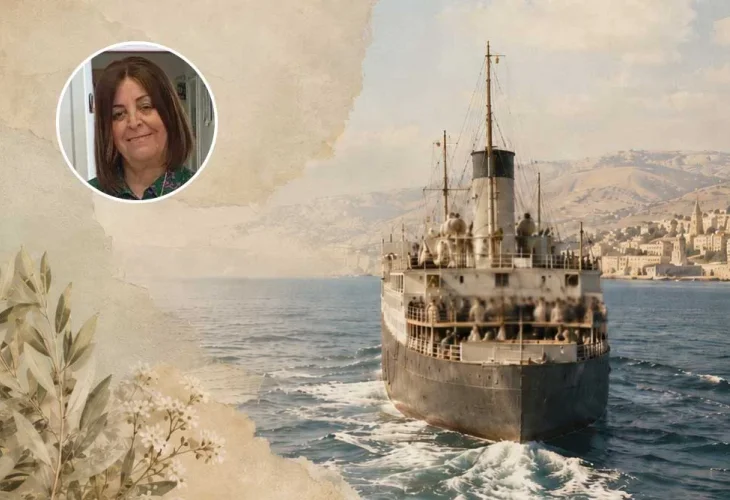 (In the circle: Miriam Biton)
Our interview with Miriam Biton was scheduled for exactly 1:30 p.m., but something more important came first. Her son, daughter-in-law, and grandchildren had just arrived to pick up the lunch she had prepared for them. For Miriam, family always comes before everything else.
Miriam is the mother of sixteen children. Her eighth child was stillborn at 42 weeks of pregnancy. "We named her Nechama Dina," she says quietly. "A kabbalist told us to say that we have sixteen children, because in the time of redemption she will return."
Born Into an Extraordinary Story
Miriam's own life began under extraordinary circumstances. She was born 65 years ago aboard the Egoz, the ship carrying Jewish immigrants from Morocco to Israel. "After bringing us safely to Israel, the ship returned to Morocco to bring more immigrants," she explains. "On that final voyage, it sank. My father lost his daughter, his son-in-law, and four grandchildren in the disaster."
She pauses before adding, "I came into the world surrounded by a very complicated reality."
Her parents were both remarried, and there was a forty-year age difference between them. "My father was 65 and my mother was only 25 when they married."
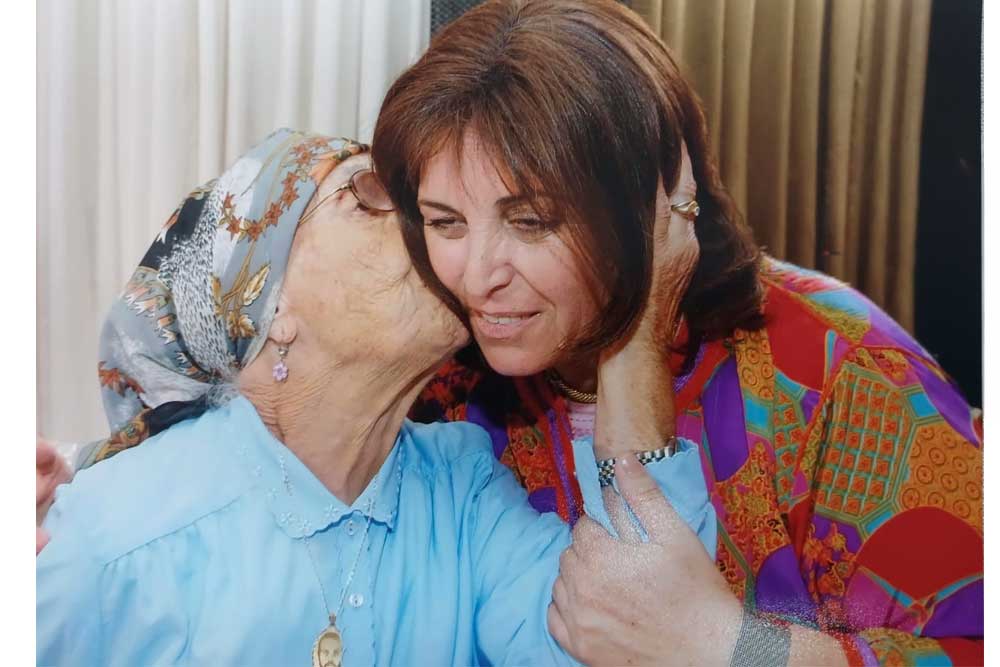 Miriam Biton and her mother
A Childhood Filled with Responsibility
Miriam grew up in a traditional Jewish home, but her childhood was unlike that of most children. "My father was already seventy-one when I was born," she recalls. "I carried a great deal of responsibility from a very young age. Every morning before sunrise, I would wake up with him, accompany him to synagogue, bring him home, prepare his meals, and then hurry off to school. It never felt like a burden — it was simply my reality."
While other girls spent their time playing with friends, Miriam devoted herself to caring for her elderly father.
"And how much I learned from him," she says warmly. "He was an extraordinary man — quiet, righteous, humble, and full of faith. He never spoke negatively about anyone."
Building a Family
While still in twelfth grade, Miriam married the love of her life, Chaviv.
"For two years we were unable to have children, and it was very painful for us," she recalls. "Then we received blessings from both the Baba Sali and the Lubavitcher Rebbe, and that very year we merited to welcome our first son, Menachem Avraham, into the covenant of Abraham."
Their family continued to grow.
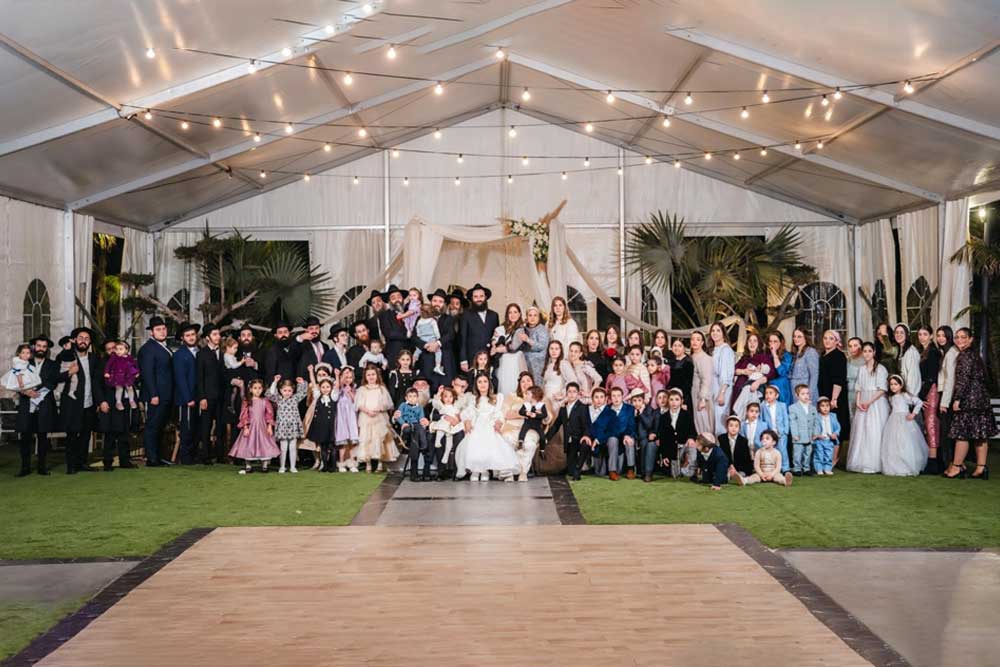
"God blessed us with seven sons and nine daughters. Today they are all married with families of their own, and we have nearly seventy grandchildren."
A Life Dedicated to Education
For more than four decades, Miriam balanced raising a large family with a demanding career in education. She taught at a boys' middle school for forty-one years while also leading Ministry of Education programs for teenagers who struggled in conventional academic settings and needed educational support as well as preparation for military service.
Even while caring for a house full of young children, she maintained a full-time teaching position and managed educational projects with remarkable dedication.
"There was never a real separation between home and work," she says. "My mornings belonged to my children and my household. During the day, I stepped into the classroom to teach, mentor, and guide my students. The strength to do both came from a deep sense of purpose and the belief that every child — whether at home or at school, needs someone who believes in them and helps them discover their abilities."
The Secret to Balancing Everything
Asked how she managed to balance such enormous responsibilities, Miriam gives much of the credit to her husband.
"I believe that when a husband and wife truly care for one another, genuinely want to help each other, and constantly think about each other's needs, almost anything is possible. We did everything together, and we still do. Whenever one of us couldn't be there, the other stepped in."
She explains that when their children were young, her husband was not home during the busiest morning hours.
"There was no outside help, so eventually we taught the older children to help. Not the little ones, of course, but the older siblings naturally took responsibility. I never went to bed before everyone's clothes were prepared and their shoes were polished. The food for the next day was already cooked the night before. Everything was organized. We had charts, routines, and responsibilities for every child according to their age."
Every morning she woke up thirty minutes before everyone else.
"I would recite the morning blessings, drink a cup of coffee, and begin my day as a mother. Chaviv and I have always tried to build our home with joy, responsibility, and cooperation, and throughout our marriage we have maintained regular Torah study together."
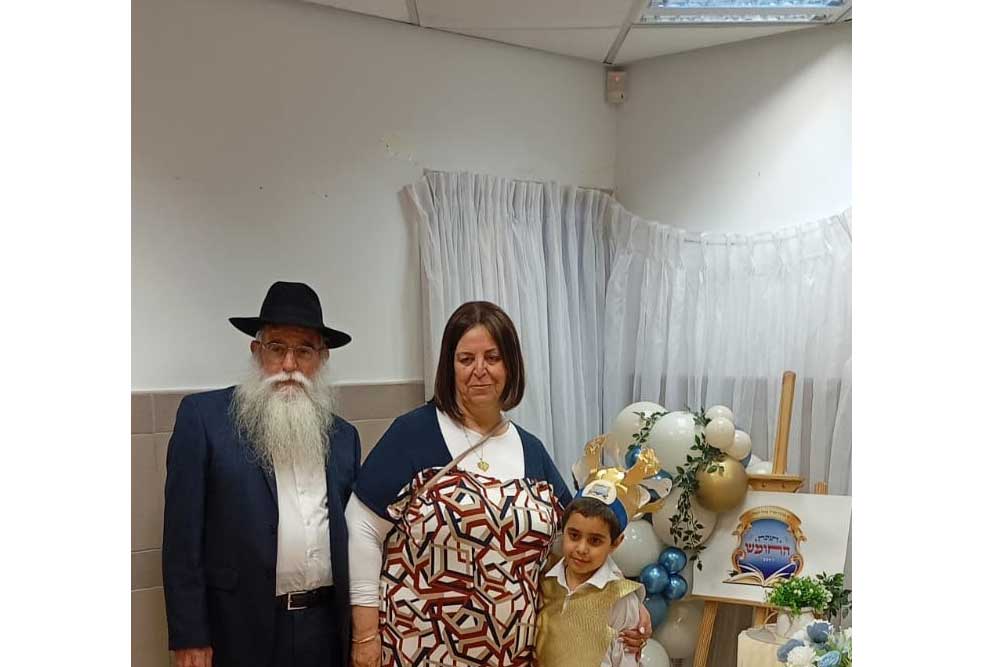 Miriam and her husband with one of their grandchildren
Accepting Every Child with Love
Most of their children remained deeply connected to Torah. Some serve as Chabad emissaries around the world, while others contribute to Jewish life in different ways.
One daughter, however, chose a different religious path. "At first, it was incredibly painful," Miriam admits. "It's not easy to see your child making different choices. But I learned to accept her exactly as she is, and today she brings us tremendous joy."
The family made only one request.
"We asked that she and her husband respect our home. When they visit, they dress appropriately, and he wears a kippah. I think all of us could learn from her what honoring one's parents truly means. I'm incredibly proud of everything she's accomplished. She's amazing."
Finding Healing Through Volunteering
Following her ninth pregnancy — the first after her stillbirth, Miriam heard about a volunteer opportunity at Assaf Harofeh Medical Center.
"It spoke to my heart immediately," she says.
Before committing, she consulted her oldest daughter who was then twelve years old, to make sure the family could manage during the hours she would be away. With her daughter's encouragement, she began volunteering.
"It started as a trial," she says, "but I fell in love with it. It became a regular part of my life."
For twenty-five years she volunteered in one hospital department. Then, nine years ago, the department closed.
"I said to myself, 'Until now I've spent years seeing elderly people, and sadly many people at the end of life. Now I want to be surrounded by new life.'"
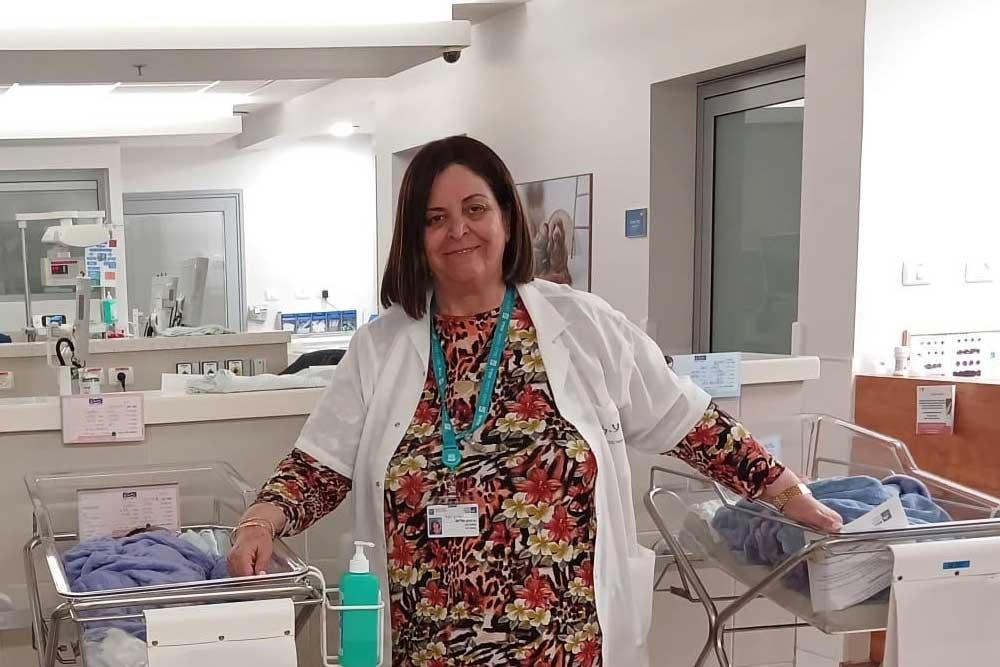
She transferred to the hospital nursery, where she comforts crying babies while exhausted new mothers get a chance to rest before returning home.
"For me, it heals my soul," she says. "After my stillbirth, and knowing that I could no longer have children, this volunteer work became a gift. I love babies so much, and through this role I get to experience the miracle of newborn life over and over again. It fills my heart."
Giving Beyond Her Own Family
The nursery shifts often take place late at night.
"It's challenging," she admits, "but it's also incredibly rewarding. The work is physically demanding — holding babies, comforting them, supporting exhausted mothers, but emotionally it gives me tremendous strength."
Those who know the Biton family are not surprised that Miriam's love extends beyond her own children. For many years, she and her husband also served as foster parents, opening their home to children who had been removed from their biological families for various reasons.
"I believe every child must be seen for their strengths," she says. "I try to live by that principle with my own children and with those who aren't biologically mine. Every child deserves to be valued for what they are capable of becoming, not judged by what they seem to lack."

