

Israel News
Israeli Court Suspends Parts of Communications Law Ahead of Elections
Israel’s High Court has temporarily frozen key provisions of the new communications law, citing petitions that raised serious concerns about the legislative process.
- Yuval Aviv
- | Updated
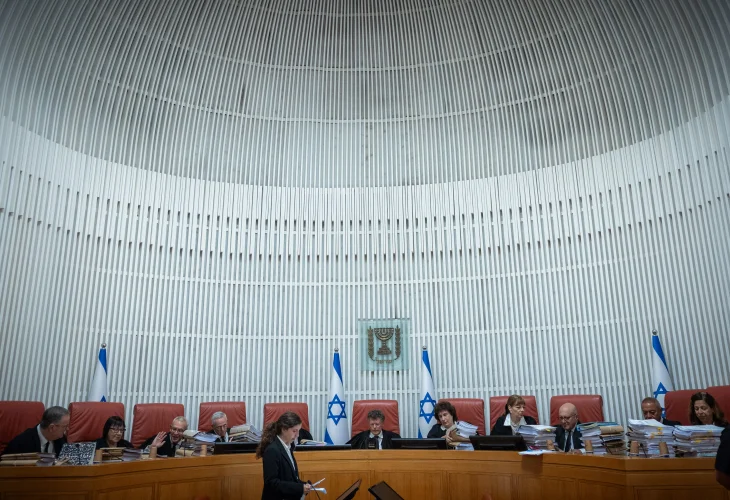 High Court of Justice (Photo: Yonatan Sindel, Flash90)
Supreme Court Justice Ofer Grosskopf ruled on Sunday morning to temporarily freeze the implementation of several provisions of Israel’s new communications law, which was approved by the Knesset in its second and third readings on Thursday, shortly before the Knesset dissolved. The decision came as part of the Supreme Court’s review of consolidated petitions challenging both the law itself and the way it was passed.
In his ruling, Grosskopf rejected requests to suspend the entire law but found sufficient grounds to temporarily delay the provisions that were set to take effect immediately after the law’s publication. The remaining sections of the law, which were not scheduled for immediate implementation, will remain in place for now.
Grosskopf wrote that the petitions raise “weighty arguments,” both regarding the legislative process and the substance of the law, including provisions it introduces and others it repeals. He also noted that the broad scope of the reforms, and their potential impact on Israel’s communications market ahead of the upcoming elections, raised concerns that once the changes took effect, “it will be difficult to turn the wheel back.”
The temporary order freezes several major reforms that were due to take effect immediately. These include allowing HOT and yes to broadcast advertisements on their cable and satellite platforms, removing cross-ownership restrictions that would have allowed them to own news channels, and permitting the i24NEWS channel to begin broadcasting on the HOT platform — a move expected to expand the channel’s reach by approximately 500,000 viewers.
Along with the temporary order, the Supreme Court instructed all respondents to submit their responses to the requests for interim orders by next Sunday. The temporary freeze will remain in effect until the court issues a further ruling.
The petitions were filed by several public officials and organizations, including Democrats faction chair MK Efrat Rayten Marom, MK Eitan Ginzburg (Blue and White), the Movement for Quality Government, the Zulat Institute for Equality and Human Rights, and the Academy for Democratic Israel. The respondents include Prime Minister Benjamin Netanyahu, Communications Minister Shlomo Karhi, Attorney General Gali Baharav-Miara, Knesset Legal Adviser Sagit Afik, and the special Knesset committee that advanced the legislation, chaired by MK Galit Distel Atbaryan.

