

Behind the News
Why Iran Is Attacking Across the Region—but Avoiding Israel
Iran is targeting America’s regional network while trying to avoid the much harsher Israeli response
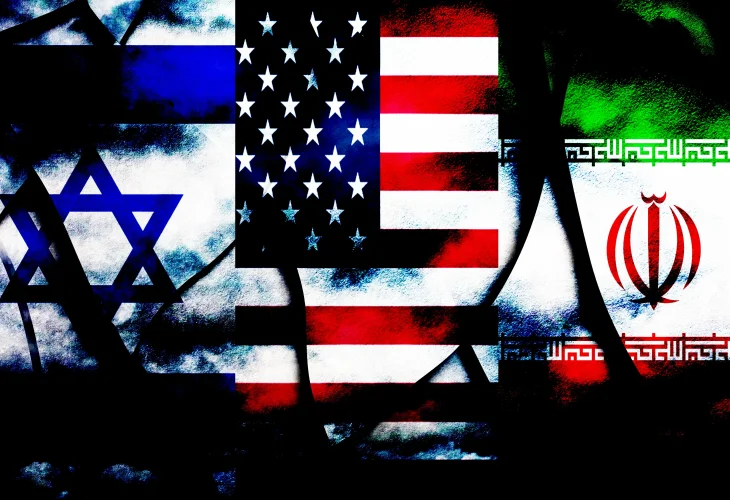 Shutterstock
Iran has fired missiles and drones at US-linked targets across the Middle East during the latest round of fighting. But Iran has not resumed any direct fire on Israel.
Iranian missiles and drones have been launched toward targets in Jordan, Kuwait, Bahrain, Qatar, Oman and Syria In Jordan, an Iranian attack killed two US service members. The IRGC has also claimed attacks on US military facilities in Kuwait and Bahrain, home to the US Navy’s Fifth Fleet, as well as American-linked sites in Qatar, Oman and Syria.
The attacks have not remained confined to military facilities. Kuwait reported damage to a desalination plant. Qatar said a child was injured by fragments after an interception. Iran has also targeted shipping in the Strait of Hormuz, contributing to oil prices rising above $90 a barrel.
Taken together, the targets reveal a consistent pattern. Iran is focusing its retaliation on the network of bases and logistics centers that allows the United States to operate across the region. The IRGC has repeatedly described American forces and equipment as its targets, presenting the campaign as retaliation against Washington rather than a war against the Arab countries where those forces are based. The message to regional governments is that if the United States uses their territory to operate against Iran, Iran will treat that territory as part of the battlefield.
A direct attack on Israel, however, would carry a higher risk. Prime Minister Benjamin Netanyahu warned Iran at the start of the recent escalation: “Do not count on it being quiet if you attack us. Do not count on a rerun; this will be a different event, much more powerful.”
Defense Minister Israel Katz delivered the same message. After Iranian missiles were fired toward Jordan near Israel’s southern border, Katz said Israel would respond with “full force” if Tehran attacked Israeli territory.
Iran has nevertheless accepted serious risks elsewhere.Yet it has avoided the single move most likely to bring the Israeli Air Force back over Iran: another missile barrage against Israeli territory.
Iran may believe it can manage the current exchange with Washington, even as the United States conducts repeated nights of attacks. It may be less confident that it could control the scale of Israel’s response once Iranian missiles again land inside Israel.
Other military factors may also influence Iran’s choices. Gulf targets are closer and can be reached with a wider selection of drones and shorter-range missiles. Striking Israel requires longer-range weapons and an attempt to penetrate Israel’s layered air-defense system. Iran may also be preserving Israel-capable missiles in case the Israeli front eventually reopens.
Iran’s strategy may still backfire. Jordan, Kuwait, Bahrain and Qatar have condemned attacks on their territory and relied on American-supplied defenses to intercept Iranian weapons. Tehran wants those governments to see US bases as the cause of their danger, but they are publicly blaming Iran for firing the missiles.
Israel has therefore not disappeared from the current war. It may be the front Iran considers most dangerous to reopen.
Tehran can portray attacks on US bases as controlled retaliation against Washington. A renewed attack on Israel could destroy that separation and trigger the harder Israeli campaign Iran appears determined, for now, to avoid.

