

For the Woman
From Diagnosis to Purpose: One Woman's Journey with Multiple Sclerosis
After a progressive multiple sclerosis diagnosis forced her to leave teaching, calligraphy artist Chani Gross found new purpose through faith, rehabilitation, family, art, and helping others.
- Miri Ben-David Levi
- | Updated

Chani Gross, 40, a calligraphy artist from the community of Nitzan, clearly remembers the first moments when her body began signaling that something was wrong.
“At first, it felt strange rather than frightening,” she recalls. “I noticed a change in my vision, but I was told that everything was fine. Later, my left leg began to go numb. It did not hurt, so I did not pay much attention to it. Then the same thing happened in my right leg, and afterward in my hand.”
Gradually, Chani went from being an energetic teacher who was constantly on the move to someone who had to call her husband and ask him to pick her up from work because she could no longer manage the five-minute walk home.
“The best way to describe it is to imagine that your leg is made of concrete,” she says. “Every step felt like lifting an enormous weight. During the summer, it felt as though my legs were burning.”
A Small Spark of Calligraphy
Chani grew up in Jerusalem’s Har Nof neighborhood. Her parents had been raised abroad, immigrated to Israel, and later became religiously observant.
After completing her national service, she studied graphic design and education at Emunah College, where she was first introduced to the art of calligraphy.
“It was only a small spark at the time,” she says. “I had no idea it would eventually become such a meaningful part of my life.”
After marrying Ariel, 41, an information security professional whose family had been evacuated from Gush Katif, the couple lived for nearly a decade in Kiryat Arba. Chani worked there as a teacher for eleven years.
“My final school year there was especially difficult,” she recalls. “There was an ongoing wave of terrorist attacks. Some of my students lost family members, and people I worked alongside were murdered.”
When the family moved to Nitzan, they felt they needed a fresh start. Around that time, their youngest daughter, Reshit, was born shortly before Rosh Hashanah.
“It felt like a new beginning in every sense,” Chani says. “We had the hopes and dreams every young couple has when entering a new home.”
At the same time, without realizing it, her body had already begun sending warning signs.
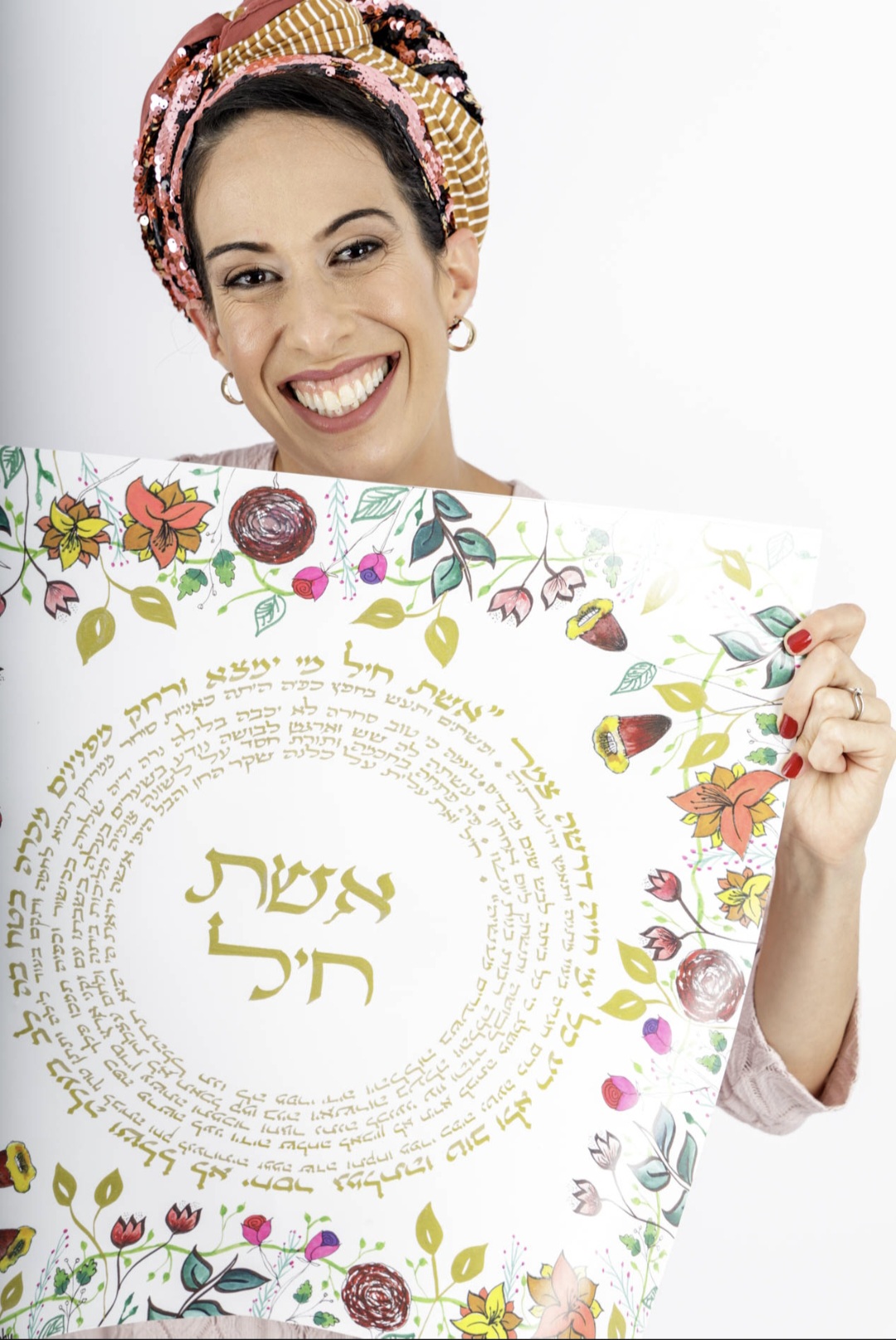 With one of her creations (Photo: Gilia Ben Gad)
“When the Results Arrived, There Was No Longer Any Doubt”
“Today I know that the first sign was actually in my eyes,” Chani says. “I sensed that something had changed in my vision. There was no pain, and it was not dramatically blurred. It simply felt different.”
Because she wore glasses, she assumed the problem might be related to her prescription. She visited an optician, was told everything was normal, and went home reassured.
“I am not the type of person who argues with professionals,” she says. “If they told me everything was fine, then as far as I was concerned, everything was fine.”
Only years later did she learn that the optic nerve in her left eye had already been damaged.
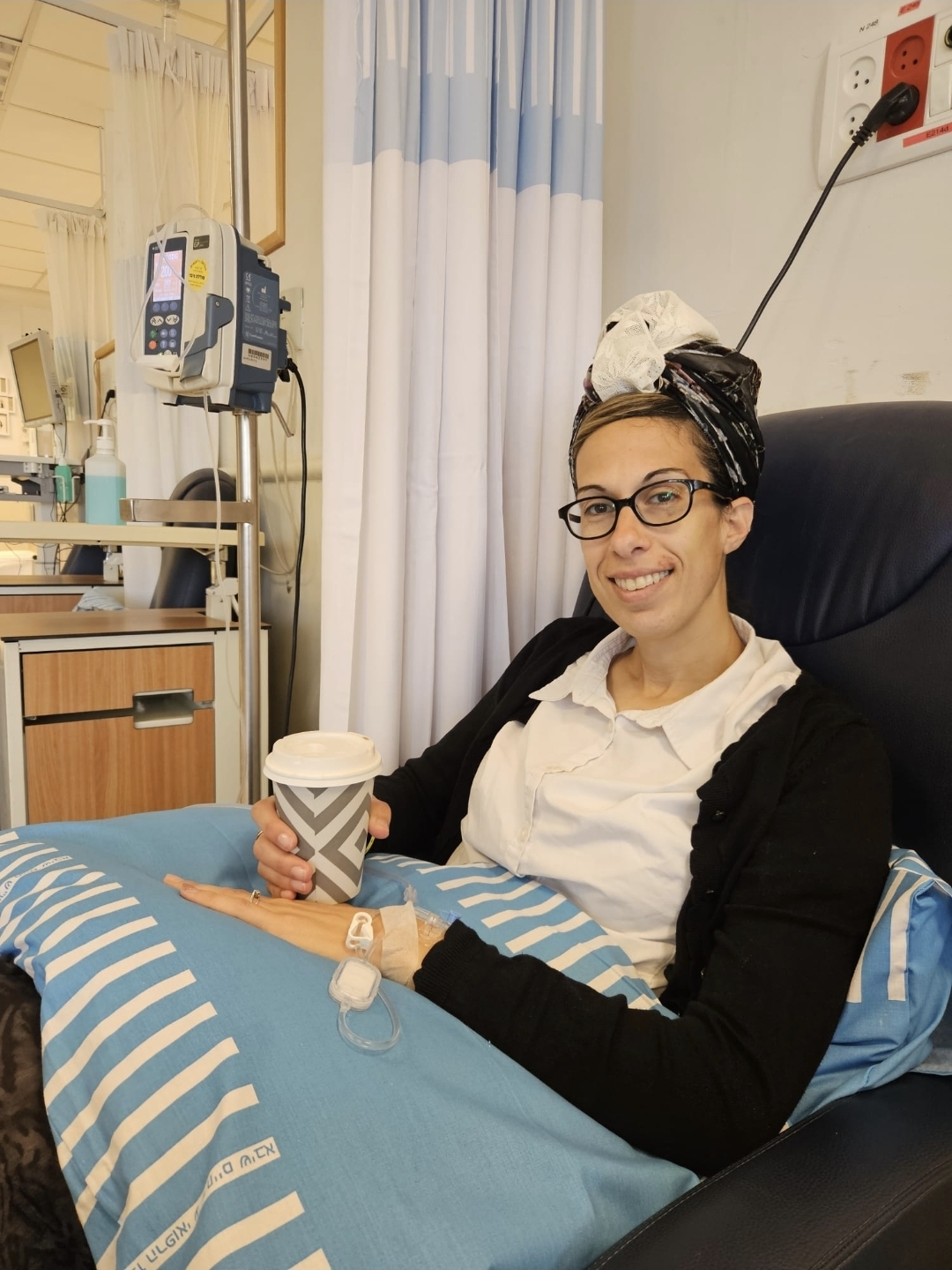
After a series of medical tests, Chani was referred to a neurologist, who raised the possibility of multiple sclerosis.
“I did not search online,” she says. “I only heard that I needed an MRI, and I understood that this was not something minor.”
When the results arrived, the diagnosis was clear. It also became apparent immediately that she had the more severe, progressive form of the disease.
What was your first reaction?
“I cried — a lot. I allowed myself to feel the pain. I think that was important, and looking back, I would do exactly the same thing. I did not try to force myself to be strong. First, I allowed it to hurt.”
Choosing to Speak Openly
Unlike many people who prefer to conceal their illness, Chani chose to speak openly from the beginning.
“After the initial crying, I began sharing,” she says. “From the first day, I called my mother and my sisters. I spoke with each of them individually. I told my friends. I was not ashamed. On the contrary, I discovered that the more I spoke, the more I was able to process what was happening to me.”
That same evening, she also spoke with her psychologist, whom she had already been seeing.
“She told me that choosing to talk was the best thing I could do for myself,” Chani recalls.
At first, she felt slightly embarrassed when speaking about therapy and sometimes referred to her psychologist simply as “my therapist.” But she soon became more open.
“I saw that people respected the honesty,” she says. “It is important for people to know that therapy helps and can save lives.”
Not long after her diagnosis, people began reaching out to her. “Women dealing with illness, mothers going through crises, and people searching for hope contacted me. I understood that my story no longer belonged only to me.”
“I Never Asked Why It Had to Be Me”
From a spiritual perspective, Chani says she had many conversations with Hashem, but very little anger.
“I was never really in the place of asking, ‘Why me?’” she says. “My questions were more practical: What now? How do I continue from here? What is happening?”
She understood that searching online for predictions about her future would only increase her fear.
“No one knows what tomorrow will bring,” she says. “Not me, and not my neighbor. So I decided to focus on what was within my control: how I could move forward and what I was still able to do.”
Were you able to continue working as a teacher?
“Unfortunately, no. The illness forced me to leave teaching. My vision and memory were affected. I struggled with balance and relentless exhaustion. I realized that I simply could not continue.”
Determined not to sink into self-pity, Chani entered rehabilitation. She also continued receiving devoted care from the neurologist who had diagnosed her.
She began physical therapy, hydrotherapy, and occupational therapy, treatments she continues to this day.
“It is difficult and exhausting,” she says, “but it restores abilities. Because of all that work, I stopped limping, which had become quite severe at the beginning.”
Staying Present for Her Children
Chani told her children about the illness from the start, and they gave her strength and confidence.
“I told myself that I did not want them to come home and find me lying in bed,” she says. “I learned to rest after dropping them off at school so that I could be present when they returned.”
She made an effort to remain carefully dressed and involved in the family’s daily life. “I cannot run a marathon with them,” she says, “but I am here.”
Her husband has stood beside her since the first symptoms appeared. Their challenge took another turn when Ariel was called up for military service on Simchat Torah 5784.
“Suddenly, I found myself facing everything alone,” she says. “But our older children understood that there was a mission here too. They would tell the younger ones, ‘Abba is not here, and Ima has multiple sclerosis, so all of us have to help.’”
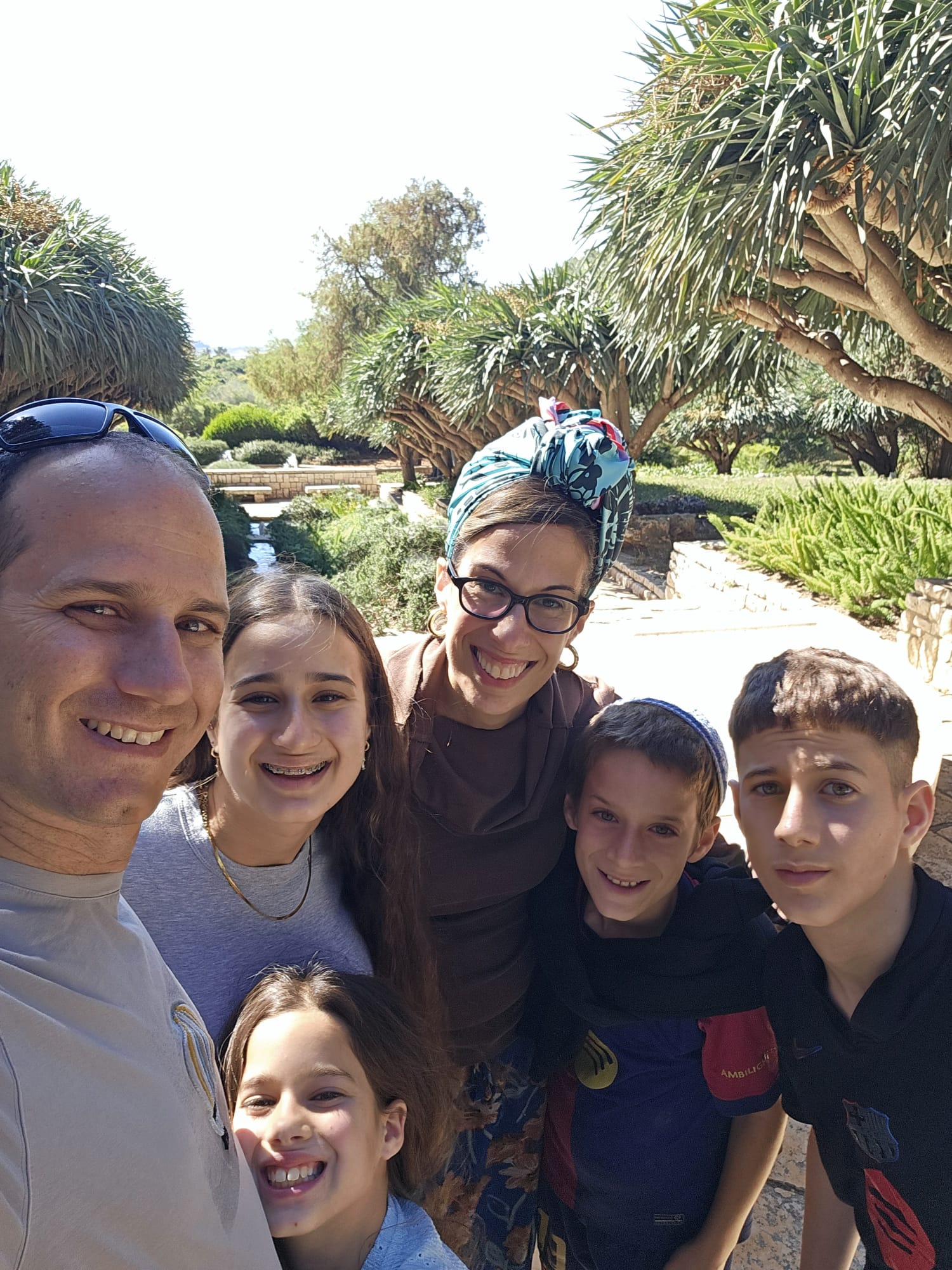 with Ariel and the children
Turning Difficulty Into Service
It was precisely during this difficult period that Chani began leading support efforts for families of mobilized soldiers in her community.
“If I had remained in a place of self-pity, I would only have complained,” she says. “Instead, I chose to help others.”
Today, the local initiative provides Shabbat cakes, children’s activities, and small gestures that remind families they are not alone.
“At first, there were many volunteers,” Chani explains. “But naturally, after the initial enthusiasm fades, people return to their routines, and it becomes difficult to sustain the effort. So I took responsibility for it. Of course, I do only what I can within my abilities, and I am careful to protect my own health.”
“We Choose How to Respond”
Today, five years after her diagnosis, Chani presents a personal performance in which she shares her story.
“I do not hide the pain,” she says. “I tell everything. But in the end, I say that we do not choose our challenges. We choose how to respond to them.”
Multiple sclerosis stopped her and forced her to slow down, but it also taught her to notice what she still has.
“I am grateful for my right hand, which allows me to continue creating,” she says. “I am grateful for my children, my husband, and everything in my life. I am grateful that I chose an art form that allows me to continue working and also gives me emotional release.”
“This is not the gift I would have chosen to receive,” she concludes. “But every day, I choose anew what I will do with it.”

