

History and Archaeology
Operation David: How Israel Destroyed Hitler’s Former Yacht
As Israel fought for its survival in 1948, a former Nazi vessel appeared off Beirut. What followed was a daring naval mission filled with history and powerful symbolism.
- Yehosef Yaabetz
- | Updated
This week’s Torah reading concludes with the command to erase the memory of Amalek. In the Book of Samuel, King Saul spared Amalek’s sheep, provoking the anger of the prophet Samuel because no trace of Amalek was meant to remain. As Rashi explains: “So that the name of Amalek should not be mentioned even in connection with an animal, by saying: This animal once belonged to Amalek.”
Thousands of years later, in the first months of the State of Israel, an unusual naval operation seemed to echo that ancient command. Its target was a ship associated with one of the darkest regimes in modern history: Nazi Germany.
Hitler’s Former Yacht Appears Off Beirut
On the night of November 29, 1948, INS Palmach left the Port of Haifa and headed north. The State of Israel was only six months old, the War of Independence was not yet over, and the Israeli Navy still consisted largely of immigrant ships hastily converted into warships, aging patrol boats, Palyam veterans, and volunteers whose experience had been gained underground.
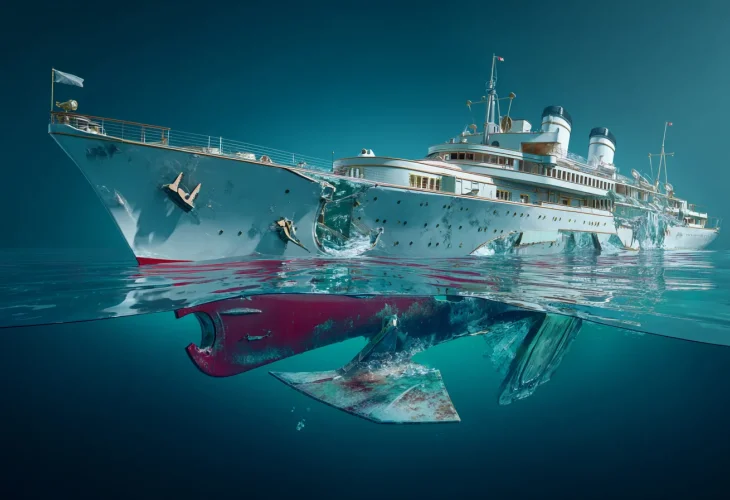
The target was a large vessel anchored off the coast of Beirut: the former German ship Grille, now called Igris and widely known as “Hitler’s yacht.” The goal of the operation, code-named David, was to put it out of commission before it could be transferred, as intelligence reaching Israel indicated, to the Egyptian Navy.
The episode took place less than four years after the end of the Holocaust. A ship built as a symbol of the Nazi regime, which had carried its leaders and served the German war fleet, was now sitting in an Arab port while Arab armies fought the newly established State of Israel.
Against that backdrop, the operation carried a significance that went beyond the immediate military threat. It could be seen as a striking historical echo of the command that concludes Parashat Ki Tetze: “Remember what Amalek did to you,” and “You shall erase the memory of Amalek from under heaven; do not forget.”
From Nazi Showpiece to Warship
The Grille was built at the Blohm & Voss shipyards in Hamburg. Construction began in the summer of 1934, the vessel was launched on December 15 of that year, and it entered service with the German Navy in May 1935.
It measured approximately 135 meters long, displaced about 3,490 tons, and could reach a top speed of around 26 knots. It was designed to serve as a state yacht for the leaders of Nazi Germany, while also being equipped with guns and the capacity to carry mines.
Its hull was painted white, and decorative elements appeared at the bow and stern. Photographs from the 1930s show an elegant vessel with two masts and long decks, designed in part to project the power and prestige of the new Reich.
In May 1936, the ship participated in a naval review commemorating the Battle of Jutland, with Hitler and Defense Minister Werner von Blomberg aboard. In 1937, it carried a German delegation to the coronation ceremonies of King George VI in Britain and the Royal Navy review at Spithead.
With the outbreak of World War II, however, its ceremonial role largely disappeared. The ship was outfitted for mine-laying, operated in the North Sea and Baltic Sea, and served as a training and command vessel. In 1942, it was stationed in Norway, where it became a floating headquarters for German naval and submarine forces in the region. Reception rooms and dining halls once intended for state functions were now being used for the German naval war effort.
After Germany surrendered in May 1945, the ship passed into British hands. Its weapons and military equipment were removed, and it was taken to Britain as war booty. A year later, it was sold to private owners, beginning its transformation from a Nazi showpiece into a commercial vessel with no clear purpose.
A Potential Threat to the New State of Israel
In 1948, the ship was purchased by George Arida, a wealthy Lebanese textile industrialist. The deal was reportedly connected to Farouk I, king of Egypt. According to accounts published after the war, Arida acted on the king’s behalf because Farouk did not want his name openly associated with the purchase of Hitler’s former vessel.
The ship was brought to the eastern Mediterranean and anchored off Beirut for repairs and refitting. At this stage, its name was apparently changed from Grille to Igris.
The War of Independence was still raging. The Egyptian Navy possessed warships, artillery, and considerably more operational experience than Israel’s fledgling naval force. A vessel more than 100 meters long, with a hull built for military service, could potentially pose a serious threat to Israeli ports and maritime traffic if armed and placed into Egyptian service.
The secrecy surrounding the work being carried out on the ship only heightened Israeli fears that it was intended for transfer to Egypt.
Israeli intelligence operatives in Lebanon were therefore asked to investigate the vessel and its surroundings. At the time, Beirut was home to operatives from the Shachar unit, the Arab department of the Palmach, who lived under cover identities within local society.
Agents connected to the operation included Yitzhak Shoshan, Yaakov Cohen, Shaul Carmeli, and Jamil Gamlieli. They located the ship’s anchorage, examined possible routes of access from the shore, and passed the information back to headquarters in Israel.
Operation David Begins
Planning the operation was assigned to personnel from the Naval Service. Eliezer Tal, head of combat planning at Israeli Navy headquarters, was involved in developing the plan. Peretz Gordon, Yosef Dror, and Shlomo Arel also participated in its planning and command.
Dror, one of the Palyam’s naval sabotage specialists and later a central figure in establishing Israel’s naval commando unit, trained the man selected to reach the ship: Eliyahu Rika.
Rika was a Syrian-born Jew and member of the mista'arvim unit. He spoke Arabic and understood local customs, but he also underwent naval training specifically for the operation.
His selection reflected the improvised character of Israel’s Navy in those early days. The mission was not being carried out by an established commando force with standardized equipment and a developed combat doctrine. Instead, it depended on cooperation among intelligence operatives, sailors, and saboteurs from the Palmach and the clandestine immigration enterprise.
INS Palmach, aboard which the force set out, was a small patrol boat that had previously served in the British Navy. Shlomo Arel commanded it during the War of Independence, carrying out infiltration missions, reconnaissance, and raids along the region’s coastline. INS Haganah was placed on standby in case the force encountered trouble or was discovered.
That evening, Palmach reached the area near Beirut. Rika and the other members of the force went ashore and met the undercover operatives waiting for them.
From the shore, Rika set out alone toward the ship, anchored several hundred meters away. He reached the hull, attached the explosive charges, and returned after spending a prolonged period in the water. Yitzhak Shoshan later recalled that Rika returned shivering from the cold before being taken back to the Israeli vessel.
The Explosion That Took Weeks to Come
The force returned to sea and waited for news of an explosion.
Nothing happened.
The following day, the ship remained exactly where it had been. Israeli intelligence operatives in Beirut watched the harbor and waited to hear a blast, but the hours passed, followed by days and then weeks.
In Israel, preparations began for a second attempt. That operation was ultimately canceled because of concern that another force might approach the hull while the original explosives were still attached.
Then, without further intervention, the charges finally detonated.
On December 17, more than two weeks after they had been planted, an explosion tore a large hole in the ship’s hull. Water began pouring in, and only rapid action by the crew and port workers prevented the vessel from sinking.
After the sabotage, King Farouk reportedly lost interest in the ship. Arida was left with a large and expensive vessel whose repair and maintenance required enormous sums of money.
The Grille eventually sailed to New York, where its owner attempted to market it as a tourist attraction, floating hotel, or entertainment center. For a short period, paying visitors were allowed aboard, but docking and renovation costs made the vessel a financial burden.
In April 1951, the ship was sold for scrap for a fraction of its purchase price. It was towed to a shipyard in the Delaware River area, where its hull was cut apart for metal.
The vessel built in Hamburg to display the power of the Nazi Reich, which later served Germany’s naval forces, passed into British hands, reached Beirut, and was damaged by the newly established Israeli Navy, ultimately ended its existence as scrap metal in America.
And so, another physical remnant associated with Hitler’s regime disappeared.
There is a striking symbolism in the name chosen for the Israeli mission: Operation David. King Saul failed to completely destroy Amalek, while David later continued the battle against Amalek. Thousands of years later, sailors of the newborn Jewish state set out on an operation bearing David’s name to prevent a vessel once associated with Hitler and Nazi Germany from becoming a weapon against the Jewish people.

