

Raising Children
The Parenting Lesson I Never Expected to Find in Parashat Ki Tavo
A stressful moment with a lost child becomes a powerful lesson about parenting, humility, joy, and the deeper message of Parashat Ki Tavo.
- Rabbanit Hagit Amaev
- | Updated
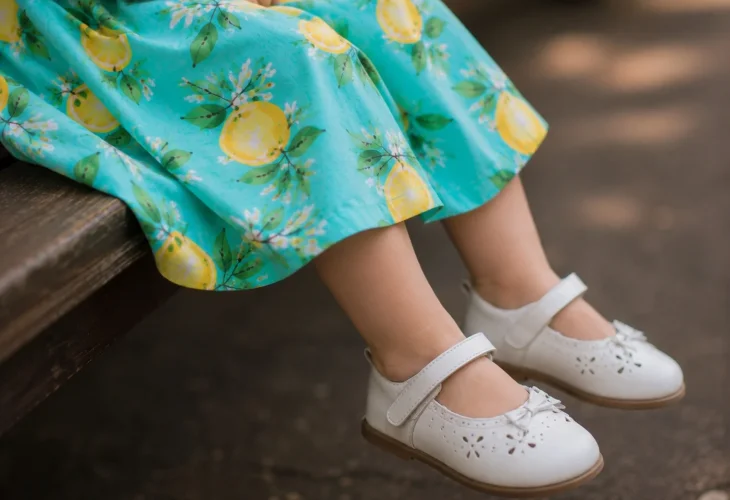
One summer day, my sister-in-law and I headed out with our lively crews to a children’s activity fair in our area.
When we arrived, we went over the safety rules with the older kids, who quickly scattered in every direction. Within moments, I found myself performing a ground-level balancing act between my three-year-old daughter and my one-year-and-nine-month-old daughter. I stood between the attractions, my head automatically turning back and forth as I tried to keep an eye on both of them.
Suddenly, the little one disappeared.
We calmly put our emergency plan into action without panicking, thanks to the secure fencing around the fair and the guard stationed at the entrance. Several friends joined the search, and I asked someone to watch my three-year-old. A short while later, the smiling little runaway was found.
Just as I was about to tell my sister-in-law that the search was over, I heard an announcement over the loudspeaker:
"The mother of the little girl in the turquoise dress with yellow lemons is asked to come immediately to the office. The girl is here, very upset and crying. Please come rescue her... The mother of the little girl..."
I gave my sister-in-law an awkward smile, handed the little one over to her this time, and announced, "I’m going to rescue the girl in the turquoise dress with the yellow lemons."
When the Advising Rebbetzin Loses Her Child
I entered the office area and made my way toward the sound of my sweet daughter’s hysterical cries. There was certainly no trouble figuring out where she was. The moment she saw me, she turned up the volume even more, making her feelings about having been lost perfectly clear.
The people gathered around her looked at me in undisguised astonishment. Their expressions seemed to say it all: "You? The advising rebbetzin?! You’re the mother of this poor child who was abandoned so irresponsibly?"
I held back an embarrassed laugh at the sight of everyone’s shocked expressions. I smiled politely, thanked everyone who had helped, and walked away with whatever composure I had left in tatters, carrying a screaming toddler and a bruised ego as I returned to the challenge of juggling the two of them.
7 Lessons This Parenting Mishap Taught Me
These are the conclusions I came away with after the incident:
- It is only our imagination that convinces us there are perfect people whose lives are always rosy, easy, and under control.
- We need to be careful with our words and mindful of the way we speak, because "death and life are in the power of the tongue." Rescue the child?!
- When we encounter a lost child or a child screaming at the top of their lungs, we should not assume that we care more about that child than their parents do. No one in the world worries more about a child than their imperfect parents. Admit it, that’s quite a revelation!
- Parenting is a challenge that requires us to strengthen both our confidence in ourselves and our trust in Hashem’s providence.
- We are all human. That means we need to give ourselves permission not to be perfect, both in life in general and in raising our children in particular.
- We must ask Hashem, the third partner in raising our children, to send great, strong, and swift angels to watch over them and protect them.
- The ego... oh, the ego. It drives us toward guilt and self-criticism and sends us spiraling into thoughts like, "This is so embarrassing" and "What will people say?" From there, it pulls us into sadness and, ultimately, all kinds of emotional distress.
Parenting, Humility, and True Joy
In this week’s parashah, it is written: "Because you did not serve Hashem, your God, with joy and gladness of heart!"
The message is that everything that happens in our lives is ultimately by His will. Our task is to humble our pride, the root of all negative traits, accept what comes our way with love, and thereby merit true joy as we work to refine ourselves in this world.
May we merit it!
Hagit Amaiev is a senior counselor with Hidabroot’s Shalom Bayit Department.

