

World News
U.S. Treasury Secretary: ‘Economic Pressure on Iran Is Working’
Iran and Oman are continuing talks on regulating shipping through the Strait of Hormuz as Tehran’s economic crisis deepens. Washington says the new economic campaign is already showing results: “The pressure is working.”
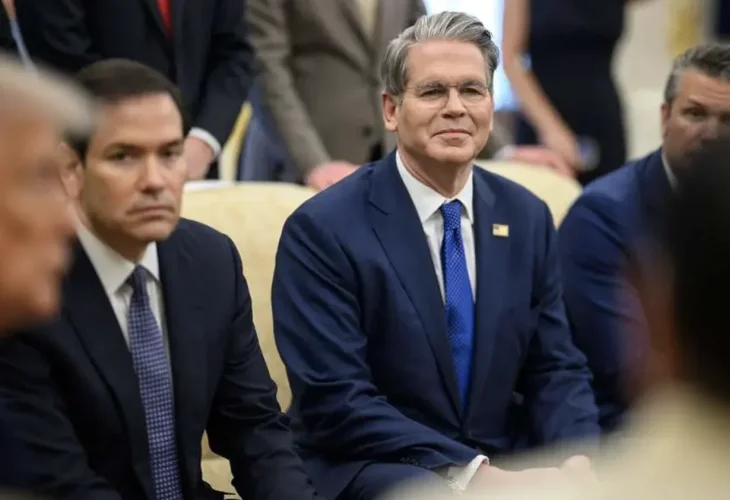 Bessent (Photo: The White House)
A day after the Trump administration announced an “economic exclusion” operation against Iran, officials in Washington say signs of pressure on Tehran are already apparent. U.S. Treasury Secretary Scott Bessent said Tuesday evening that Iran’s leadership “is admitting what the entire world can already see: the pressure is working.” At the same time, Iran and Oman are continuing talks in an effort to regulate shipping through the Strait of Hormuz once again.
In a joint statement released by Oman’s Foreign Ministry after a meeting between Omani Foreign Minister Al-Busaidi and his Iranian counterpart Abbas Araghchi, the two countries said their consultations focused on resuming the movement of vessels through the strait. According to the statement, the goal is to allow shipping to resume “in a manner that preserves the sovereignty and sovereign rights” of Iran and Oman.
The foreign ministers also discussed a proposed framework for restoring shipping, including a joint temporary corridor and a joint mine-clearing project. The statement was released hours after U.S. President Donald Trump declared that all mines placed in the international waters of the Strait of Hormuz had already been removed or detonated.
The efforts to regulate shipping come after Tehran effectively imposed a blockade on the strait during the war between Israel and Iran. Iranian officials later said they intended to turn the strategic passage into a permanent source of revenue by charging fees to vessels. It was subsequently reported that Iran and Oman were advancing a plan to collect payment from ships passing through the strait, despite U.S. opposition.
Behind the talks is the economic campaign Washington announced a day earlier, which it described as the largest economic campaign ever undertaken against a country. The success of the American move depends largely on countries that continue to maintain trade ties with Iran. Last week, the United Arab Emirates announced it was halting all trade and financial relations with Tehran “until further notice.”
Even without increased pressure from the United States, Iran’s economic situation continues to deteriorate. Hours before the U.S. announcement yesterday, the Iranian rial fell to an all-time low of 2.02 million rials to the dollar, and the crisis is already being felt on the streets. Iranian media reported long lines at gas stations in Tehran amid fears of price increases, as well as the temporary closure of some stations. Last week, the government abruptly canceled a pilot program to raise fuel prices in the southern city of Kerman after the move sparked panic.

