

Interesting
Why Is This Moroccan City Painted Entirely Blue?
Chefchaouen is famous for its striking blue streets and houses, but why are they blue? Explore the history and theories behind Morocco’s Blue Pearl.
- Tehila Cohen
- | Updated
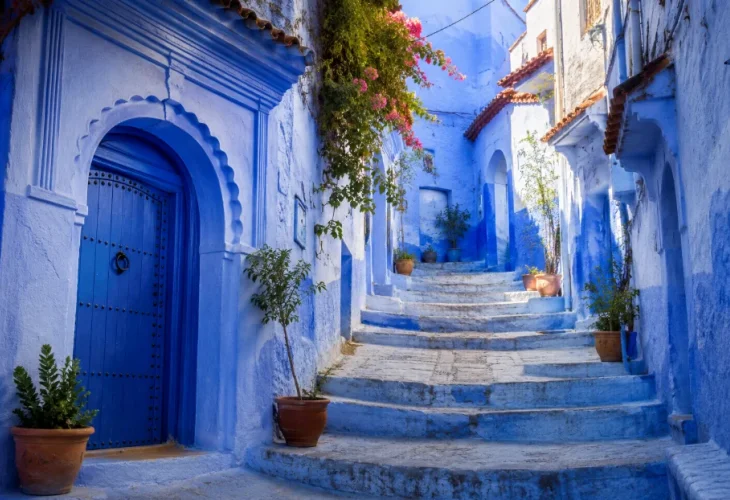
At first glance, Chefchaouen looks almost like a carefully designed movie set. Narrow alleyways wind between buildings painted in shades of blue, while doors, stairways, and entire house facades blend into the city’s distinctive color palette.
But Chefchaouen is very much a real, living city. And while its famous blue streets have become instantly recognizable around the world, the story behind the color is less straightforward than you might think.
Morocco’s Blue Pearl
Chefchaouen sits among the Rif Mountains in northwestern Morocco. Founded in 1471, the city consists of a newer section alongside its old medina, the historic walled quarter. It is here, in particular, that visitors encounter the greatest concentration of blue-and-white alleyways and homes.
Over the years, Muslims and Jews expelled from Spain and Portugal settled in the area, and the influence of Andalusian culture can still be seen in the city’s architecture.
Who Started Painting the Houses Blue?
One common theory connects Chefchaouen’s famous blue color to the Jewish community that once lived there. According to this explanation, blue represented the sky and humanity’s connection to Hashem, inspiring residents to use the color on the walls of their homes.
There is no clear agreement, however, about when the custom began. Some accounts suggest it dates back centuries, while others attribute the widespread use of blue to Jews who arrived in the city during the 20th century.
Some older residents have also recalled that in the past, it was primarily the Jewish quarter that was painted blue, while other parts of Chefchaouen were predominantly white.
Was the Blue Meant to Keep Mosquitoes Away?
Another popular explanation is far more practical. According to this theory, residents painted the walls blue because the color resembles flowing water and was believed to repel mosquitoes.
In practice, however, there is no convincing scientific evidence that painting a house blue will keep mosquitoes away.
Other theories suggest that the color represents the waters of the Mediterranean Sea or the Ras el-Maa spring, an important local water source. Some also believe that the light shades of blue help create a cooler, more refreshing atmosphere during the hot summer months.
From Local Tradition to Tourist Attraction
Whatever the true origins of Chefchaouen’s blue walls, today the color serves another important purpose: attracting visitors from around the world.
Residents continue to refresh the blue paint covering the walls, doors, and alleyways, preserving the distinctive appearance that has made Chefchaouen famous. What may have begun as a religious, cultural, or practical tradition has become an inseparable part of the city’s identity and an important source of income for local businesses.
The precise reason Chefchaouen became blue may remain a matter of debate, but the mystery itself has become part of the charm of Morocco’s famous “Blue Pearl.”

