

Rosh Hashanah
When You Can’t Reach Your Child: A Powerful Message of Hope
The promise of the “great shofar” teaches parents that even when they cannot break through their child’s walls, they can preserve connection, hold on to hope, and trust that no soul is ever beyond reach
- Rabbi Dan Tiomkin
- | Updated
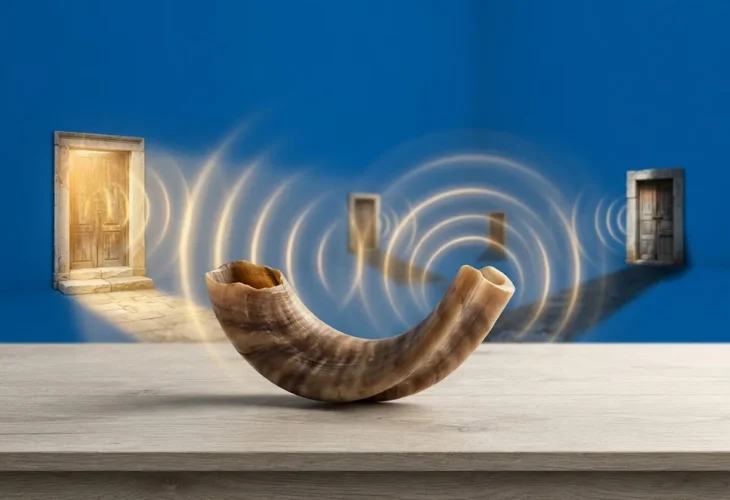
We are living through days of reflection and self-examination. There is always something within ourselves that we can work on, repair or improve. At the same time, there are also situations that simply are not within our control. Sometimes they make choices that deeply concern us, and despite everything we say or do, we feel unable to reach their hearts or help them choose a better path.
The Shofar That Can Reach Every Soul
It is precisely in those moments, when it seems there is nothing more we can do, that our Sages offer a perspective filled with hope. The Midrash teaches that two shofarot were fashioned from the ram that Avraham Avinu offered at the Akeidah. The shofar sounded at the giving of the Torah was the smaller one, while the shofar that will herald the coming of Mashiach will be the great shofar.
It is this shofar that the prophet Isaiah describes in a verse recited during the Rosh Hashanah Mussaf prayer: “And it shall be on that day that a great shofar will be sounded, and those who are lost in the land of Assyria and those who are cast away in the land of Egypt will come, and they will bow before Hashem on the holy mountain in Jerusalem” (Isaiah 27:13).
The sound of the smaller shofar can awaken those who are already close, and who still feel some connection to holiness. To awaken those who are described as lost or cast away however, requires something greater. The day will come when there will be such a powerful revelation of Godliness in the world that it will awaken even those who seem distant and disconnected, even those who appear utterly lost.
Two Ways a Person Can Become Lost
Chassidic teachings understand Isaiah’s verse as describing two different kinds of Jews who have become distant from serving Hashem. There are those who are “lost in the land of Assyria,” and there are those who are “cast away in the land of Egypt.” Rabbi Tzadok HaKohen explains that some become lost through happiness or prosperity, while others are driven away through suffering and hardship (Resisei Layla, 35). Yet both, the lost and the cast away, will ultimately be awakened by the sound of the great shofar, through a revelation of Godliness powerful enough to reach even these souls.
Look around, and it is not difficult to recognize both kinds of people. Some are lost in a kind of imagined happiness. They are immersed in a life that keeps them constantly occupied, entertained, or distracted, leaving little room to stop, reflect, or reconnect with something deeper. Others have been driven away by pain. Their hardships have closed in around them. Trauma, emotional struggles, disappointment, and suffering have created distance and walls that can be extraordinarily difficult to penetrate.
There may appear to be an enormous difference between these two groups. Yet when we look beyond outward appearances, we may discover something they have in common. Often, these are good people whose lives are currently being governed by layers of self-protection. They have developed walls of emotional disconnection, and those walls may make it almost impossible to reach them. At times, it can feel as though there is simply no one available to speak to, as though “the owner of the house is not home.”
When We Cannot Break Through the Walls
Sometimes we will not be the “great shofar” that breaks through those walls. We may desperately want to say exactly the right thing, find the right argument, or create the moment that will finally make our child understand. However, sometimes the person we love needs to go through a process of his or her own before becoming ready to hear, and we may not be the ones who can bring about that awakening.
That does not mean, however, that we have no role to play. Perhaps our task is not to break down the walls, but to preserve the relationship until the day those walls can come down. We can remain present and available. As much as circumstances allow, we can protect the emotional connection rather than allowing every disagreement to become another reason for distance.
There are times when maintaining that connection is itself the greatest effort we can make. We cannot control another person’s choices. We cannot force an awakening before its time. We cannot always rescue someone from the process he or she needs to undergo. But we can do what is within our reach.
Holding On to Connection and Hope
We can remain a source of love and connection, we can try to endure the uncertainty without giving up on the person behind the walls, and above all, we can continue to believe and to hope for salvation.
The great shofar has not yet sounded. But the promise of that shofar is that no soul is beyond reach forever. Those who are lost and those who have been driven away can still find their way home.
May the merit of these holy days stand for us and for our children. And may we soon merit to hear the sound of the great shofar that will awaken the distant, gather the dispersed, and bring us all together in Jerusalem.

