

Magazine
From Burned Trees to Mezuzot: How Kibbutz Be’eri Is Growing Again
From trees scarred by war, a powerful symbol of new life is emerging. Discover the story of the 40 mezuzot being created for families returning to Be’eri.
- Michal Arieli
- | Updated
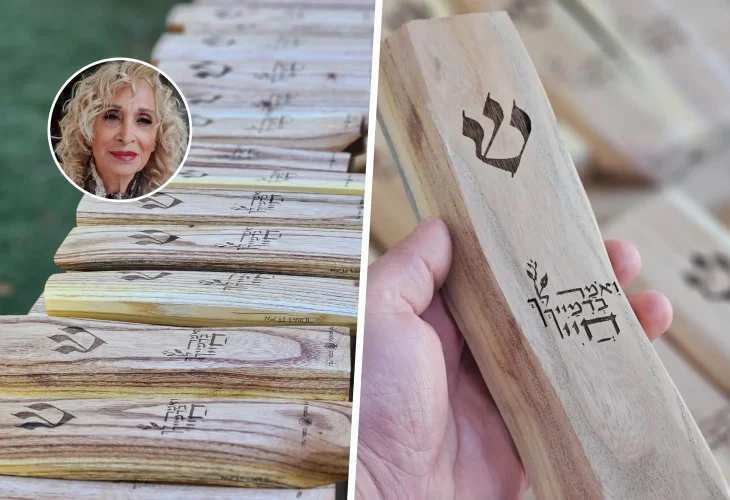
The synagogue at Kibbutz Be’eri has witnessed its share of joyful occasions and, tragically, heartbreaking moments as well. It survived the terrorist attack on October 7th almost entirely intact and has since become a center for renewal, celebrations, and moving ceremonies.
Now, an extraordinary project is taking shape within its walls, transforming the scars of loss and destruction experienced by local residents into a symbol of rebirth.
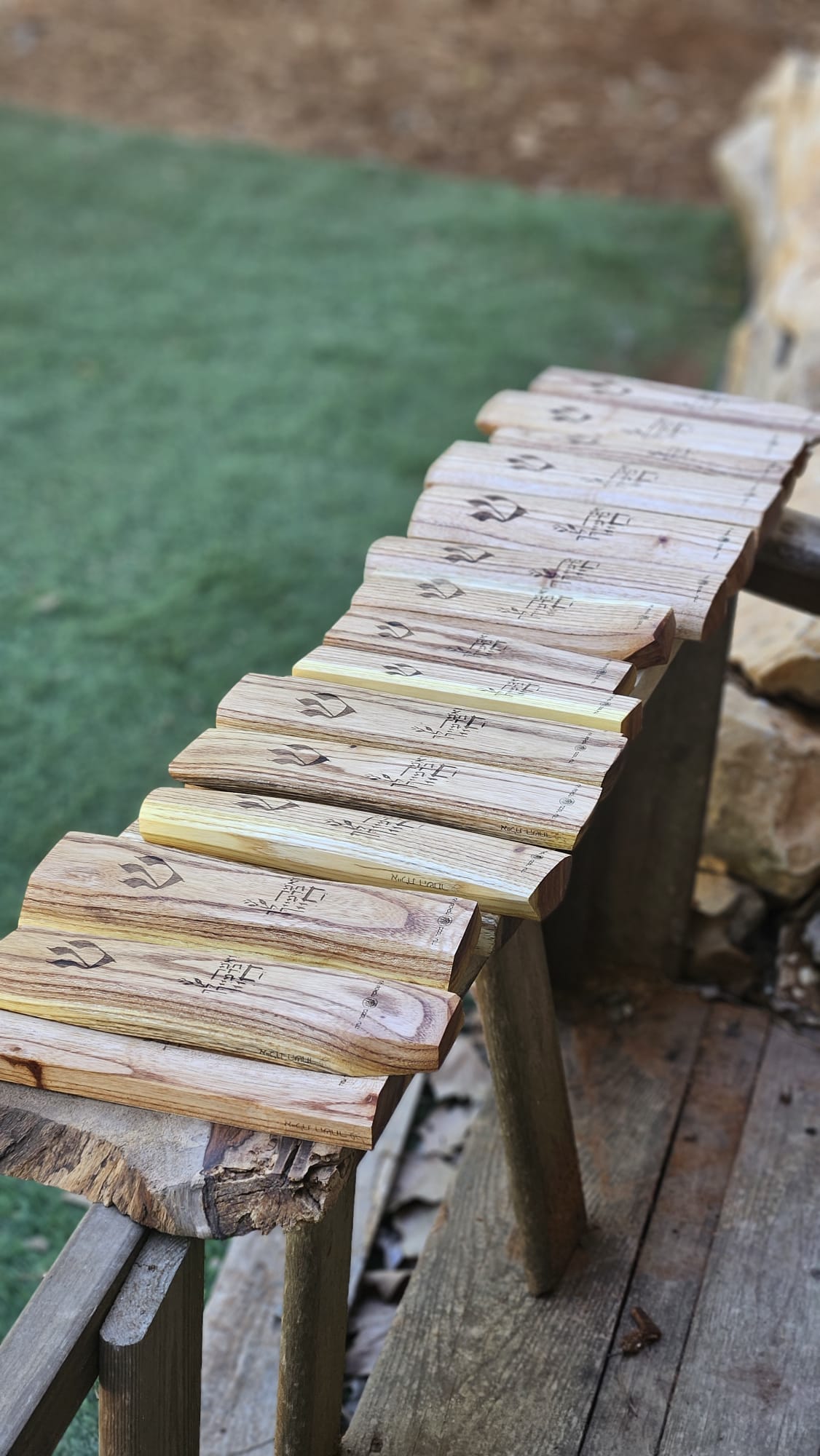
Two people are behind the initiative: Tzviaz Kalchheim, a young wood artist and resident of Har Bracha, and Rachel Fricker, the synagogue’s gabbait in Be’eri. Together, they are creating 40 mezuzot from trees that were burned or damaged in the Gaza border area during the war.
“Everyone I tell about this project is moved to tears,” Rachel shares. “The thought of taking trunks and trees that fell, and turning them into mezuzot to hang at the entrances of the homes of people who chose to return to Be’eri and continue living after their homes were burned, it is unimaginable. It proves how the people of Israel continue to grow. Even when everything appears burned and broken, new life emerges from the great rupture.”
Growing Again
The idea for the mezuzot began to take shape at the start of the war.
“Like many others, I was called up to the war in the middle of Simchat Torah,” Tzviaz recalls. “My brigade was assigned to an area near Be’eri, so we passed through Be’eri and had contact with the kibbutz. From time to time, we went in to rest, and among other things, we prayed in the kibbutz synagogue.
“The first time I entered the synagogue, I saw an artistic mezuzah hanging by the entrance in the shape of a tree. The tree appeared to have been cut down, yet fresh branches were bursting forth from it, and beneath it were the words: ‘The people of Israel are connected to their roots and grow again.’
“Since I am an artist who carves Judaica items from rare woods, I was deeply impressed by the piece. It moved me so much that I told myself I had to create a set of mezuzot inspired by it.”
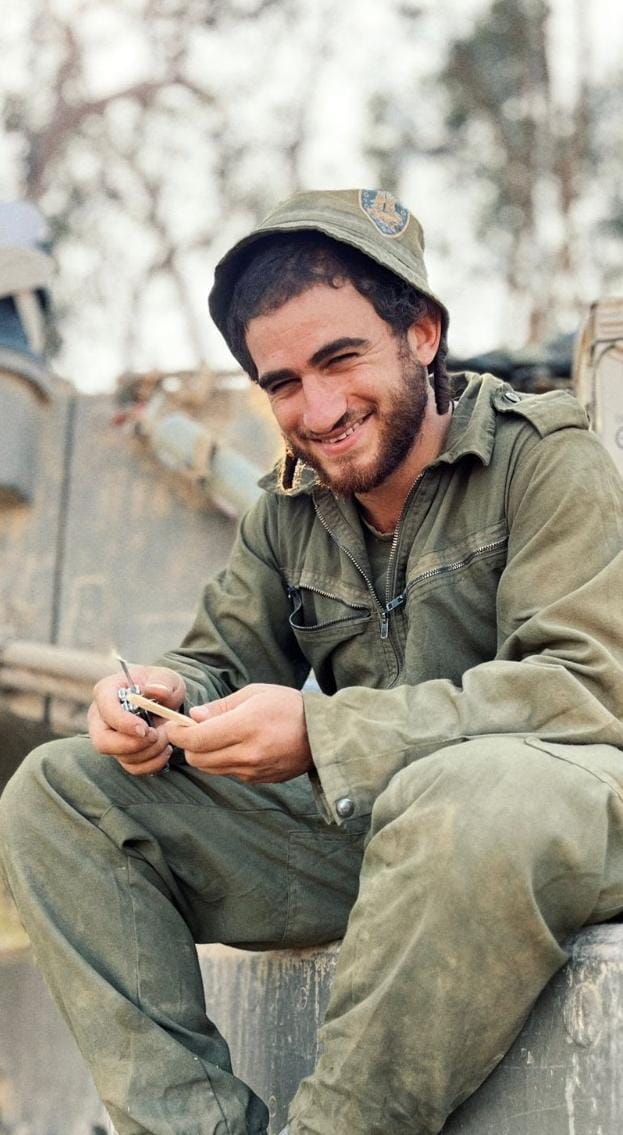 Tzviaz Kalchheim
 At the time, however, Tzviaz was busy fighting and could not begin the project. But between deployments, whenever he had a few free minutes, he found another way to create something meaningful.
“I carved a Torah pointer from one of the trees that had fallen in the area during military activity around Be’eri,” he explains. “It pained me to see the trees being thrown away, and since I have tried, from the start of my military service, to leave a Torah pointer at every military base where I serve, it felt natural to do so in Be’eri as well. Afterward, I left the place and did not even bother to check whether they had received the gift or what they did with it.”
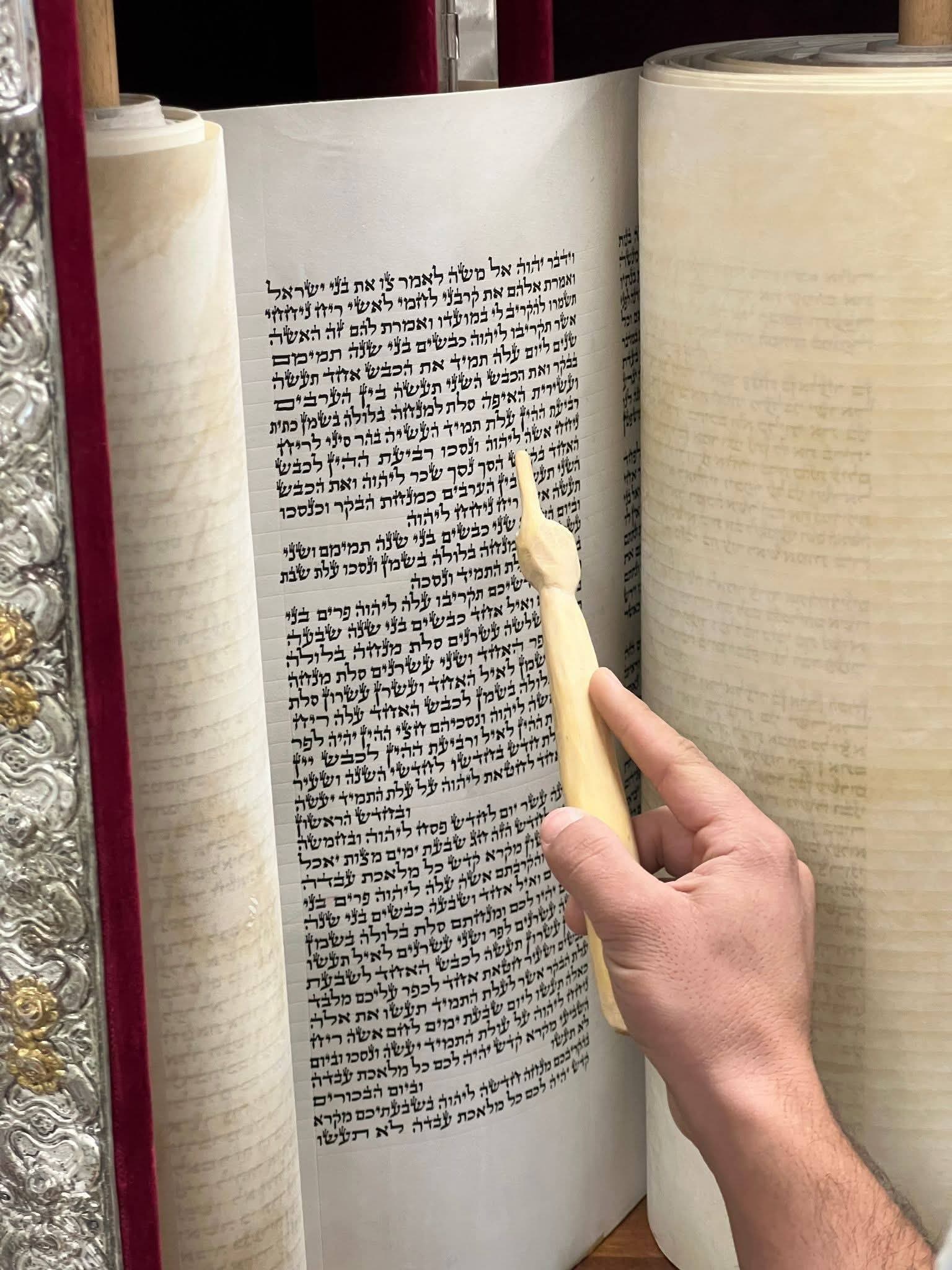
That was when Rachel Fricker entered the story. When she discovered the pointer, she was deeply moved and wanted to know who had carved it. She filmed a video of herself receiving the unusual gift and said, “I don’t know who this is from, but if you see this video, we would love to meet you.”
At the time, Tzviaz was fighting, so he never saw the video and was unable to meet Rachel.
“We only met a year later,” he says.
“It was a special meeting,” Rachel adds. “The remarkable thing is that at exactly that time, we were about to complete the writing of a Torah scroll. It is a Torah scroll written by the entire people of Israel, and I felt that the right thing would be to use such a pointer for the reading. After all, there is nothing that demonstrates the eternity of the people of Israel more clearly.”
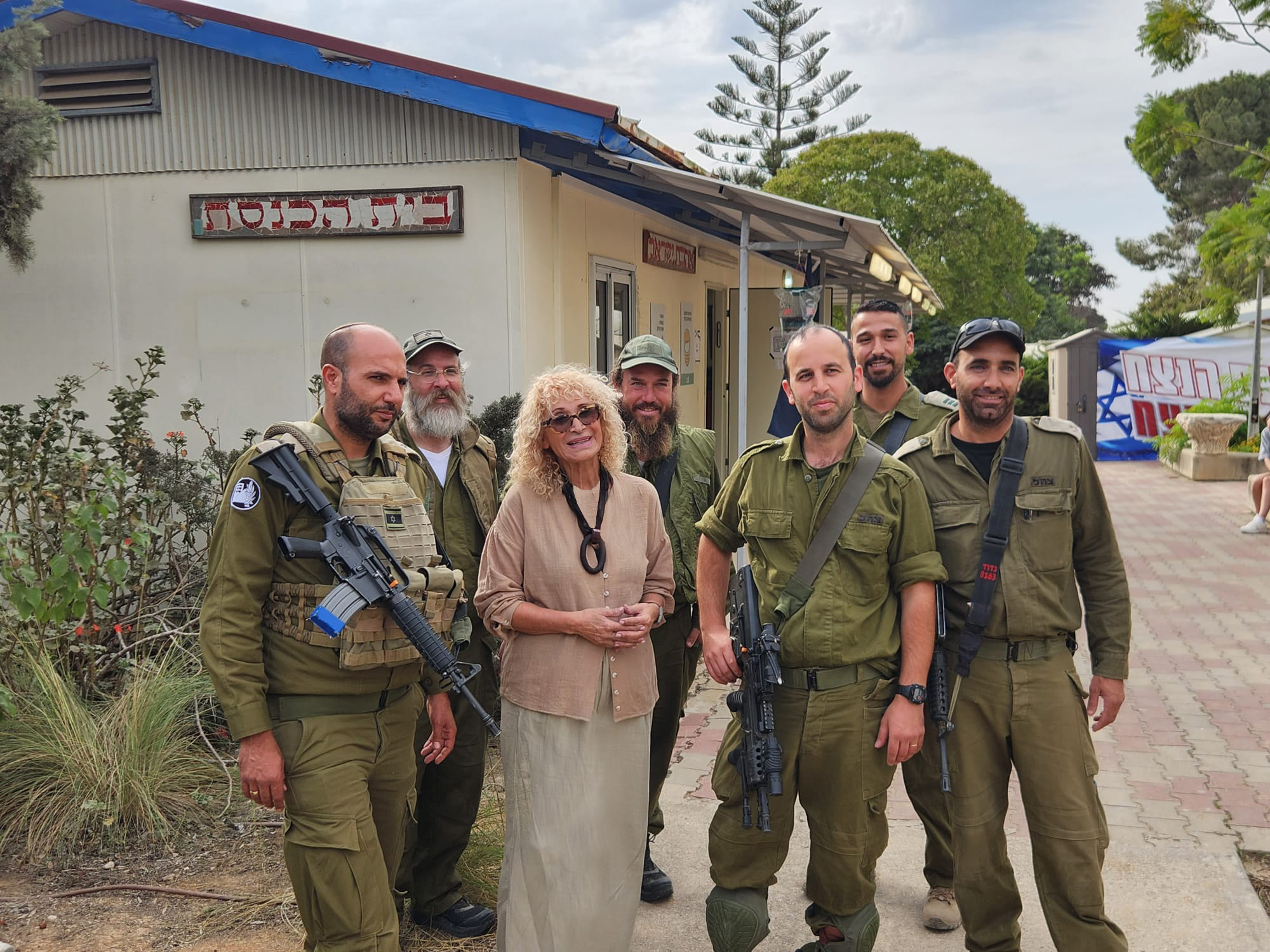 Rachel at the synagogue in Be'eri (Photo: KfirSivan)
During their meeting, Tzviaz shared how deeply he had been affected by the mezuzah at the synagogue entrance and asked Rachel about the story behind it. As it turned out, she had a personal connection to its creator.
“The creator of the mezuzah was Shmuel Avni, of blessed memory,” Rachel explains. “He was one of the founders of Kibbutz Be’eri and served as regional council head for two terms. I met him when I worked as a nurse in a nursing home, and I was with him in his final days before he passed away. We had deep conversations about life, and on that occasion he also showed me the mezuzah he had created.
“Then he surprised me by personally asking me to give him the opportunity to put on tefillin. It was the first time in his life that he had put on tefillin. I was so emotional that I did not even take a photo. This is the man behind the creation of the mezuzah.”
By then, Tzviaz had no doubt that he wanted to create a series of mezuzot inspired by Shmuel Avni’s original design. When he shared the idea with Rachel, another thought emerged: Why not give the mezuzot to residents returning to homes being rebuilt in the kibbutz?
“It moved me so deeply,” Rachel says. “Two new neighborhoods are being built in our kibbutz, and right now, residents evacuated from their burned homes are preparing to move into them. This is an incredible, special gift with so much meaning.”
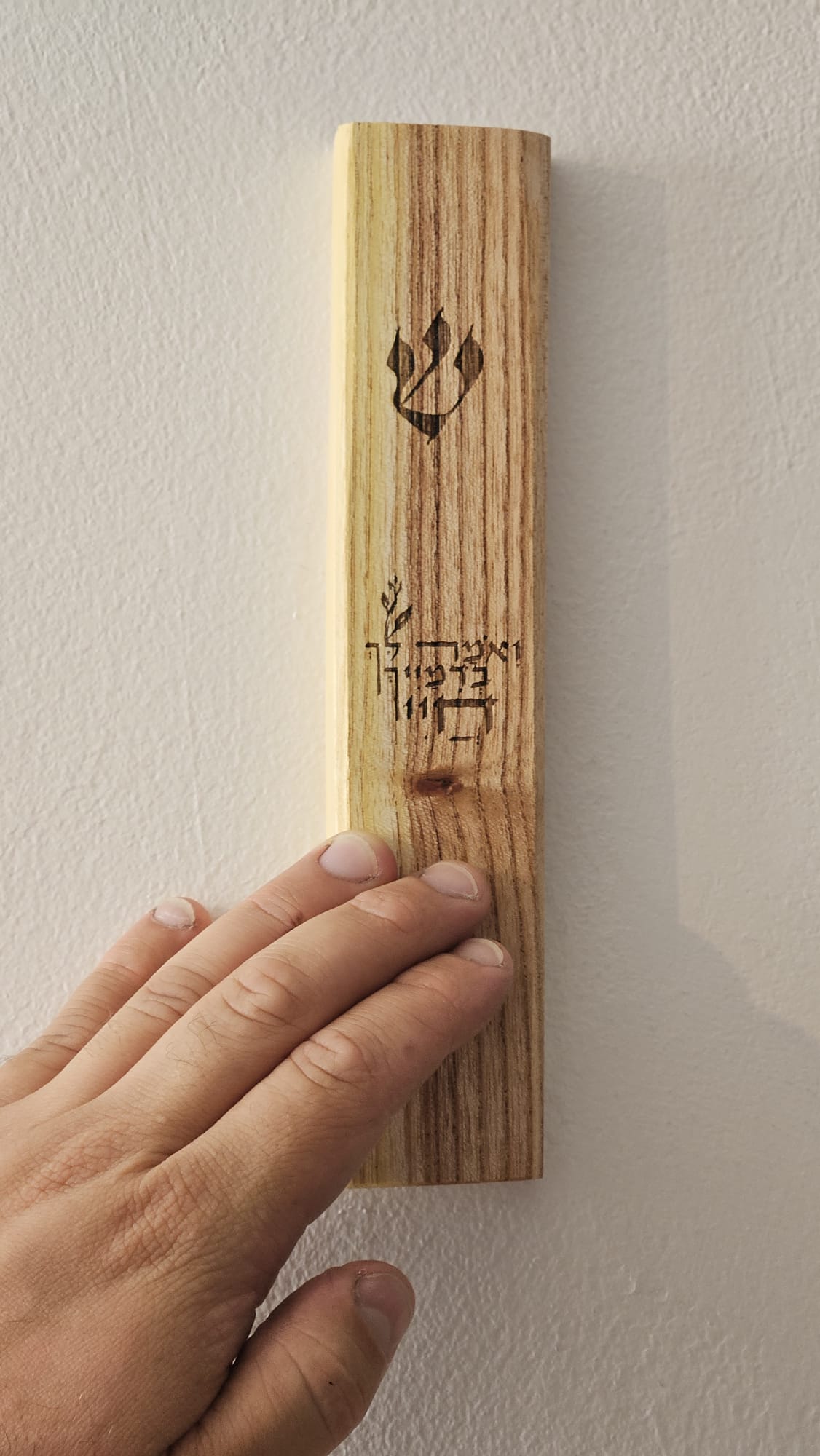
Because the project required funding, Rachel approached Rabbi Shlomo Raanan of the Ayelet HaShachar organization. He helped fund 40 mezuzot, on one condition: that they include the words, “And I said to you: In your blood, live.”
Blood, Life, and Renewal
Tzviaz got to work bringing the vision to life.
“I deliberated over how the mezuzot should be designed,” he recalls. “It was important to me to incorporate the required verse, but I also wanted to build on the design of the original mezuzah. In the end, I took the branch from the original design and turned it into a plant flowering out of the Hebrew letter lamed. I also enlarged the word ‘live,’ creating a mezuzah with the requested inscription.
“I felt it was a winning combination. On one hand, blood and pain; on the other, life, flowering, and renewal, without ignoring the difficulty the people of Israel are going through.”
Where did you get the wood for the mezuzot?
“Here I received great help from Heaven, because as I mentioned, the idea was to make the mezuzot specifically from trees that fell in the Gaza border area. When I tried to figure out how to do this, I discovered that some trees are set aside especially for artists rather than being thrown away. So far, I have designed 20 mezuzot, and I intend to continue until the project is complete, with Hashem’s help.”
Isn’t it difficult to work with trees that fell under such tragic circumstances?
“Some people hear that I use trees from the Gaza border area and ask me, ‘How can you?’ My approach is the complete opposite. It is known that the Ben Ish Chai hung a stone from the Land of Israel beside the mezuzah at the entrance to his home in Baghdad, explaining that he did so so that Baghdad’s Jews would kiss the Land of Israel along with the mezuzah.
“I can say for myself that I make the Judaica items I carve exclusively from trees from Israel. I do not order wood from AliExpress or from other unknown places. My goal is exactly like that of the Ben Ish Chai: that people kiss the mezuzah and love the land. As it is said: ‘For Your servants have cherished her stones and favored her dust.’
“Now, when the mezuzot are designed in a way that connects us to our roots, it completes the message in my eyes and closes the circle. It shows us exactly what Shmuel Avni wrote on the mezuzah: the people of Israel are growing again, and the roots remain planted deep in the ground.”

