

World News
90 Years After the Battle of Cable Street: Are Jews Being Written Out of the Story?
In 1936, Jewish resistance stopped a fascist march through London. Ninety years later, campaigners say its antisemitic purpose and the Jewish role in defeating it are being downplayed.
- Shira Dabush
- | Updated
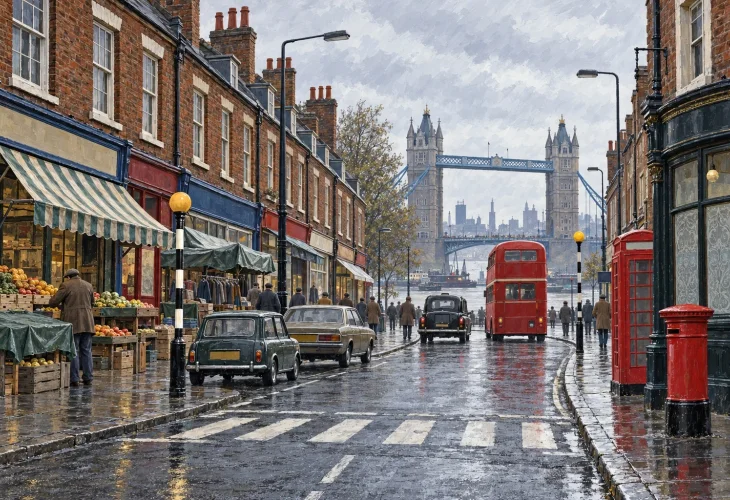
In 1936, thousands of Blackshirts led by Sir Oswald Mosley prepared to march through London’s East End, home to a large Jewish community. The march was intended to intimidate Jewish residents, but opponents filled the streets before it could proceed. Jews joined Irish workers, trade unionists, socialists and communists to block the route.
Residents built barricades from whatever they could find. A bus and a tram blocked streets, while stones, sticks, chair legs, rotten vegetables and even the contents of chamber pots became improvised weapons. Historical accounts describe children rolling marbles beneath the hooves of police horses as officers attempted to clear a path by force.
Eventually, Mosley’s planned march of around 5,000 Blackshirts was called off. The confrontation became known as the Battle of Cable Street, one of the most famous events in British Jewish history. Now, on its 90th anniversary, a debate is unfolding in Britain over how its Jewish character is remembered.
The Resistance Is Remembered. Are the Jews Being Overlooked?
Jewish campaigners argue that some accounts present the battle primarily as a victory for the working class or the political left, without clearly identifying the community the march was intended to threaten. Criticism has focused in part on a BBC report about a musical based on the event. The report mentioned Irish residents and dockworkers but drew complaints for barely mentioning Jews.
The trade union Unite also faced criticism over publicity for a commemorative event that emphasized the strength of organized workers without initially mentioning the Jewish community. The publicity was subsequently amended. Critics argue that recognizing the contribution of allies should also include acknowledging the community the fascists sought to intimidate.
Alex Hearn, a leading figure in Labour Against Antisemitism, believes British Jews should actively preserve their place in the memory of the battle. In his view, Jewish residents organized resistance and others joined them. Presenting the event solely as a political victory for the left leaves out a central part of the story.
The debate also reflects present tensions between sections of the Jewish community and the British left. Dave Rich, director of policy at the Community Security Trust, notes that in 1936, some people combined Jewish identity, communist beliefs and Zionism.
Former Labour leader Jeremy Corbyn has also drawn criticism. Corbyn has previously spoken about his mother’s participation in the resistance to the march. His critics say that, during a parliamentary debate commemorating the battle, he referred to East End residents who opposed the fascists without explicitly mentioning the Jewish community.
Claudia Mendoza, chief executive of the Jewish Leadership Council, emphasizes the importance of Jewish communities being able to stand up for themselves. Rich similarly argues that political alliances can change, making it essential for the community to retain the ability to protect its security and interests.
Ninety years after the battle, the dispute centers on what will remain in public memory. Cable Street was a victory achieved through collective resistance, but the march it stopped was directed against a Jewish neighborhood. Campaigners seeking to restore Jews to the center of the story want that fact to remain an inseparable part of its telling.

