

Pregnancy and Birth
Pregnancy During War: What a New Study of Israeli Mothers Reveals
How did war and displacement affect women giving birth after October 7? New research explores maternal mental health, mother-infant interaction, and the role of family support.
- Yitzchak Eitan
- | Updated
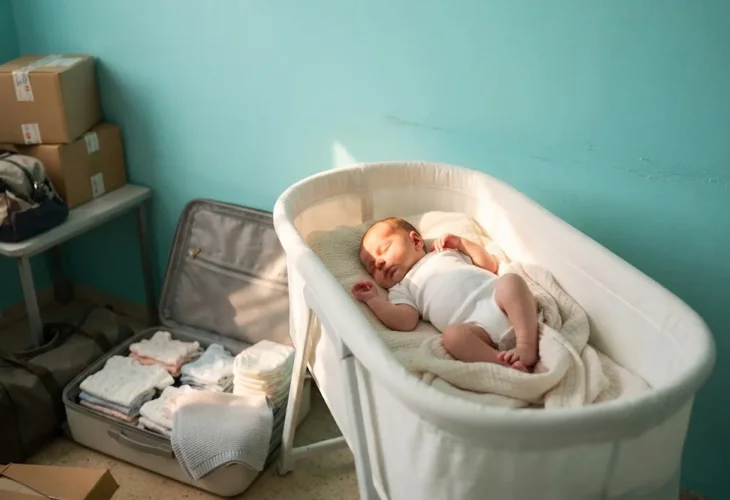
For hundreds of Israeli women, pregnancy and the first months of motherhood unfolded against a backdrop they could never have imagined: war, evacuation, uncertainty, and, for some, separation from their partners serving in the reserves.
A new study conducted jointly by the Goshen Center, Hadassah Hospital, and Bar-Ilan University examined how the war and displacement affected women who gave birth following October 7. The findings suggest that for mothers who were pregnant or gave birth around the outbreak of the war, the emotional impact extended into childbirth and the first months of life with their babies.
Mothers Evacuated From the South Reported Greater Difficulties
The study, titled “War Babies,” included 390 mothers in its quantitative analysis as well as 30 in-depth interviews.
According to the findings, mothers evacuated from communities in southern Israel experienced significantly higher levels of trauma symptoms and parenting stress than both mothers evacuated from the north and women who had not been evacuated. The differences remained significant even after researchers accounted for demographic factors and the degree of exposure to the war.
Differences also emerged in measures related to mother-infant interaction. Women who gave birth after being evacuated from the south reported the highest levels of stress and difficulty in their interactions with their babies, while their infants were described as showing higher levels of restlessness.
By contrast, mothers evacuated from northern Israel reported the lowest levels of difficulty in their interactions, and their babies were described as showing a greater ability to self-regulate.
The researchers also found an association between a mother’s psychological state and how she experienced her relationship with her baby. Higher levels of anxiety and trauma symptoms were associated with greater difficulties in early mother-infant interaction.
Evacuation Created Another Layer of Stress
The war itself was not the only source of strain. Evacuation brought additional challenges, including crowded living conditions, uncertainty, and the ongoing feeling of living somewhere temporarily.
Researchers described another consequence as “medical nomadism,” with displacement disrupting continuity of care and forcing some women to navigate pregnancy monitoring while moving between locations and medical providers.
The study also highlighted wives of reservists as another vulnerable group. Many faced the combined burden of managing their homes and caring for their families without their partners while simultaneously living within communities affected by war.
Family and Community Support Made a Difference
Despite the difficult findings, the research also identified an important protective factor: family and community resilience.
Mothers evacuated from the south who reported high levels of family resilience showed a quality of mother-infant interaction similar to that of mothers who had not been evacuated.
The in-depth interviews also revealed another side of the experience. Amid war and uncertainty, many women described giving birth as a source of hope, continuity, and meaning.
Dr. Inbal Mozes, CEO of the Goshen Center, told Israel Hayom: “This is one of the first studies in Israel to comprehensively examine mothers and babies in the context of a prolonged war and evacuation, while simultaneously looking at maternal mental health, the mother-infant relationship, infant development and resilience.”
She added that the research presents a complex picture of motherhood during prolonged war and displacement. Alongside the effects of evacuation, “medical nomadism,” and higher rates of trauma symptoms among women from the south, she emphasized the protective role that family and community resilience can play for babies.
According to Dr. Mozes, the researchers have submitted a practical framework of recommendations to Israel’s health and welfare systems and hope the recommendations will soon be adopted.

