

Beginners Guide
10 Things You'll Hear in Synagogue and What They Mean
What do minyan, Kaddish, and Kedushah mean? Discover 10 common synagogue terms and learn the meaning and traditions behind Jewish prayers.
- Yonatan HaLevi
- | Updated
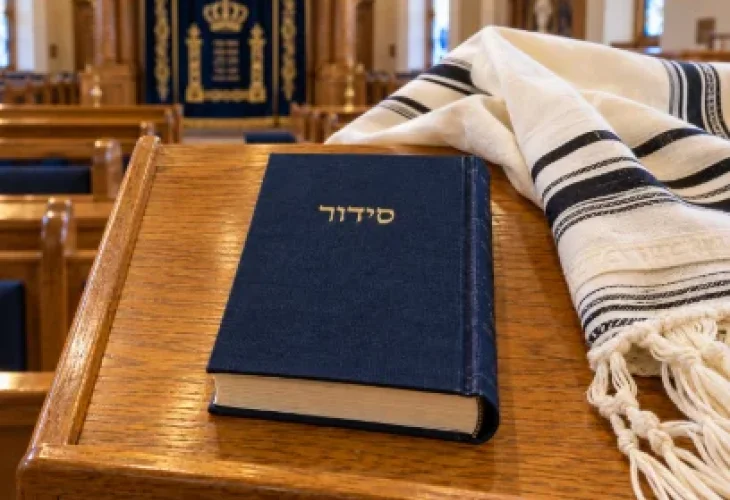
“We need one more for a minyan,” someone announces at the synagogue entrance. The gabbai is looking for a shaliach tzibbur, and the siddur indicates that Tachanun is skipped today.
If you're new to synagogue services, it can sometimes feel as though everyone is speaking a language you haven't quite learned yet.
But these unfamiliar words have straightforward meanings, and understanding them can make following the prayers much easier. Here are 10 common synagogue terms, along with some fascinating details about the traditions behind them.
1. Minyan: The Prayer Quorum
A minyan is a group of at least 10 Jewish males who have reached bar mitzvah age. According to traditional Jewish law, a minyan is required for certain communal prayers, including Kaddish, Kedushah, and Barechu.
When you hear someone say, “We're waiting for the tenth,” it means one more person is needed to complete the minyan.
The Rambam teaches: “The prayer of the community is always heard, and even if there are sinners among them, Hashem does not reject the prayer of the many” (Hilchot Tefillah 8:1).
But why specifically 10?
The Gemara explains that matters of sanctity require an “assembly.” The Torah uses this term in reference to the 10 spies who spoke negatively about the Land of Israel, excluding Joshua and Caleb. From this, the sages derive the minimum number required for a minyan (Megillah 23b).
2. Shaliach Tzibbur: The Prayer Leader
The shaliach tzibbur, often abbreviated as shatz, is the person who leads the congregation in prayer. The term literally means “messenger of the congregation,” reflecting his role in representing the community before Hashem.
He is also commonly called the chazzan.
When someone is asked to “go up to the teivah,” they are being invited to lead the prayers from the designated prayer stand.
The Shulchan Aruch emphasizes that a shaliach tzibbur should possess qualities such as humility, a pleasant voice, and the acceptance of the congregation.
3. Gabbai: The Synagogue Organizer
The gabbai is responsible for helping the synagogue run smoothly, particularly during prayer services.
His duties may include arranging who leads the prayers, assigning honors during the Torah reading, and making sure the service proceeds in an orderly manner.
If someone approaches you at synagogue to offer you an honor or ask whether you can lead part of the service, there's a good chance it's the gabbai.
4. Shemoneh Esrei: The Central Prayer
The Shemoneh Esrei, also called the Amidah, is the central prayer of the three daily services: Shacharit (morning), Minchah (afternoon), and Maariv (evening).
It is recited while standing, quietly moving the lips rather than simply reading the words silently.
Interestingly, although Shemoneh Esrei means “Eighteen,” the weekday prayer actually contains 19 blessings.
The Gemara (Berachot 28b) explains that an additional blessing against heretics was instituted in Yavneh. The original name remained, even after the number of blessings increased.
On Shabbat and most holidays, the Amidah contains seven blessings instead of 19. One notable exception is the Musaf prayer of Rosh Hashanah, which contains nine.
5. Chazarat Hashatz: The Chazzan's Repetition
After the congregation finishes the silent Amidah, the chazzan repeats the prayer aloud. This is known as chazarat hashatz, meaning the prayer leader's repetition.
Originally, the repetition was instituted to help people who did not know how to recite the prayers themselves fulfill their obligation by listening to the chazzan.
The Shulchan Aruch explains that the repetition is still observed even when everyone present knows how to pray (Orach Chaim 124:4).
During this part of the service, the congregation should listen attentively, avoid unnecessary conversation, and respond “Amen” to the blessings.
6. Kedushah: Sanctifying Hashem's Name
Kedushah is one of the most significant moments during the chazzan's repetition of the Amidah.
Recited during the third blessing, it includes verses describing how the angels praise Hashem, including:
“Holy, holy, holy is Hashem of Hosts; the whole earth is filled with His glory.”
The Mishnah Berurah (Orach Chaim 125:4) emphasizes that while reciting Kedushah, a person should intend to sanctify Hashem's name, fulfilling the verse: “I shall be sanctified among the Children of Israel.”
7. Kaddish: A Prayer of Praise
Many people associate Kaddish with mourning, so it may come as a surprise that the prayer does not mention death at all.
Instead, its central message is the praise and sanctification of Hashem's name, expressing the hope that His greatness will be recognized throughout the world.
Most of Kaddish is written in Aramaic. One of its best-known phrases, “Yehei Shmei Rabbah Mevorach,” means “May His great name be blessed.”
There are several forms of Kaddish, including those recited by mourners and others recited by the shaliach tzibbur during the prayer service.
The Mishnah Berurah (Orach Chaim 56:1) stresses the importance of responding “Amen, Yehei Shmei Rabbah” with sincere concentration and intention.
The Gemara teaches: “Whoever answers ‘Amen, Yehei Shmei Rabbah Mevorach’ with all their strength, their harsh decree is torn up” (Shabbat 119b).
8. Barechu: The Call to Bless Hashem
At certain points in the prayer service, the chazzan calls out:
“Bless Hashem, who is blessed.”
The congregation responds:
“Blessed is Hashem, who is blessed, forever and ever.”
This exchange is called Barechu. It is an invitation for the congregation to join together in blessing Hashem.
After everyone responds, the chazzan repeats the congregation's response, joining in the blessing he invited them to recite.
You will hear Barechu during Shacharit and Maariv, before the blessings of Kriat Shema, and in some communities at the conclusion of these services. It is also recited at the beginning of the blessings by someone called up to the Torah.
Barechu requires a minyan and is not recited when praying alone.
9. Tachanun: Asking for Mercy and Forgiveness
Tachanun is a section of prayer devoted to asking Hashem for mercy and forgiveness.
It is generally recited after the Amidah and the chazzan's repetition during Shacharit and Minchah, although the precise customs differ between communities.
One interesting feature of Tachanun is that it is omitted on certain days.
These include Shabbat, Jewish holidays, and Rosh Chodesh. Certain joyous occasions, such as the presence of a groom under circumstances specified by halacha, may also affect whether it is recited.
When Tachanun is omitted, the congregation simply continues to the next section of the service.
10. Baal Koreh: The Torah Reader
The baal koreh is the person responsible for reading aloud from the Torah scroll during the synagogue service.
This role requires considerable preparation. Unlike a printed Chumash, a Torah scroll does not contain vowel markings or cantillation symbols.
The baal koreh must therefore know how to pronounce the Hebrew words correctly, where to pause, and which traditional melody to use.
His preparation helps ensure that the Torah is read accurately and respectfully before the congregation.
Understanding the Language of Prayer
At first, synagogue terminology can seem overwhelming. But once you become familiar with these expressions, you'll begin to recognize the structure of the service and understand what's happening around you.
And the next time someone announces that they're waiting for a minyan, or the gabbai asks someone to lead the prayers, you'll know exactly what they mean.

