

Magazine
The Jewish Secrets of the Dominican Republic
How a researcher’s search for his own Sephardic roots led him to Bani, where family customs, oral traditions, and centuries-old connections may preserve traces of a forgotten Jewish past.
- Shira Dabush
- | Updated
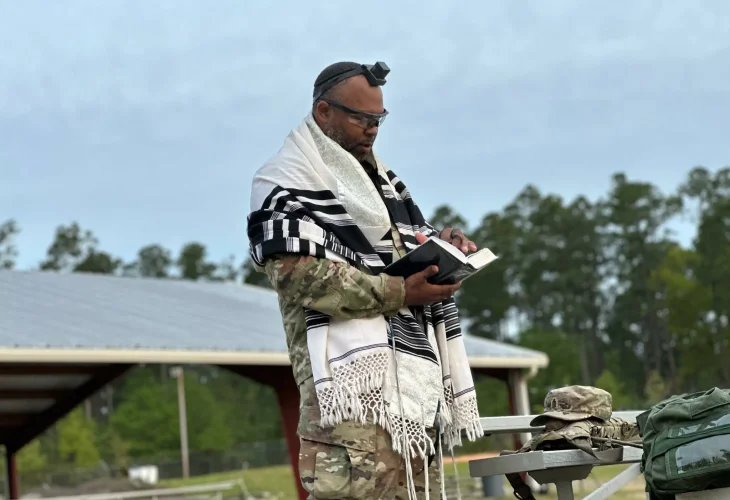
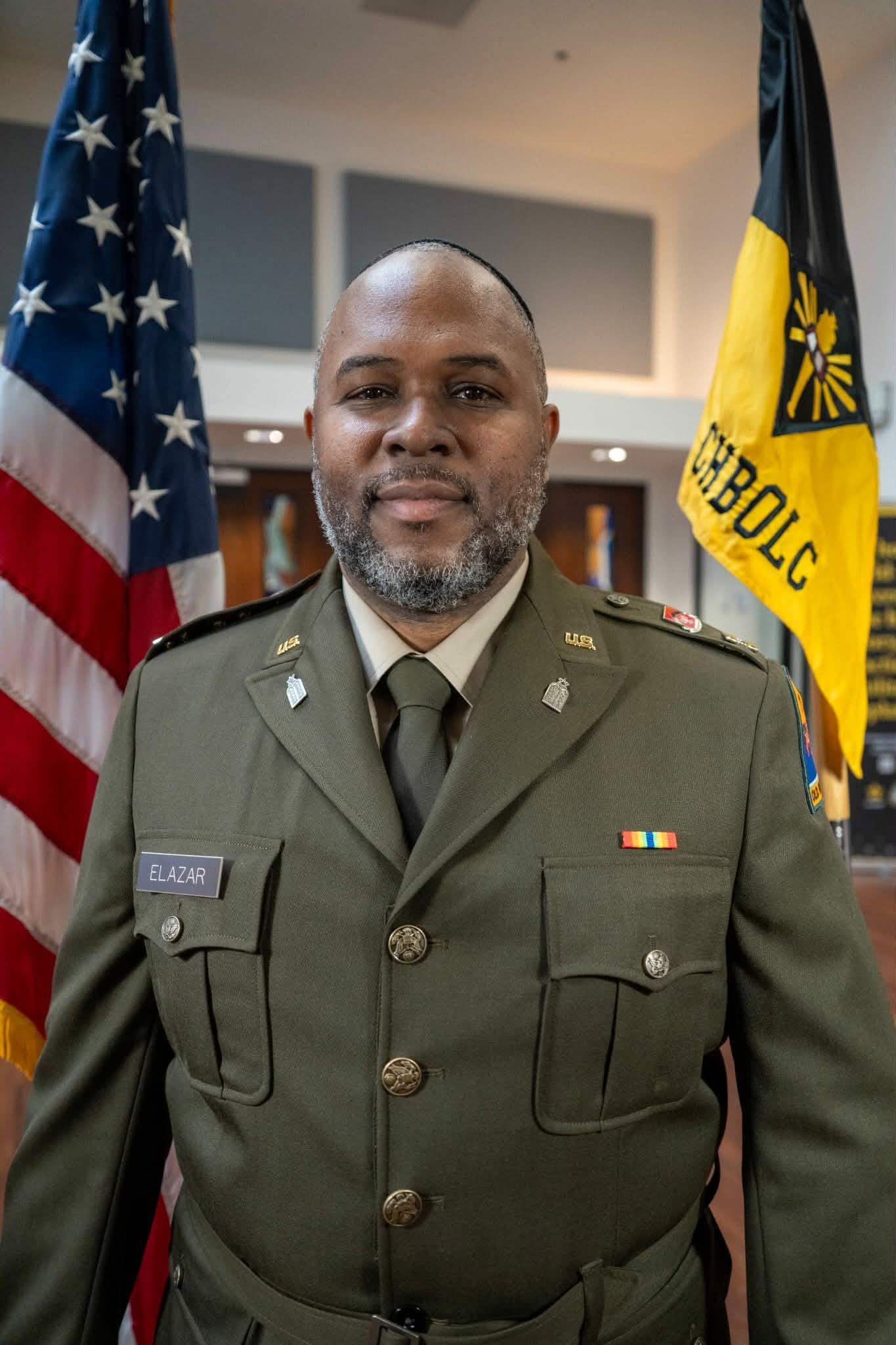
Hacham Dr. Yehonatan Elazar-DeMota, a rabbi, researcher, educator, professor of law and religion, and Jewish chaplain on active duty in the U.S. military, has spent much of his life exploring Jewish identity and history. His background includes studies in anthropology and religious studies, a doctorate in international law, teaching and research in Europe, and Torah training in rabbinics, shechita, and brit milah. In 2009, he founded Beth Midrash Eleazar in the Dominican Republic to strengthen Sephardic Jewish life and identity there. Yet long before he took on these roles, DeMota was a boy in Miami who knew mainly one thing: his family was not quite like the families around him. "We did not regularly go to synagogue, but there were rules about what we could and could not eat, all kinds of customs surrounding Shabbat, and strange practices that no one could explain," recalls DeMota, 45, a married father of four who lives at Fort Bliss in Texas. He knew his family had a story, but he did not yet understand how far back it reached.
Only years later, as an adult, did he begin asking questions and taking a serious interest in his family history—and gradually grasp its scope. "I interviewed the older members of my family, and suddenly the pieces slowly began to come together," he says. "The Dominican Republic, Curaçao, Jamaica, Portugal, Morocco, the Netherlands, and Turkey were no longer just names of places, but stops along our family's story, which stretches across generations."
The deeper he dug into his family's past, the more his own unusual life path began to take shape, eventually leading him to a fascinating mission: studying the remnants of Jewish identity in the Caribbean.
DeMota was born in Florida to a Sephardic family from the Dominican Republic. His parents and siblings came to the United States through Puerto Rico in the 1970s. Asked about the home in which he grew up, he explains that his parents divorced when he was five, creating many difficulties for the family.
"We were not a typical Jewish family, and at that stage my older siblings had moved away from religion, while my mother's knowledge of religious customs and our family history was very limited," he says. "Even when it came to the type of haircut children were allowed to have, she could not explain where the rule came from."
He learned more about his family history by interviewing older relatives. "They knew about the Jewish traditions they had received from their parents and grandparents, and that was when I discovered our family's connections to Sephardic communities around the world, even before the family migrated to the Dominican Republic," he says. "After I built our family tree, many members of my family, including myself, received Portuguese citizenship under the special 2014 law for descendants of Portuguese Jews."
"Animals in Bani Were Slaughtered According to Jewish Law"
Drawing on the information he had gathered, DeMota began to research seriously not only his own family history but also the remnants of Jewish life in the Dominican Republic. "It began when I was in my third year of undergraduate studies," says DeMota. "The subject drew me because I wanted to better understand my family's history and why they had settled there in the 19th century."
That was how he arrived at the subject of his extensive research: the roots of the surviving Jewish traditions in the city of Bani. "My interest in Bani began in 2010, when I was working as a science teacher at an international school in the Dominican Republic. I took my students on an educational trip to the area to study the Bani dunes, and suddenly I noticed that the city was very orderly and clean. At the same time, I saw that many businesses bore Jewish surnames such as Melo, Pinto, Pimentel, Lara, Gomez, and others. I wanted to know more about these people and understand why they seemed so different from the rest of the Dominican population."
What did you know about Bani before you arrived there, and what was the first thing you discovered on the ground that surprised you?
"I read genealogy books about the residents of Bani, including a book written by an anthropologist from Haiti about the general history of Jews on the island. The book mentioned a woman from Bani who claimed that the city had been founded by Sephardic Jews, and I wanted to find out whether that claim was true.
"At the beginning of my research, I was surprised to discover that animals in Bani were slaughtered according to Jewish law. Over time, I learned that most residents of Bani do not marry Dominicans from outside the city; most marriages are endogamous, meaning that they take place within the community."
DeMota speaks of at least four significant waves of Jewish immigration in the history of the Dominican Republic: Spanish conversos during the colonial period; Sephardic merchants who arrived from Amsterdam, Jamaica, Curaçao, St. Thomas, and Haiti in the 18th and 19th centuries; Sephardic Jews from the Ottoman Empire; and, later, Jewish immigration following World War II.
Within this history, Bani especially caught his attention. To research Bani, he combined anthropology, genealogy, Inquisition documents, oral traditions, family customs, and mitochondrial DNA.
For your research, you used sources from the Spanish and Portuguese Inquisitions. What exactly were you looking for in those sources, what did you discover, and which document or finding affected or moved you the most?
"I looked for practices of 'Judaizing,' which the Inquisition authorities defined as heretical practices. I created a questionnaire of 70 questions that included customs related to marriage, diet, family purity, superstitions, family values, beliefs, and genealogy.
"In a sense, I put myself in the position of the Inquisition officials, searching for the Jew, and when I examined Bani's genealogical records, I was amazed to discover that two Jews from Curaçao had settled there, members of the Vidal and Capriles families. One of them even became mayor of Bani in the 19th century."
But the story became especially interesting when what the old documents described began to surface, in different forms, in real life.
Traditions Preserved for Years Without Knowing Why
While reviewing the Inquisition files, DeMota noticed several interesting facts concerning the women of Bani in particular. In his research, he studied 23 women, through whom he discovered an entire world of customs and traditions originating in Judaism.
"I chose to focus on women because many of the cases documented by the Inquisition involved women. I identified a pattern and realized that female conversos were very careful to pass on to their children the heritage they had received from their ancestors.
"During my research, I discovered that in Bani, among the original families and their descendants, it is customary to keep separate utensils and pots for meat and dairy. Only one of the women who participated in the study could offer an explanation. Mrs. Aguasvivas told me that milk could not be boiled in a meat pot because remnants of meat left in the pot could mix with the milk. However, she did not know how to explain the deeper or religious meaning of the custom.
"Another interesting custom involved eggs. Before eating an egg, they place the yolk in a bowl and check it for blood spots. If a blood spot is found, the residents of Bani throw the egg away.
"In addition, I discovered that there are four ways in which Dominicans slaughter or kill chickens:
Slaughter according to Jewish law.
Twisting the neck.
Breaking the spine with a blow.
Striking the head with a stick."
Was there one particular woman you interviewed who had a personal impact on you during the research?
"Yes. Dr. Laura Pimentel, a dentist from Bani. She showed me a plaque with the Shema prayer written in Spanish and told me that she recites it every day. It touched me deeply."
According to DeMota, when he arrived in Bani, he did not want to tell anyone that he was Jewish. "I did not want to influence the field research or have it become biased because of that. But when I met Dr. Laura, I felt I had to tell her, and after I mentioned that I was Jewish and a rabbi, she became very interested and wanted to hear more and more of what I had to say."
But that was not the only case.
DeMota has many stories from Bani. In one case, a local woman told him that her family always washed their hands after leaving a cemetery. When asked why, she could not explain. "It is simply not good not to do it," she said. In another case, he documented a tradition of throwing water out of the house after a death, a custom that has a parallel in Jewish mourning traditions.
He heard about avoiding counting stars or pointing at them, and about triangular markings found on doorposts in rural areas. Local historian Dr. Manuel Valera also told him about documentation concerning midwives who circumcised children, and about a family dispute over the circumcision of a child, in defiance of the Church's firm opposition.
Your research also included mitochondrial DNA testing. What did you discover through it?
"The findings were very interesting. We discovered that approximately 70 percent of those tested in the study were descendants of just six ancient mothers. Another surprising finding was that many of the women who were tested were genetically related to one another, even though they did not know they were relatives. When I examined the family trees, I discovered that the connections between them went back hundreds of years, mainly to the 17th and 18th centuries.
"We also discovered that three of those mothers belonged to genetic groups that also appear in the database of Dr. Doron Behar of the University of Haifa, which deals, among other things, with Sephardic Jewish populations. We also found lineages of Taino or Arawak origin and of African origin."
Still, DeMota warns against attempts to prove Jewish ancestry through a surname, a single custom, or a DNA test showing a certain percentage. "A surname can change. A custom can also be passed on to people who are not Jewish, and genetic testing is not a halachic ruling," he says firmly.
The Importance of Women
Asked whether the research confirmed things he already knew, DeMota explains that it completely changed the way he looks at Jews. "This research changed the way I think about the question of who may be considered Jewish according to halacha, and to what extent the concept of 'Zera Yisrael' exists in different places around the world.
"I believe that DNA testing and the information available today on the internet are very powerful tools that can awaken descendants of the Children of Israel who were lost to us over the past centuries.
"The research also taught me how important women are in passing down tradition and influencing their children's education. This work inspires me to help people who seek to reconnect with the Jewish people, wherever they may be."
This research was part of his master's degree studies, and when he submitted it as his thesis, he received an outstanding grade. "Afterward, I published the research as a book, and since then I have presented its findings at various academic and religious conferences around the world, before both Jewish and non-Jewish audiences," DeMota recalls. "Many residents of Bani who now live in the United States contacted me following their DNA results and in connection with the book I published. Some of them are now also in contact with Jewish communities."
Why do you think the Jewish story of the Dominican Republic should be much better known in the Jewish world?
"The story of the people of Bani shows that family memory can preserve parts of an identity long after descendants have forgotten what their original meaning was.
"Through surnames, family connections, marriage within the community, household customs, oral traditions, and practices passed down especially through women, families can become a kind of living archive. Those memories and customs can later be examined against family trees, historical documents, and genetic findings. Therefore, for me, the story of Bani is not only a story about an attempt to prove Jewish ancestry. It shows how a community can continue to 'remember' even after it has consciously forgotten where some of its customs came from.
"I believe this story deserves to be better known because the Jewish history of the Dominican Republic reveals a chapter that has received almost no attention: a place where Sephardic migration, family memory, assimilation, survival, and rediscovery all came together in the Caribbean."

