

Parashat Noach
You Can't Stop the Rain, but You Can Build an Ark
What can Parashat Noach teach us about overcoming difficult times? Explore three powerful lessons for finding inner peace, strength, and hope.
- שירה פריאנט
- | Updated
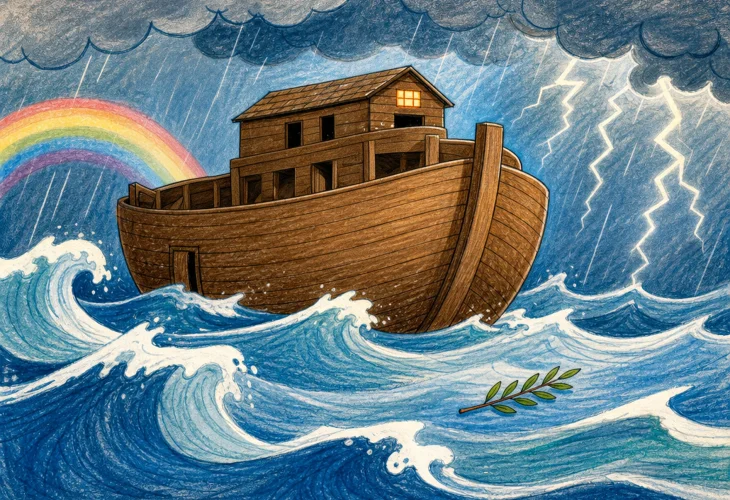
The story is told of a chassid who came to his rabbi brokenhearted, overwhelmed by financial difficulties and family troubles. He wept and asked, “Rabbi, why does Hashem bring such storms upon me? Why doesn’t He stop the rain and lighten my load?”
The rabbi smiled, straightened his clothes, and replied, “Hashem doesn’t always promise to stop the rain. Sometimes our job isn’t to wait for the skies to clear, but to know how to build an ark.”
When we go through a difficult period, our natural instinct is to wait for the pain to end. We resist reality, standing in the middle of the storm and trying with all our strength to stop the rain. But when we struggle against things beyond our control, we use up enormous amounts of emotional energy, leaving ourselves with little strength for the things we actually can change.
In Parashat Noach, Hashem does not tell Noach, “I will stop the storm so that you can live.” Instead, He says, “Come, you and all your household, into the ark” (Genesis 7:1). He commands Noach to enter the ark with his family just before the flood begins.
This is one of the profound lessons of Judaism. It does not promise magic solutions or instant relief from life's difficulties. Our problems may not disappear overnight, and our task is not always to change our external circumstances. Sometimes, it is to create a safe, stable space within ourselves, an inner “ark” that allows us to keep going even while the storm outside continues to rage.
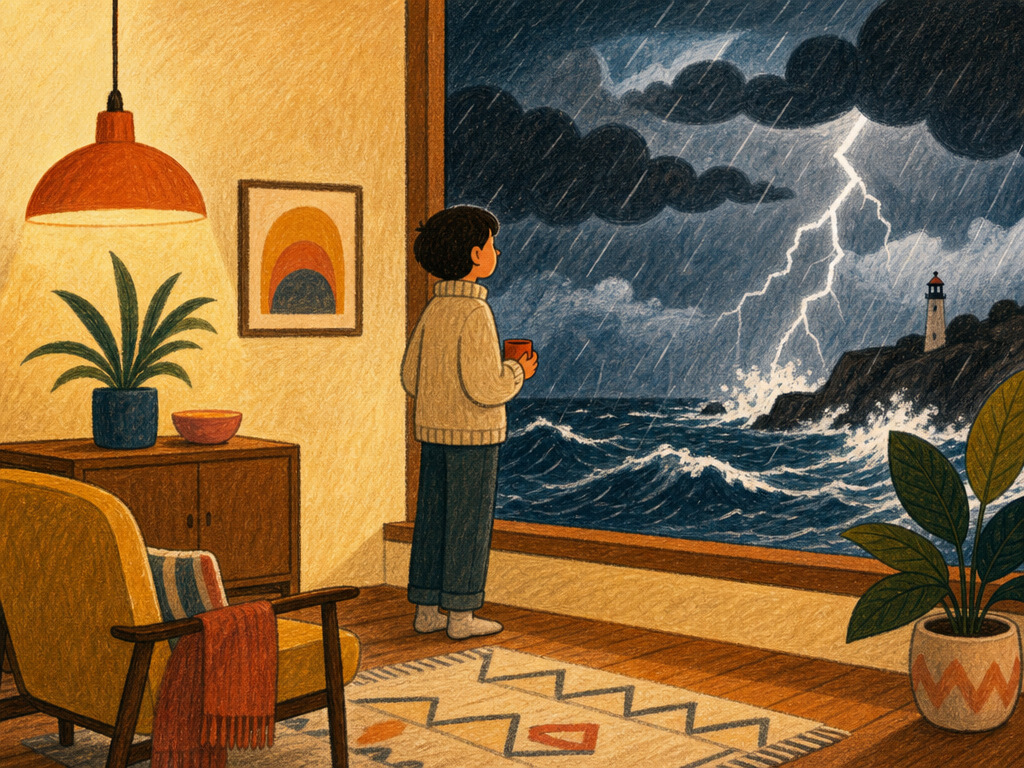
Why Do Our Minds Focus on Things We Cannot Control?
Sometimes, the flood is external. It may be the security situation, the political climate, the constant stream of news, uncertainty, health problems, or unexpected hardships that suddenly enter our lives.
But there is also an internal flood, made up of thoughts, anxieties, fears, worst-case scenarios, and worries that overwhelm us from within.
Both Jewish teachings and Western psychology recognize our tendency to become preoccupied with things beyond our control. This can create a paralyzing sense of helplessness. We spend precious time and energy trying to predict the future or control outcomes, while struggling to stay afloat in the present.
We cannot control the entire world or stop every flood. But we can build an ark, create a space of stability, and choose how to act in the areas where we do have influence.
How Can We Build an Emotional Ark During Difficult Times?
The first step is learning to distinguish between the flood and the ark.
The flood represents everything that is currently beyond our control: the results of a medical test, another person's decisions, the economy, or the fact that a crisis has already occurred.
The ark represents what we can control today: how we breathe, whom we choose to call, how much news we consume, whether we take care of our basic needs, and the words we say to ourselves and those around us.
Instead of shouting at the sky to stop the rain, we can close the windows and focus on the practical steps available to us right now.
The Three Decks of Noach's Ark: Three Steps Toward Emotional Resilience
Noach's ark was built with three decks. These three levels can also represent three stages of emotional resilience that we can apply during times of crisis.
This approach draws on the teachings of the Baal Shem Tov concerning hachna'ah (submission), havdalah (separation), and hamtakah (sweetening), as well as the emotional management method taught by Rabbi Yitzchak Fanger, FHT.

1. The First Deck: Hachna'ah – Stop Fighting Reality
The bottom deck of the ark teaches us to begin by accepting our circumstances as they are.
Submission is sometimes mistaken for weakness, but in this context, it means looking reality in the eye and acknowledging, “This is my flood right now. It exists, and that is a fact.”
Sometimes we spend weeks or months feeling angry that life has not unfolded as we planned. This approach encourages us to stop demanding that Hashem and our circumstances conform to our expectations.
It is also an opportunity to remember what our sages said about Noach, who was described as “righteous in his generations.”
The words “in his generations” can teach us an important lesson about self-compassion. Our abilities, strengths, and expectations naturally change depending on the circumstances we face. We should not measure ourselves during an overwhelming period against what we were able to accomplish on our very best days.
On a good day, when we feel energetic and optimistic, we may be capable of doing more, taking initiative, and achieving our goals. But on a difficult day, when our strength is limited, it may be enough to do only what is essential, without placing unnecessary pressure on ourselves.
2. The Second Deck: Havdalah – Knowing What Is Ours to Carry
The middle deck teaches us to distinguish between what is our responsibility and what is not.
Separation means recognizing that being unable to accomplish something does not diminish our worth. A difficult day, a moment of weakness, or a period of hardship does not define who we are.
At this stage, we learn to separate what we cannot change from what we can still do.
For example, we might tell ourselves, “I cannot change my medical test results or improve my numbers instantly, but I can stop searching for frightening answers online and make an appointment with my doctor.”
Or perhaps, “I cannot change the economy, the situation at my workplace, or my boss's decisions, but I can review this month's expenses and send my résumé to another employer.”
The goal is not to solve everything at once, but to recognize the small, meaningful actions that remain within our reach.
3. The Top Deck: Hamtakah – Finding Light Within the Difficulty
The Hebrew word tzohar, referring to the window Noach was instructed to make in the ark, contains the same Hebrew letters as tzarah, meaning trouble, arranged in a different order.
This connection offers a powerful lesson. Even when we cannot immediately remove a problem from our lives, we may be able to change how we relate to it and find a point of light within the difficulty.
This is the meaning of hamtakah, or sweetening.
It means identifying one small action we can take within the next 24 hours to strengthen and steady ourselves. That action might be a prayer, asking a loved one for help, or having a meaningful conversation with a friend.
We may not be able to remove the entire storm, but we can still create moments of comfort, connection, and hope.
Sometimes, One Olive Leaf Is Enough
After the destruction of the flood, Noach sends a dove out of the ark to see whether the waters have receded. The dove eventually returns with “a plucked olive leaf in her mouth.”
Just one small leaf. Yet that single leaf carries an extraordinary message: the world is beginning to recover.
Perhaps this is one of the most comforting lessons of Parashat Noach.
When we are in the middle of a crisis, we often wait for complete salvation: a perfect solution to every problem, the total disappearance of our difficulties, or an immediate return to normal life. Until that happens, we may feel that there is no reason for hope.
But the parashah teaches us that during difficult times, we do not need an entire forest. Sometimes, one olive leaf is enough to remind us that better days are possible.
We have small olive leaves in our own lives, too.
We wake up each morning. We breathe. We may have a supportive community, family, friends, or a source of livelihood.
Even when life is far from perfect, there are still reasons to be grateful. Perhaps a child is struggling at school, but that same child has many wonderful qualities. Perhaps money is tight, but we have managed to buy groceries for the next meal. Thank Hashem.
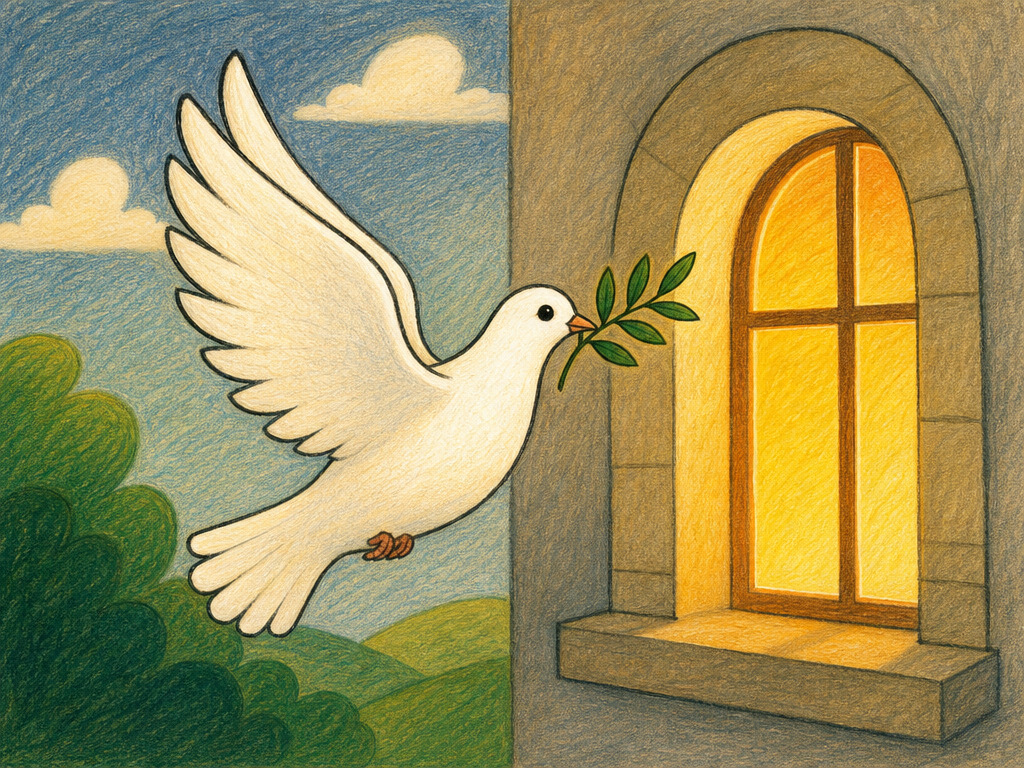
These small blessings are reminders that even amid difficulty, life continues and there is still goodness around us. Our world may already be beginning to rebuild.
Ultimately, Noach's story is not about controlling the weather. It is about the choices we make when life becomes overwhelming.
Instead of exhausting ourselves trying to stop the flood outside, the parashah invites us to step into the ark, accept the reality we face, recognize what remains within our control, and open a small window to let in the light.
And sometimes, all we need is the faith that the olive leaf is already on its way.

