

Facts You Didn't Know
Why Purple Was Once More Valuable Than Gold in the Ancient World
From the Mishkan to Roman royalty, explore the fascinating history of purple dye and the painstaking process that made it a symbol of wealth.
- Tehila Cohen
- | Updated
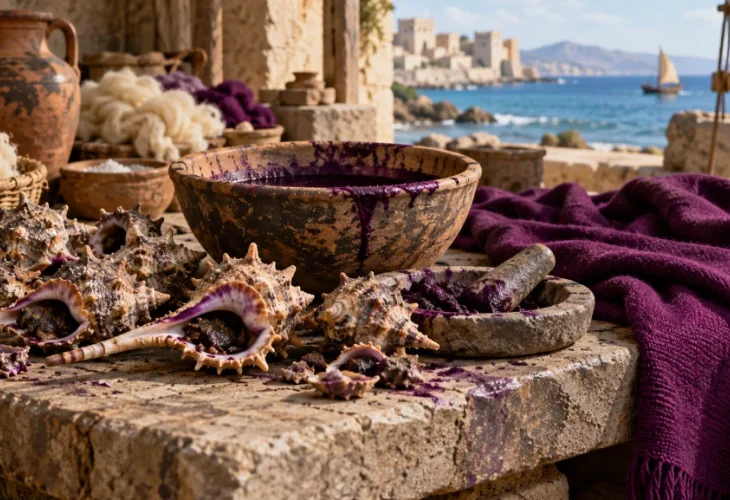
In ancient times, wearing purple was a symbol of wealth, status, and power. A robe dyed in this luxurious color was a clear sign of prestige, yet the source of the prized pigment was surprisingly humble: sea snails from the murex family, found in the Mediterranean Sea.
The snails themselves were not particularly rare. What made purple dye so valuable was the tiny amount of pigment that could be extracted from each one, along with the enormous amount of labor required to produce it.
Purple also held an important place in Jewish tradition. It is mentioned in the Book of Shemot (Exodus) as one of the materials used in the construction of the Mishkan (Tabernacle), alongside techelet (blue dye) and tola'at shani (scarlet dye). It was also used in the garments of the Kohen Gadol (High Priest), including the ephod and choshen (breastplate).
In the Book of Shoftim (Judges), purple garments worn by the kings of Midian are also mentioned, reflecting the color's association with royalty and splendor.
How Was Ancient Purple Dye Made?
Producing purple dye was a complicated and labor-intensive process. Workers first had to open or crack the snail's shell and extract a small gland from its body. This gland contained substances that could be transformed into dye through a series of chemical reactions.
Interestingly, the final color was not always the same. Different species of snails, variations in processing methods, and exposure to light and oxygen could all influence the resulting shade.
Depending on these factors, the dye could range from reddish purple to bluish violet. Skilled dye makers needed a thorough understanding of the raw materials and techniques to achieve the exact color they wanted.
Days of Work for a Single Piece of Fabric
Once the raw material had been extracted, it had to undergo a carefully controlled dyeing process to ensure that the color penetrated the fabric's fibers.
Modern researchers have successfully recreated ancient purple dye using similar materials and techniques, including fermentation and heating processes that can take several days.
After the fabric was dipped into the dye, it was exposed to the open air. Contact with oxygen allowed the color to develop and reach its final shade.
The complexity of the process, the expertise required, the dye's resistance to fading, and the extremely small amount produced from each snail all contributed to its extraordinary value.
During the Roman period, high-quality purple dye could be worth more than gold. Purple fabrics became closely associated with royalty, wealth, and political authority. In certain periods, laws even restricted who was permitted to wear particular shades of purple.
Archaeological Discoveries Reveal the Ancient Industry
Archaeologists have uncovered fascinating evidence of ancient purple dye production, including large piles of snail shells, tools used to crush them, and pottery vessels containing traces of pigment.
On the Greek island of Aegina, researchers identified a purple dye production site dating back to the 16th century BCE, offering evidence of just how far back this industry extends.
In Israel, archaeologists discovered fibers and textile fragments dyed with genuine purple at Timna, dating to approximately 1000 BCE. These findings provide a remarkable glimpse into the use of this valuable color in the ancient world.
Today, choosing a shade of purple is as simple as selecting a color from a chart or buying a piece of clothing. But thousands of years ago, producing that same color required days of painstaking work, specialized knowledge, and countless sea snails.
What we now consider an ordinary color was once one of the ancient world's most treasured luxuries.

