

Personal Stories
The Invisible Struggle: Rebuilding Life After a Traumatic Brain Injury
Three survivors share how brain injuries changed their memory, identity, careers, and relationships, and how rehabilitation, community, and resilience helped them build meaningful lives again
- Michal Arieli
- | Updated
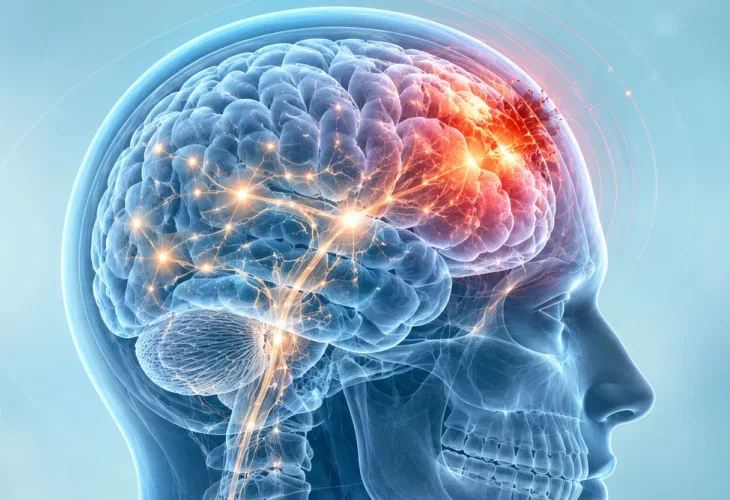
They may look perfectly ordinary from the outside. They may smile at you on the street, hold a pleasant conversation, or work beside you. Yet beneath that familiar exterior, many are fighting a battle no one can see.
Some were once at the height of their abilities: successful executives, ambitious young travelers, people building careers and planning their futures. Then, in a single moment, everything changed. A traumatic brain injury forced them to relearn basic skills, rebuild their identities, and discover how to live in a world that often cannot see what they are going through.
What does life really look like after a brain injury? We spoke with people whose lives were transformed in an instant, who were forced to begin again, and who found ways to move forward despite challenges that remain largely invisible to others.
Shachar Gesundheit: “Life Comes to a Halt”
Shachar Gesundheit is 33 and has always been someone who wanted to contribute to society. “My life was wonderful,” he says, quickly adding, “and it still is today. The difference is that now it comes with challenges.” Those challenges began during a trip to India, when the driver of the vehicle he was traveling in fell asleep at the wheel and Shachar plunged from a height of 70 meters. “From that moment, I remember nothing. My memory begins again only about six months later.”
Considering what doctors initially told his family, Shachar sees his recovery as nothing short of extraordinary. “The doctors told my parents that I would never breathe on my own again and that I would not be able to speak. They made it clear that the life I had before was over and that I would never return to who I had been. But reality turned out differently.” He underwent a long and difficult rehabilitation process after the brain injury. “It is hard to say that I fully returned to myself. There are challenges that will stay with me for the rest of my life. But show me someone who does not have challenges. Our job is to draw strength from them and grow.”
Rehabilitation also forced Shachar to confront what it actually means to live with a brain injury. “It was like being born again and having to learn the world from the beginning. For six months, I was simply creating memories and learning how to live.” What made the experience even more difficult was that, outwardly, he looked completely normal. “People around me did not understand what was happening because I looked exactly as I had before. But if someone asked me who had visited me that day, for example, I would make things up. It took a very long time before I began to return to myself. And even today, I have not truly gone back to being the person I was.”
Despite the injury, Shachar completed a bachelor’s degree and began speaking to people dealing with post-trauma, sharing his story in the hope of strengthening others. “When I saw how much strength people received from hearing about my experience, I founded the ‘Or Community.’ The goal is to build a community for people who have experienced head injuries.” He notes that brain injury covers an extremely broad spectrum. “In Israel there are more than 150,000 people with head injuries, and the number is continuing to rise following the Swords of Iron War. There is also an older population dealing with the effects of strokes. We try to provide support for everyone.”
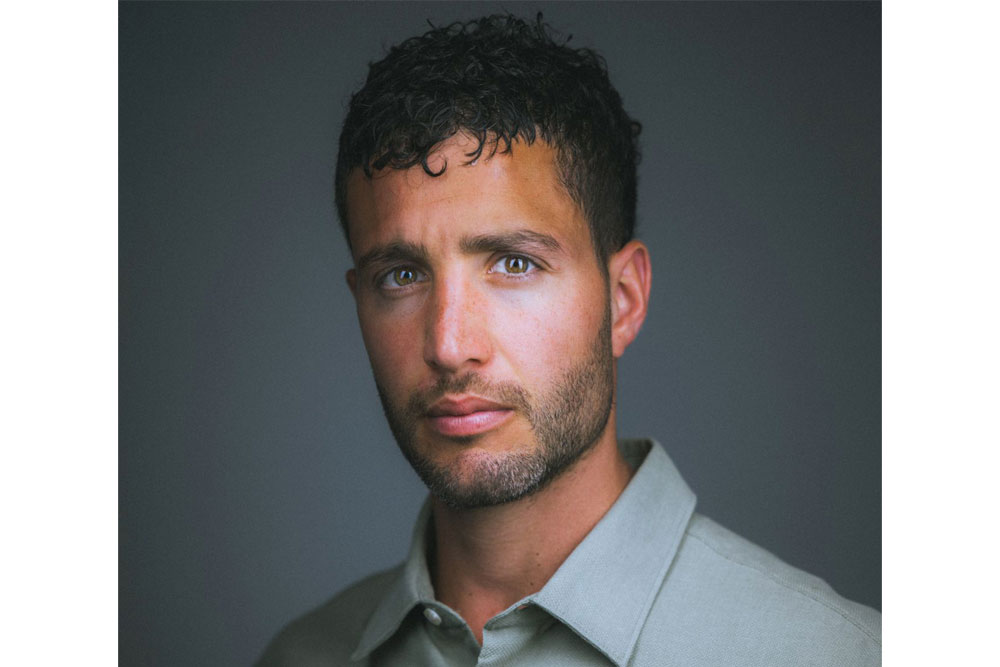 On the outside they look like ordinary people: Shachar Gasundheit (Photo: Amit Lavee)
Recently, the community launched what Shachar describes as Israel’s first mentoring program of its kind, pairing people who have already lived through brain injury with those who have just completed formal rehabilitation. “That support is especially important during the first stage after rehabilitation ends.”
Can people with brain injuries return to full lives? “The answer is complicated. Personally, I believe that today I live a full and good life because I have learned how to work around my difficulties and cope with them. But the number of people who truly manage to return to that kind of life is low. My goal is to give them tools that can help them manage everyday life successfully.”
Gav Peled: “They Told My Parents I Was Going to Die”
Gav Peled was traveling alone in California when he set out on a well-known hiking trail. After leaving the marked path, he fell from a 15-meter cliff. “I fell face-first with a 30-kilogram backpack on my back,” he recalls. “I do not remember the fall itself, but I remember my life before it very clearly, including the minutes leading up to the accident.” The fall caused a severe brain injury, along with an open fracture in one arm, a fractured left eye socket, and additional injuries. Yet remarkably, Gav initially remained conscious. “I managed to take the backpack off and sit down at the edge of the lake.”
Then came what he describes as the miracle of his rescue. A boat happened to be crossing the lake at that exact time, carrying hikers who had met him earlier that morning. Because he had told them where he planned to hike, they looked for him. “They expected to see me walking. Instead, they saw me sitting there.” From a distance, they could not understand what they were looking at. They called his name several times, but when he did not respond, they asked the captain to steer toward him. “I had been wearing a gray shirt, but they later said it looked like I was wearing a red sweater because there was so much blood.” The captain dropped off the hikers who knew him so they could begin helping him, while a helicopter was summoned to evacuate him.
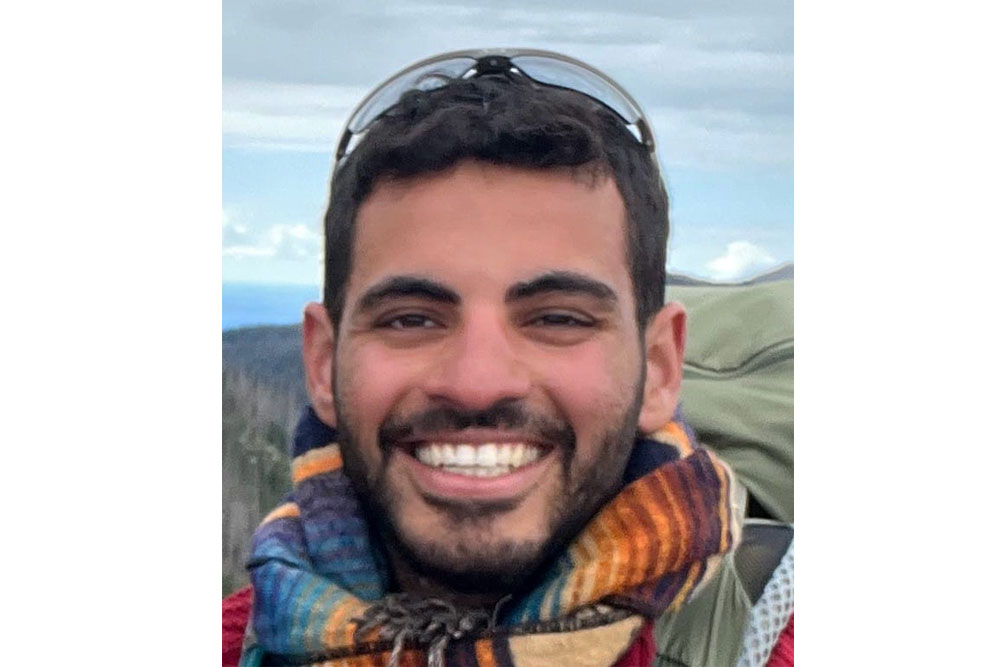 Gav Peled
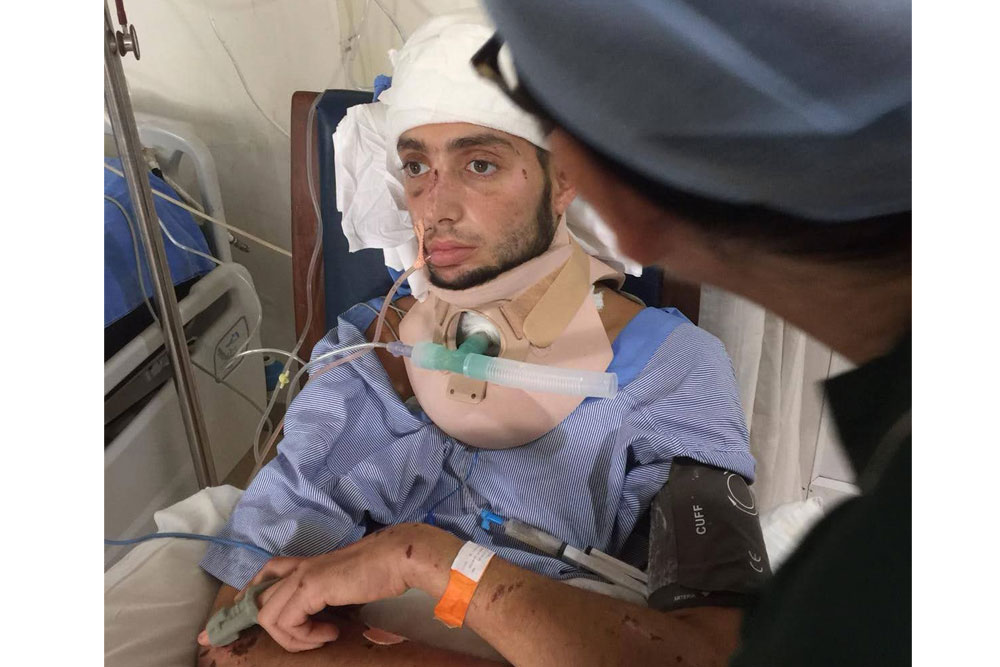
Gav lost consciousness in the helicopter and fell into a coma. He was sedated and ventilated for two weeks. “Right after I was admitted, the medical team contacted the Israeli consulate. They called my mother and told her I had suffered multiple traumatic injuries and was expected to die within hours. They told her there was no point coming to the United States because by the time she bought a ticket, I would already be on a plane back to Israel.” His parents decided to fly anyway. “That turned out to be the right decision. But my condition was extremely serious. For 12 days, they did not operate on me because they were convinced I was going to die. From their perspective, there was no point investing the time and effort.” Against all expectations, Gav survived.
A month and a half later, he was transferred to the emergency department of a major hospital in Israel. “They kept me there overnight and determined that I needed multidisciplinary treatment. At the end of the night, the head of the emergency department told my parents that the only available place was an internal medicine ward. Because of the risk of infection there, she said it would be better not to admit me. So I was sent home.”
The reality of that discharge was almost impossible to imagine. “My jaws were wired shut. I was wearing a helmet because one-third of my skull was missing. I was in a wheelchair, being fed through a tube into my stomach, and my right arm was completely immobilized. That was how I went home.” Only a week and a half later, Gav moved to Beersheba and began studying at university. “My mother, a true lioness, moved into the student dormitory with me. She took care of me and nursed me.”
He struggled through an entire semester but failed every exam. “It was the first time in my life I had ever failed. Until then, I had never failed at anything.” Eventually, a CT scan revealed that he had developed a delayed traumatic reaction in the brain, with fluid accumulating and affecting him both cognitively and physically. “I stopped walking. I deteriorated in several areas at once.”
For Gav, the emotional impact was profound. “I was 25 years old, really just a kid, and I had essentially lost my whole life. Until then, I had been considered full of promise. It was clear that I could study anything I wanted. Then, in one moment, everything changed.” The injury had affected his frontal lobe, the area associated with many aspects of personality and executive function. “My entire life changed.”
Because his condition was so severe, community rehabilitation was not an option, and Gav was admitted to Loewenstein Rehabilitation Medical Center. “I was treated there for a month, but nothing changed.” His parents began going from one neurosurgeon to another, looking for someone who could help. “Eventually, they found a neurosurgeon who agreed to operate. He implanted a prosthetic piece in the area that was missing, and it completely transformed my life.”
The improvement was almost immediate. “The next day, I was able to sit upright. Two days later, I could walk. A month later, I was running again.” Not long afterward, Gav applied to three medical schools and two physical therapy programs. He was not accepted to medical school, but he was accepted to study physical therapy. “I devoted myself completely to it and finished successfully.”
He now dreams of eventually working in adult rehabilitation at Loewenstein. “From everything I have experienced, I believe I can be an empathetic and patient professional. I can contain other people’s suffering in a way that many therapists may find more difficult. Only someone who has gone through these experiences truly understands what people are facing during the hardest moments of their lives.”
The injury still affects him today, even though most people would never know it. “If you met me on the street, there is no chance you would realize that anything had happened to me. I look fine and function well. I even tutor other students in some of my university courses.” That invisibility can itself become a burden. “Because the signs are not obvious, people around me sometimes forget. They become impatient if I do not understand something, ask the same question several times, become short-tempered, struggle to concentrate, or become overwhelmed by noise and need quiet.”
For that reason, Gav has begun working to raise awareness within medical institutions. “I am developing a training program for staff at leading medical centers to help them understand what people with brain injuries experience after discharge. It is a subject that is barely discussed, and it is extremely difficult.”
Shachaf Eliad: “Nothing Prepares You for This”
Shachaf Eliad’s injury began with something that sounds almost impossibly ordinary. “I was walking down the street when I tripped and fell backward onto a concrete bench,” he says. “The impact was severe. My skull fractured, I suffered a brain hemorrhage, and I died. They resuscitated me, and I woke up in intensive care. Five days later, I was discharged from the hospital.”
At first, everything appeared normal. “The tests looked fine, and in everyday life everything seemed fine too. I tried to return to my usual routine.” But over the following months, problems began to appear. “For about six months, I kept encountering different failures. Then physical problems began developing, both functional and motor, and no one understood where they were coming from.”
For two years, Shachaf went from doctor to doctor. “Everyone attributed it to psychological causes.” Eventually, the deterioration became impossible to ignore. “At a certain point, I could no longer stand, speak, or function. That was when they realized it could not all be explained psychologically.” New scans revealed that he had been misdiagnosed and had not received the correct treatment. “For the first time, I finally began rehabilitation.”
By then, however, much of the damage could no longer be easily reversed. “Today I am 51 and permanently use a wheelchair. I spent my life owning a company and serving as a CEO, yet afterward I could not even get a job behind a cash register because of how the wheelchair made me look.” The transition was devastating. “Nothing prepared me for having my life change in a single moment. I felt that everything had been taken from me.”
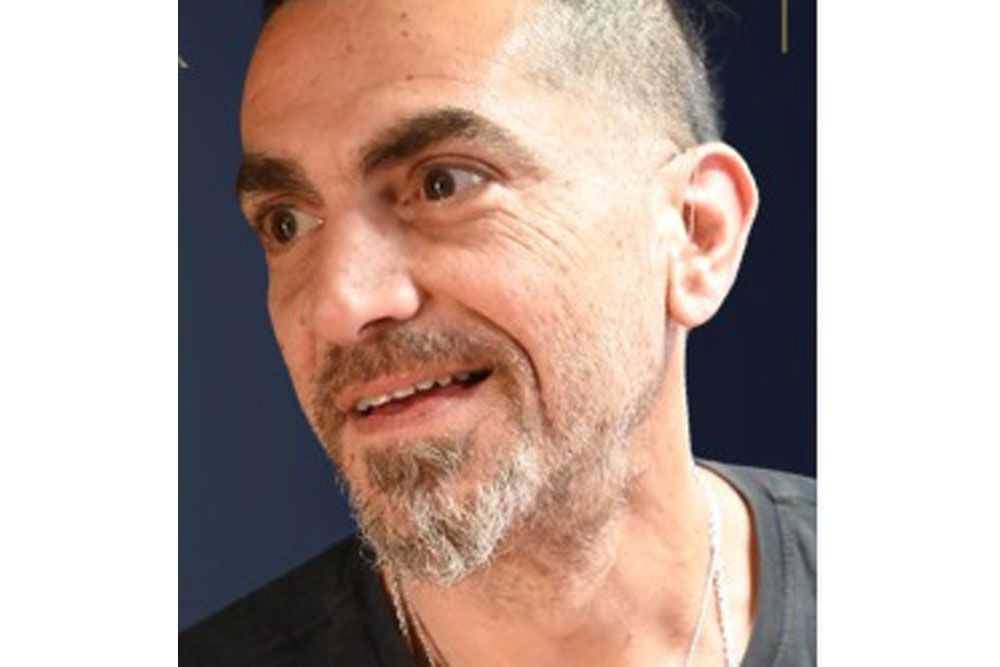 Shahaf Eliad: "For two years I went from doctor to doctor, and everyone blamed it on the soul"
Shachaf says his inner optimism helped him survive, as did finding the “Or Community.” “I came across it completely by chance while searching online. Over time, I became one of its leaders. I feel that this is a place where I can contribute, grow, and give something of myself.”
Still, he says one of the hardest parts of brain injury is that so much of it remains invisible. “There are many illnesses that affect people in ways others can immediately see. That may be very painful, but at least those people often receive recognition, support, and consideration. With brain injuries, it can be completely different. People may look like everyone else and function quite well. Even in a deep conversation, you may not notice anything unusual.”
The impairment may lie in interpretation, judgment, processing, or the gap between understanding something and being able to act on it. “Sometimes I feel that the wheelchair actually saves me from having an invisible disability. Other than the wheelchair, everything looks normal from the outside. But the truth is that life is very different.”
For Shachaf, this is why community matters so deeply. “Being among people who understand what you are going through keeps you from becoming lost in the social system.” He says that sometimes people who knew them before the injury struggle to remain close. “The pain is difficult to hear and difficult to witness, especially if they remember us as highly capable people. They do not know how to help, so sometimes they distance themselves.”
He does not blame them. “But when I am surrounded by people who understand me, it changes everything. I am in a place where no one judges me, criticizes me, or blames me. I am among people who truly understand.”
From that sense of belonging, he says, remarkable things can happen. “I cannot say that people return completely to who they were before. There are still the effects of medication, psychiatric treatment, and the daily struggle.” Some people may function normally one day and wake up the next morning unable to remember even basic details about themselves. “These are people who were at the height of their abilities before the injury.”
For Shachaf, that is the heart of the challenge. “We have to reinvent ourselves every day. Not only in relation to society, but also in relation to ourselves. We have to learn to contain, accept, and recognize our difficulties and challenges.” And all the while, the outside world may see nothing at all. “People meet us on the street and have no idea there is a problem because everything looks so normal. The challenge is to remain positive and keep looking forward, every single day. I hope we succeed.”

