

Faith (Emunah)
Rabbi Distributes 1,500 Pairs of Tefillin as Jewish Faith Surges Amid War
From wounded IDF soldiers to secular Jews around the world, Rabbi Eyal Amichai shares remarkable stories of spiritual awakening, renewed Jewish identity, and the transformative power of tefillin
- Michal Arieli
- | Updated
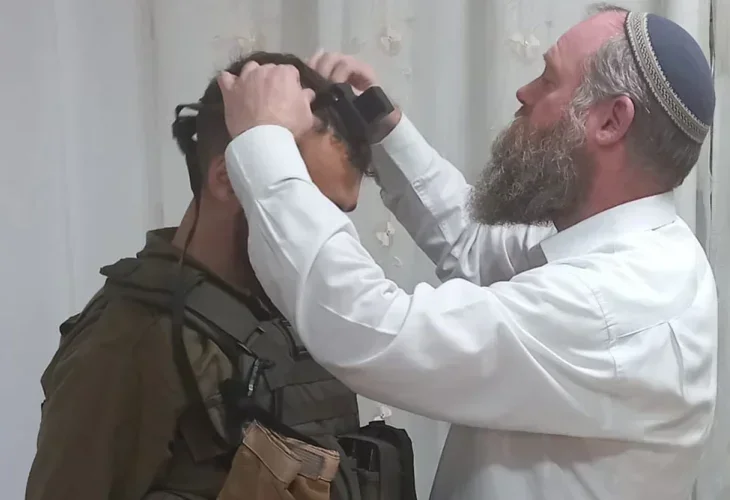
What do a man in his 90s, a soldier entering Gaza, a young kibbutz resident from northern Israel, and a Bar Mitzvah boy have in common? All of them have received tefillin in recent years through Rabbi Eyal Amichai.
Since the outbreak of the war, Rabbi Amichai has turned the distribution of tefillin into his life's mission. Even he is astonished by the constant stream of requests pouring in from across Israel and around the world. "It's an endless stream. People keep asking for more and more tefillin. It's unbelievable," he says emotionally.
When he first embarked on this mission, he could never have imagined the depths of pain, extraordinary expressions of faith, and unexpected encounters that awaited him along the way. Today, he has distributed no fewer than 1,500 pairs of tefillin, each with its own story.
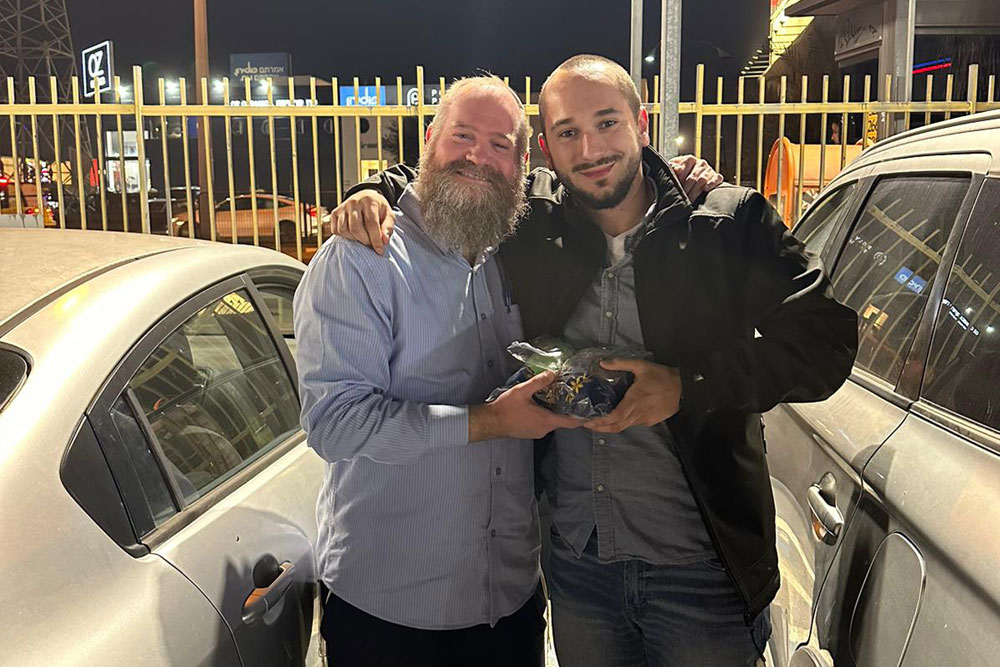
"We Want to Put On Tefillin"
Rabbi Amichai's story began approximately 25 years ago, when he was a young married yeshiva student who devoted his spare time to teaching Torah classes to Jews seeking to strengthen their connection to Judaism.
"On one occasion, I gave a Torah class at a well-known pub in Jerusalem," he recalls. "The young men who attended were genuinely inspired. They approached me afterward and said, 'Rabbi, we want to start putting on tefillin.' As a young kollel student, I had very little money, and I wondered how I could possibly obtain tefillin for them."
As Rabbi Amichai considered different possibilities, a Jewish scribe approached him with an idea that would eventually transform his life. "He explained that when older men purchased new tefillin, they sometimes left their old pairs with him. These tefillin were often in excellent condition and of a very high halachic standard, but people generally preferred buying new ones. He offered to inspect, repair, and refurbish these tefillin for me at cost, charging only for the actual expenses. That way, I could distribute them to the young men attending my classes. And that's how it all began."
Over the next 25 years, Rabbi Amichai continued collecting, restoring, and distributing tefillin alongside his responsibilities as a Torah lecturer at a yeshiva. For most of that time, however, it remained a secondary undertaking. Everything changed with the outbreak of the war, when requests suddenly began pouring in from every direction. Mothers and wives of soldiers reached out, along with individuals from kibbutzim and communities where religious observance was uncommon.
"I realized that something extraordinary was happening," Rabbi Amichai explains. "There were so many Jews experiencing a newfound desire to connect to this mitzvah, and someone needed to make tefillin available to them. I decided to set aside my other activities and devote all my energy to this project."
Who are the people receiving these tefillin?
"The overwhelming majority are Jews who are not religiously observant. Many have never put on tefillin before, and some come from strongly secular backgrounds, even those who have been actively opposed to religion. Baruch Hashem, they reach a point where they want to strengthen their Jewish identity, draw closer to Hashem, and express their faith through something tangible rather than keeping it on a purely spiritual level."
Rabbi Amichai believes that the mitzvah of tefillin is particularly suited to this spiritual awakening. "It is one of three mitzvot described in the Torah as a 'covenant' and a 'sign,' alongside Shabbat and circumcision. These mitzvot express the profound bond between a Jew and Hashem. At the same time, putting on tefillin is a practical and accessible mitzvah. It takes only a few minutes to put them on and recite the Shema."
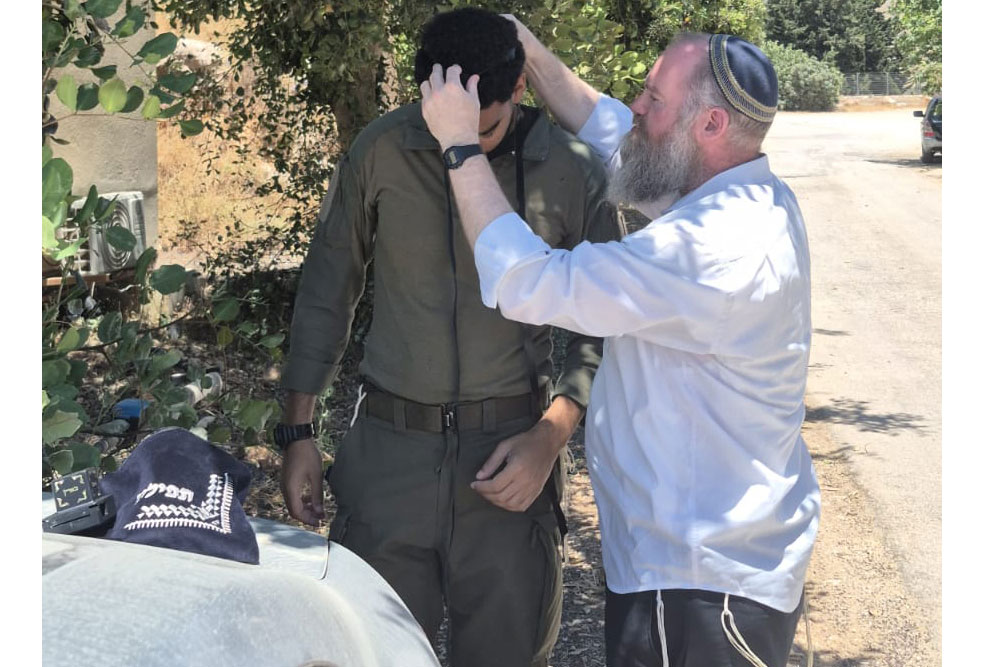
Who donates the tefillin?
"I advertise the project in religious and Haredi neighborhoods throughout Israel, primarily through street posters. It's important for me to emphasize that the Haredi community is our main source of donated tefillin. In fact, people from this community frequently contact me on their own initiative and specifically request that their donated tefillin be given to a soldier, in the hope that the mitzvah will provide him with spiritual protection. I find that incredibly moving."
The initiative has also received widespread rabbinic support and blessings from prominent rabbis across the spectrum, including Rabbi Yitzchak Zilberstein, Rabbi Shlomo Amar, Rabbi David Yosef, and many others who have expressed admiration for the project.
Rabbi Amichai emphasizes that everyone benefits from the initiative. "Most people have no use for their old tefillin, which often sit untouched in closets for years. Over the past three years, thousands of pairs have been donated to us. I've collected them, invested whatever was necessary to restore them, and brought them up to the highest standards of halachic excellence. I then personally pass each pair on to a Jew who has never put on tefillin before."
The donors themselves are often deeply moved by the opportunity to give their old tefillin a new purpose. "I frequently hear stories about a grandfather who lovingly preserved his tefillin for years, hoping that his descendants would one day use them. But when the time came, they preferred buying new pairs, leaving his tefillin unused. Now, that grandfather is surely rejoicing in Gan Eden, seeing that his tefillin have been brought back to life. His family is happy, and so is the Jew who receives a beautifully restored pair of tefillin."
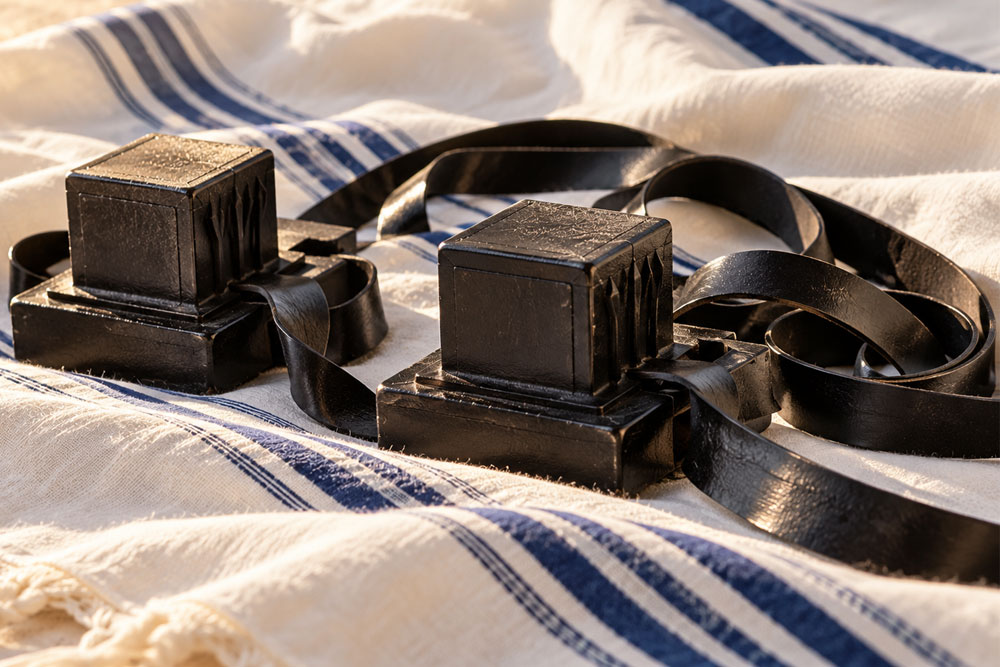
An Unprecedented Spiritual Awakening
Requests for tefillin come from every corner of Israel, from Kibbutz Kfar Blum and Kiryat Shmona in the north all the way to Eilat in the south. Rabbi Amichai has also sent tefillin to destinations around the world, including Los Angeles, Belarus, Ukraine, Russia, Romania, Argentina, Croatia, and Germany.
Despite the overwhelming demand, Rabbi Amichai maintains one firm condition: every recipient must commit to putting on tefillin daily. "I personally speak with every individual who expresses interest," he explains. "If someone honestly tells me that he isn't ready to make that commitment, I respect his decision and tell him to contact me again when he feels ready. Sometimes he comes back, and sometimes he doesn't. But that's my condition."
One particularly emotional encounter remains etched in his memory. "A mother contacted me about her son, an officer in the Givati reconnaissance unit, who had been critically wounded in Gaza. He had been sedated and placed on a ventilator for several days. When he finally regained consciousness, the very first thing he asked his mother was, 'I want you to get me tefillin.'"
Although the soldier had been severely injured, Rabbi Amichai explained to his mother that he still needed to know whether her son was prepared to commit to putting on tefillin regularly. The mother promised to try speaking with him, although she was uncertain whether he would be able to respond in his condition.
The following day, she called back, overcome with emotion. "Listen," she told Rabbi Amichai, "my son says he's already been putting on tefillin!"
She went on to explain that when her son's unit entered Gaza, all the soldiers in his company had collectively resolved to put on tefillin every day. Until his injury, he had been borrowing tefillin from his fellow soldiers. Now, he wanted a pair of his own so he could continue fulfilling the mitzvah regularly.
Do you feel that this spiritual awakening is directly connected to the war?
"Without a doubt," Rabbi Amichai responds. "The people who approach me make that connection themselves. Some tell me explicitly, 'They wanted to kill us, and succeeded in killing us, simply because we are Jews. That's precisely why we want to take on the mitzvah of tefillin, to strengthen our Jewish identity.'"
He recalls a man from France whose journey toward Jewish observance began even before the war. During the period of intense division within Israeli society, the man would sit in his home in France watching the news and wondering why there was so much hatred between different groups of Jews. He began questioning why some people felt such hostility toward religious Jews.
When the war broke out, his question took on a new dimension. Instead of asking why religious Jews were hated, he began asking why Jews as a whole were the targets of such hatred. This led him to a deeper realization about his own identity. "Yes, I am Jewish, and that makes me special," he concluded.
The man eventually developed a relationship with a Chabad emissary in France and decided that he wanted to put on tefillin every day. His search for a pair of tefillin ultimately brought him to Rabbi Amichai.
A Tefillin Stand in Memory of a Son Murdered at Nova
Another deeply moving encounter involved a family from Tel Aviv whose son had been murdered at the Nova music festival. Although their son had not been religiously observant, there was one mitzvah he had always been particularly careful to fulfill: putting on tefillin.
"They even showed me photographs of him sitting on his motorcycle in remote corners of the world, putting on tefillin," Rabbi Amichai recalls. The family wanted to establish a tefillin stand in their son's memory and specifically requested that it be placed in the school he had attended.
Rabbi Amichai was willing to help, but only on the condition that the school administration approved the initiative. "I told them, 'I'd be happy to help, but I'm not interested in getting involved in disputes. I'll do it only if the school principal gives his approval.'"
The family approached the principal, who subsequently contacted Rabbi Amichai and gave his consent. During their conversation, Rabbi Amichai explained the meaning and sanctity of tefillin, and the principal promised to respect their religious significance, despite not being a believer or putting on tefillin himself.
Once the stand was established, the principal approached Rabbi Amichai in astonishment. "I had no idea," he admitted, "that so many students at this school would be interested in putting on tefillin."
"He Changed His Entire Family Through Tefillin"
Rabbi Amichai concludes with another story that illustrates how a single pair of tefillin can transform not only one person's life but an entire family.
"One day, I received a phone call from a very anxious mother," he relates. "She explained that her son had recently begun taking an interest in Judaism. He was bringing Jewish concepts into their home and had expressed a desire to start putting on tefillin. 'I'm calling to request tefillin for him,' she said, before quickly adding, 'But of course, he's not going to become religious!'"
Rabbi Amichai was happy to help the young man obtain tefillin. Two years later, he happened to speak with a rabbi who taught at a religious study program for teenage boys. During their conversation, the rabbi mentioned that he was mentoring the very same young man.
According to the rabbi, the boy had become the most religiously committed student in the entire program and was now fully observant of Shabbat and kashrut. Yet the most remarkable part of the story was the transformation that had taken place within his family.
The same relatives who had initially been strongly opposed to his newfound religious commitment had themselves begun growing closer to Judaism. They were now joining him in his home for Shabbat meals, embracing the very traditions they had once resisted.
"Just think about the transformation this young boy brought into his home, all because of tefillin!" Rabbi Amichai says with emotion.
For Rabbi Amichai, this story is far from an isolated occurrence. It is one of countless experiences he has witnessed throughout his years of distributing tefillin, many of which he recounts in his book, Kesher Shel Tefillin (The Bond of Tefillin).
"I have the privilege of witnessing firsthand the extraordinary power of tefillin," he reflects. "This mitzvah awakens something deep within the person who performs it, and its influence often extends far beyond the individual, touching everyone around him. That is the very essence of the bond created through tefillin: the connection between a Jew and his Creator, and the connection that unites all of us as the Jewish people."

