

Raising Children
How to Make a Storybook With Your Kids: A Fun and Creative Family Activity
Turn your child's imagination into a real book with this easy, step-by-step activity. Discover how to create characters, write stories, add illustrations, and encourage creativity while enjoying quality family time.
- Tehila Cohen
- | Updated
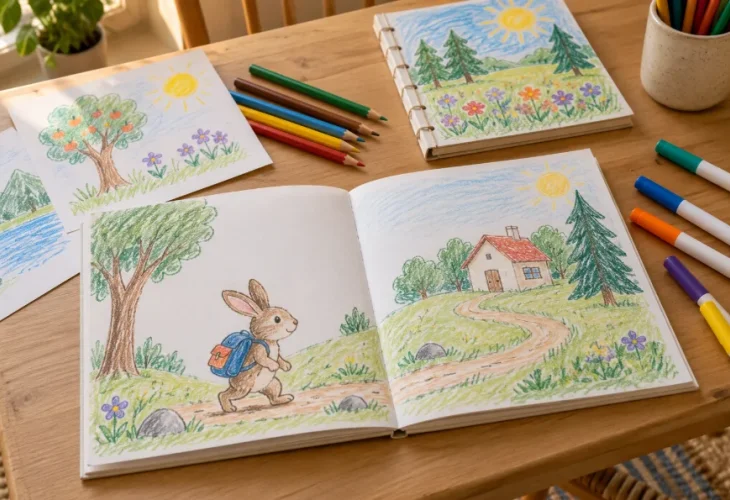
A little boy who's afraid of the dark, a girl who helps her mother, or a group of friends who refuse to give up even when things get difficult. When children create their own storybooks, they get to decide what happens next.
This fun and imaginative family activity begins with everyone sitting together to invent a story, then bringing it to life through writing and colorful illustrations. Along the way, children can explore their creativity, develop storytelling skills, and enjoy the excitement of turning their ideas into a real book.
Best of all, there's no need for special equipment. All you need is a few sheets of paper, pencils, and coloring supplies. Fold several sheets in half to create a booklet, or work on separate pages and have an adult help bind them together afterward. It's best to start with a short story of four to six pages so that the project remains manageable, enjoyable, and easy to complete.
Start With a Story Idea and a Main Character
The first step is helping your children come up with a central idea for their story. Rather than asking the broad question, "What would you like to write about?" guide their imagination with three simple questions: Who is the main character? What does the character want? And what is preventing them from getting it?
For example, imagine a rabbit who wants to bake a cake but discovers that all the carrots have mysteriously disappeared. From there, the possibilities are endless. Where will the rabbit search for the missing carrots? Who will it meet along the way? And perhaps, after an unexpected adventure, it will decide to bake an entirely different kind of cake!
If your children have trouble choosing an idea, turn the brainstorming process into a game. Write the names of different characters, places, and objects on separate slips of paper, then have them randomly select one from each category. The unusual combinations can inspire all kinds of entertaining stories.
Give Every Page Its Own Part of the Story
Before your children begin drawing, help them decide what will happen on each page. Start by introducing the main character, followed by the discovery of a problem, an attempt to solve it, and finally, the story's conclusion.
Keep the writing simple, with just one or two sentences per page, leaving plenty of space for illustrations. This makes the activity more approachable for younger children and allows their drawings to become an important part of the storytelling.
Children who haven't yet learned to write can dictate their stories to an adult, tell the story entirely through pictures, or add short speech bubbles to their illustrations. If your child prefers drawing to writing, encourage them to begin with the pictures and develop the story around them.
There is no single correct way to create a storybook. The important thing is to let each child express their imagination in the way that feels most natural and enjoyable.
Let the Story Belong to Your Children
As tempting as it may be to guide the story toward a logical or predictable ending, try to resist the urge to take over. When your children ask for help, respond with questions that encourage them to develop their own ideas.
For example, you might ask, "What happened when he opened the door?" or "How did she manage to find her way home?"
Let your children decide what happens next, even if their answers involve a flying elephant, a talking tree, or an especially unusual ending. The freedom to make creative decisions is part of what makes this activity so rewarding.
Spelling corrections can wait until the story is finished. If necessary, suggest changes gently rather than interrupting the creative process every time a mistake appears. The goal is to encourage children to enjoy storytelling and feel confident expressing their ideas.
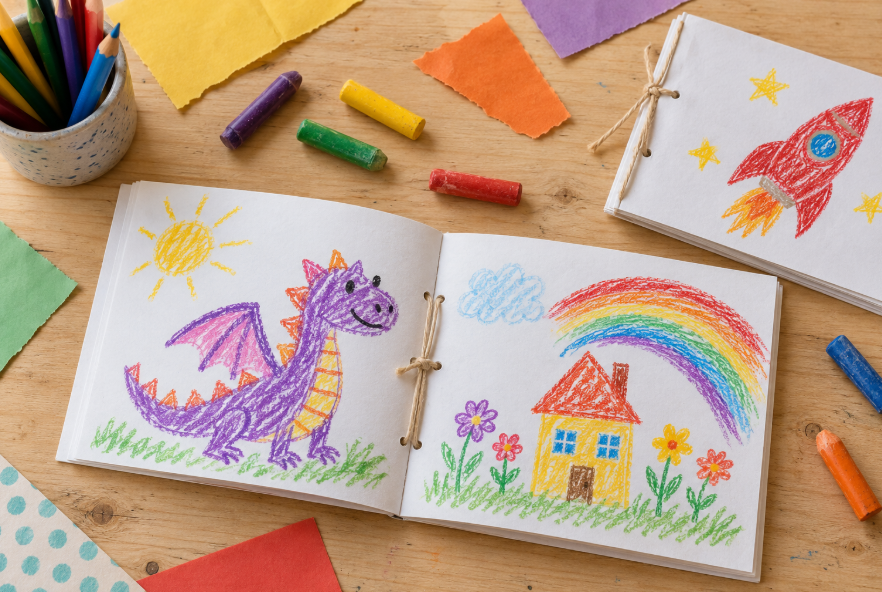
The Big Moment: Celebrate Your Child's Book Launch
Once the story and illustrations are complete, it's time to turn the project into a finished book. Help your children design a colorful cover, choose an exciting title, and proudly add the names of the authors and illustrators.
For an extra personal touch, consider including a dedication page or even an "About the Author" section featuring your child's photograph and a sentence they choose to share about themselves.
Then comes the most exciting part: the official book launch! Gather the family for a special reading session, allowing the young authors to present their creations. Give the finished book a place of honor on the bookshelf alongside the family's other books.
If the main character's adventure ends with an unanswered question or an unfinished mission, that's even better. You already have the perfect inspiration for the next book!

