

Wonders of Creation
How Do Plants Know What Time It Is? Scientists Explain
Did you know plants have internal clocks? Discover how they know when to wake up, flower, release fragrance, and prepare for night, even without sunlight.
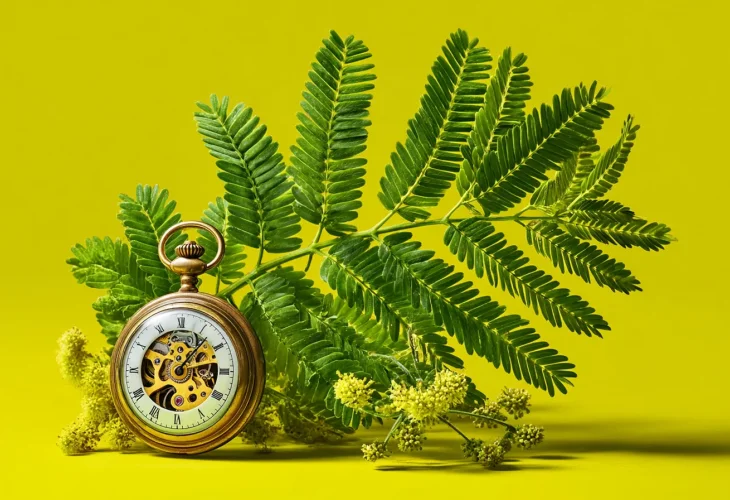
Twice a year, millions of Americans adjust their clocks for daylight saving time, often struggling to adapt to the change. Waking up an hour earlier or later can disrupt our routines, sleep patterns, and energy levels.
But what about plants? They don't have watches, alarms, or calendars, yet they somehow know when to open their leaves, prepare for sunrise, release their fragrance, and even begin flowering.
As it turns out, plants have their own sophisticated internal clocks, allowing them to anticipate changes in their environment rather than simply react to them.
And scientists have discovered that these biological clocks are far more complex than we might imagine.
The Experiment That Revealed Plants Can Tell Time
For centuries, people observed that certain plants open their leaves during the day and close them at night. The explanation seemed obvious: sunlight caused the leaves to open, while darkness made them close.
But in 1729, French astronomer Jean-Jacques d'Ortous de Mairan conducted an experiment that challenged this assumption.
He placed a sensitive mimosa plant, whose leaves open during the day and fold at night, in complete darkness.
Surprisingly, the leaves continued opening and closing according to their usual daily rhythm, even without sunlight.
The plant appeared to be following an internal schedule.
More than a century later, in 1832, Swiss botanist Augustin de Candolle investigated the phenomenon under constant light. He discovered that the plant's leaf movements followed a cycle of approximately 22 hours.
These early experiments provided compelling evidence that plants possess an internal timekeeping mechanism rather than simply responding to changes in light.
A Biological Clock in Almost Every Cell
Today, scientists know that plants have an intricate biological timing system known as a circadian rhythm.
This internal cycle lasts approximately 24 hours and continues operating even when environmental conditions remain constant.
Remarkably, nearly every cell in a plant has its own molecular clock. These individual systems coordinate their activity across different tissues and organs, helping the entire plant function according to a daily schedule.
At the heart of this system is a complex network of genes and proteins that repeatedly activate and suppress one another, creating predictable cycles of biological activity.
Sunlight and temperature help synchronize these internal rhythms with the outside world.
The result is a plant that can anticipate sunrise, changing temperatures, sunset, and nighttime conditions.
Instead of waiting for sunlight to appear before preparing for photosynthesis, for example, a plant can begin activating relevant biological processes before dawn.
Throughout the day, its metabolism, growth, and water regulation adjust according to the time and environmental conditions. As evening approaches, the plant begins shifting toward the processes needed during darkness.
How Plants Make Their Food Last Until Morning
One of the most remarkable functions of a plant's internal clock involves managing its energy reserves.
During daylight hours, plants use photosynthesis to produce sugars. Some of this energy is used immediately, while some is stored as starch for later.
At night, when photosynthesis stops, the plant must rely on those stored reserves.
But there's a problem: if the plant uses up its starch too quickly, it could run out of energy before sunrise.
Its biological clock helps solve this problem by regulating how quickly the starch is broken down throughout the night.
Studies have shown that plants can adjust the rate at which they consume their stored energy according to the expected length of the dark period.
In other words, the plant doesn't simply use its reserves at random. Its internal timing system helps ensure that enough energy remains until morning.
The clock also helps plants manage other limited resources, including water.
Tiny openings on the surfaces of leaves, called stomata, allow carbon dioxide to enter for photosynthesis. However, water also escapes through these openings.
Opening the stomata can support photosynthesis, but it also increases water loss.
The biological clock helps regulate this delicate balance, coordinating stomatal activity with light, temperature, and environmental conditions.
Why Some Plants Fold Their Leaves at Night
The internal clock also influences how plants move and grow.
In certain species, stems grow faster at particular times of day. Hormonal signals change according to the daily rhythm, allowing plants to adjust their growth patterns.
Some plants also display visible movements that follow their internal clocks.
The sensitive mimosa, for example, folds its leaves in the evening and opens them again in the morning.
These movements are produced by changes in water pressure within specialized structures at the base of the leaves, known as pulvini.
Because these movements are visible to the naked eye, the mimosa became an important subject in the history of biological clock research.
What scientists once observed simply by placing a plant in a dark room can now be studied at the molecular level.
In Arabidopsis thaliana, a small flowering plant widely used in biological research, scientists have identified complex networks of genes that regulate the circadian clock.
These genes activate and suppress one another in repeating cycles, while additional mechanisms control RNA activity, protein production, and protein stability.
Together, they create an extraordinarily precise biological timing system.
How Do Plants Know When to Flower?
A plant's internal clock doesn't just help it distinguish day from night. It also plays an important role in recognizing seasonal changes.
Throughout the year, the length of daylight gradually increases and decreases. Plants use this information to help determine when conditions are suitable for flowering.
Their circadian clocks work alongside systems that detect day length, allowing them to coordinate flowering with the seasons.
In Arabidopsis, for example, a gene called CONSTANS plays an important role in this process.
Under long-day conditions, the timing of its activity can coincide with daylight, helping activate another gene called FT, which promotes flowering.
This coordination is essential because flowering at the right time can improve a plant's chances of successful pollination and seed development.
A plant that flowers too early or too late may miss the environmental conditions or pollinators it needs.
Its internal clock helps it respond to the changing seasons with remarkable precision.
Flowers Even Know When to Release Their Fragrance
One of the most fascinating discoveries about plant biological clocks involves something we rarely think about: the timing of a flower's scent.
Many flowers don't release their fragrance at the same intensity throughout the day.
Instead, they produce stronger scents at particular hours, often corresponding to the activity patterns of the insects that pollinate them.
Researchers studying petunias, pelargoniums, tobacco plants, and other species have found that circadian clocks can regulate the production and release of fragrant compounds.
In petunias, for example, a clock-related gene called PhLHY directly influences genes involved in fragrance production.
Changes in this gene's activity can alter when the flower releases its scent.
In the petunias examined by researchers, much of the fragrance was released at night, coinciding with the activity of their pollinators.
Studies involving the tobacco hawkmoth have also shown that the internal rhythms of both the insect and the plant influence the timing of flower visits.
Similar patterns have been observed in orchids, with some species releasing more fragrance during the day and others at night.
In certain orchids, these cycles continue even under constant light, providing further evidence that an internal clock helps regulate scent production.
Plants Can Prepare Their Defenses Before Danger Arrives
Plants cannot run away from predators or move to a more comfortable location when conditions become difficult.
Instead, they rely on sophisticated biological systems that help them anticipate and respond to environmental challenges.
Their circadian clocks play an important role in this process.
Research has shown that certain plant defense mechanisms follow daily rhythms, with genes involved in protection against pests and pathogens becoming more active at particular times.
This can help plants prepare for periods when certain threats are more likely to occur.
The clock also helps coordinate responses to changing temperatures.
Interestingly, many chemical reactions speed up as temperatures rise. You might therefore expect a plant's biological clock to run much faster on hot days than on cold ones.
But plants possess a remarkable ability known as temperature compensation.
This allows their internal clocks to maintain a rhythm close to 24 hours across a relatively broad range of temperatures.
Without this mechanism, changes in temperature could interfere with the plant's ability to anticipate the daily cycle.
A Hidden World of Natural Timekeepers
The next time you walk through a garden, forest, or field, consider what's happening inside the plants around you.
Even when they appear completely still, intricate biological clocks are coordinating countless processes.
They help plants prepare for sunrise, manage energy throughout the night, regulate water loss, recognize the seasons, release fragrance when pollinators are active, and prepare their defenses.
What looks like a simple leaf or flower is actually part of an extraordinary system of biological timing.
And while we may need clocks and calendars to organize our lives, plants have been following their own internal schedules for millions of years.
It's another remarkable example of the wisdom of Creation, revealing just how much complexity and precision can exist in the natural world, often hidden in plain sight.

