

Relationships
Rabbi Avner Kwass: No Unsuccessful Couples, Only Unguided Couples
"Relationships are the bread and butter of this generation," says Rabbi Avner Kwass, a specialist in marital harmony known for his engaging, humorous, and faith-based lectures. In a deep conversation about the current issues, he states, "My fulfillment comes from studying Torah."
- Shira Dabush (Cohen)
- | Updated
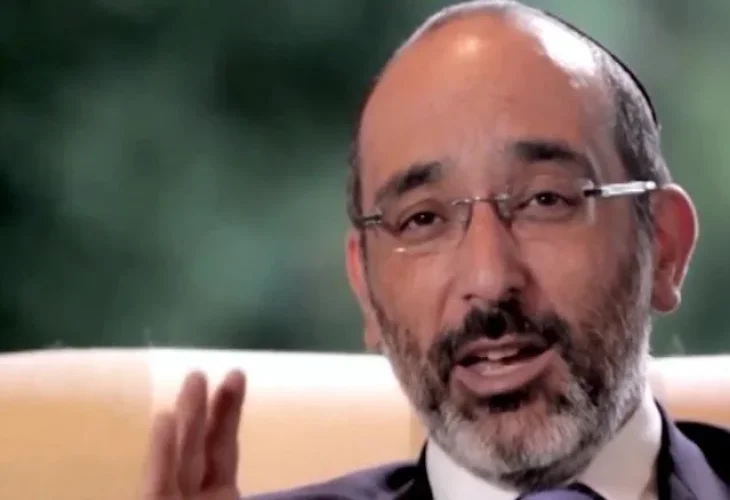
Behind Rabbi Avner Kwass stand 26 years of dedication to public service. His impressive résumé includes hundreds of lectures, books, pamphlets, and thousands of happy couples. Among them are couples who stood just steps away from divorce, yet were able to save their relationships and rediscover happiness thanks to his guidance.
So how did it all begin? At home, with Mom and Dad. Rabbi Kwass was born in Jerusalem into a religious family. After his marriage, when the time came to give back beyond his own household, the young couple began engaging in outreach and assisting couples both before and after marriage.
“After we got married, my wife and I decided to lead a program guiding brides and grooms, which naturally integrated us deeply into the community,” recalls Rabbi Kwass. “Over time, many cases involving marital challenges and child education began coming our way. Thanks to Hashem, we were given the tools and methods to help these couples. That’s how our work truly began. My wife trained women—providing bridal instruction and counseling married women—while I guided the men.”
Over time, Rabbi Kwass pursued Torah studies that qualified him as a rabbi and a dayan, encompassing the halakhic dimension as well. Throughout the years, he has authored two books on the Jewish home: Three Points to Marriage and Together. He is currently working on the second volume of Together.
He began delivering engaging, witty, and insightful lectures filled with Jewish wisdom across the country even before the age of 18. At the same time, he worked with the Arachim organization and participated in hundreds of Jewish seminars. In 2003, he founded Education for Family Life, an organization that serves as the framework for Rabbi Kwass’s wide-ranging activities. It offers workshops on relationship education and provides the public with a professional network of certified consultants—including doctors, spiritual leaders, and other specialists—who deliver precise, expert guidance grounded in Torah values.
“From my experience,” says Rabbi Kwass, “you can give a three-hour lecture, inspire the audience, and even motivate people to make serious commitments to themselves. But most people don’t maintain those commitments for long. The reason is simple: one lecture cannot do what an intensive workshop of 8–12 sessions can. When you accompany people over six months and work closely with them, the learning becomes internalized, and you witness real, meaningful change.”
Who are these workshops suitable for?
“For everyone—across the entire spectrum. From those who do not observe mitzvot to the ultra-Orthodox and Hasidic communities. What’s remarkable about these workshops is that there’s no situation in which participants don’t understand what the rabbi means. They are filled with practical tools, making them far more effective and impactful than a single lecture.”
The collaboration with Hidabroot developed as Rabbi Kwass’s activities expanded and the Hidabroot Channel grew from a local station into a national cable channel. At that point, Rabbi Kwass chose to take an active role in the channel’s outreach efforts, sharing dozens of recorded lectures in the hope that viewers would strengthen their connection to spirituality with renewed energy.
Relationships: An Age-Old Talmudic Issue
Why does this generation need to talk so much about relationships? In previous generations, no one discussed the topic at length, yet our grandparents managed quite well.
“I’ll share a small secret,” Rabbi Kwass says. “When I first began sharing my perspective, a well-known lecturer approached me and suggested that I shouldn’t lecture about relationships. He believed that if I wanted to bring Jews closer, I should focus on fostering faith in Hashem—using lectures that combine scientific proofs with Torah. Of course, alongside my focus on relationships, I speak about many other topics: the weekly Torah portion, character development, Judaism, halakha, family purity, and more. But I disagreed with him.
“In my view, every Jew—even someone who appears completely atheistic—believes in Hashem. Today, there isn’t a single lecturer who doesn’t speak about relationships. And why? Because relationships are the bread and butter of this generation—its most basic necessity. The issue of relationships is a social challenge discussed for centuries in the Talmud. The Talmud prepares us for the end of days and explicitly states: ‘Not a hunger for bread nor a thirst for water, but for hearing the words of Hashem.’ The burning issues of our generation are parent-child and marital relationships. Anyone who wants success in relationships and education has a profound obligation to explore Hashem’s word on these matters.”
“A man and a woman—if they merit it, the Divine Presence dwells between them. What does ‘merit’ mean? It means purification. What are we purifying? Ourselves—our negative traits, present in every person. That can only be achieved through deep learning and long-term guidance.
“Our grandparents succeeded because society condemned divorce. They had no choice but to work things out—and they did, often living fulfilling lives. In this generation, people are unwilling to invest the effort and seek ‘easy solutions,’ which ultimately prove to be the wrong ones. My motto is simple: there is no unsuccessful couple—only unguided couples. With the right guidance and a willingness to invest, any obstacle can be overcome.”
Family Comes Before Everything
Beyond all his public activity, Rabbi Kwass’s primary focus is his family of thirteen. For those who wonder how he manages it all, the answer is simple. Until noon, Rabbi Kwass immerses himself in Torah study. Afterward, he returns home for lunch and dedicates himself entirely to family matters—no phone, no daily pressures.
“Family comes before everything and everyone,” the rabbi states.
Don’t you ever experience moments of burnout or want time just for yourself?
“Of course there are difficulties—many of them. I listen to pain and problems all day. But thank Hashem, there is no burnout. That’s precisely why I’m here. People don’t call me to say how good they feel; they call because they need advice, emotional support, and guidance.
“My strength comes from Torah study, which is known to provide resilience. Since my work doesn’t consist of short, easy lectures, it’s understandable how demanding it can be. Often, I arrive at a lecture utterly exhausted, barely able to leave the car. Yet the moment I see the audience waiting for me, I feel as though it’s the first lecture I’ve ever given. It happens time and again—and it’s nothing short of divine assistance granted through the audience.”
Is the ability to motivate people to improve relationships learned, or is it innate?
“Formal study certainly helps, but someone who naturally connects with people, reads human dynamics well, and knows how to engage an audience will succeed even without countless courses. Skills like stage presence can be taught, but the essential human ‘spice’—the inner sensitivity and charisma—is not always something that can be learned.
“Experience also plays a crucial role. Over time, you immediately recognize where to go deeper. I’ve learned that anyone involved in counseling—especially between husband and wife—must not become emotionally entangled in the problem. You must stay outside it. To pull someone out of a pit, you have to be standing above it.
“Without experience, counselors can easily sink into the couple’s struggles after endless sessions without ever addressing the root problem. Experience teaches you what to ask, where to focus, and how to identify the core of the issue. In my humble opinion, true success comes from a combination of both innate talent and acquired skill.”

