 עברית
עברית

The Last Jew in Afghanistan
Victories and defeats, ups and downs. Power passed from hand to hand, and each kingdom left its mark on this land. An ancient Jewish community with a glorious tradition, and many legends about lost tribes were added – meet the Jews of Afghanistan.

Afghanistan. What comes to mind, aside from atomic bombs and the Taliban? Interestingly, one of the few countries in the world without a Chabad House has something special. For nearly two thousand years, there existed a large and splendid Jewish community here. During all that time, the Jews did not change, even when governments swapped rulers and religions were changed rapidly – the Persians, Alexander the Great, the Indians, the Persians again, the Arabs, the Mongols of Genghis Khan, the Mughals, the Persians (for the third time), and now the Afghans. Why did such a cumbersome country on the map become a strategic point for great empires? Because the famous Silk Road passes through Afghanistan, and many powers wanted to claim a part of it. Following all the conflicts surrounding Afghanistan over the years, the country itself decided not to interfere and get involved in wars, but to maintain neutrality.
In general, the Jews of Afghanistan got along with their Arab neighbors, but over the years there were several pogroms and blood libels. In the late thirties of the last century, on the eve of Yom Kippur, Muslims spread a rumor that Jews kidnapped a Muslim boy, and organized "choli", pogroms, against the Jews of the city and severely injured two. The Jews locked themselves in their homes and prayed alone on Yom Kippur. Only a few dared to go to the synagogue. One Jewish family went to the synagogue, and on the way, a group of Muslims shouted insults at them and wanted to harm them. Suddenly, another group of Muslims appeared and protected them, allowing them to reach the synagogue safely. This incident is very similar to what happened a few months ago – more than a thousand Muslims formed a human peace ring around a synagogue in Copenhagen, Denmark, to show solidarity with the Jews and to condemn the attack that took place there.
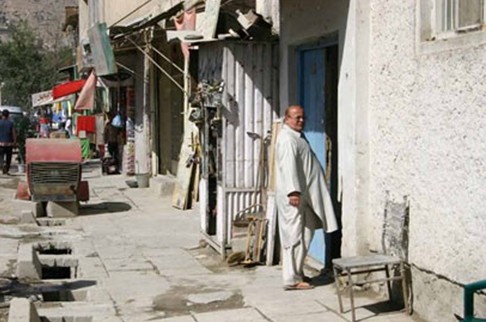 Zebulon Simantov, the last Jew in Afghanistan
When Jews made Aliyah, some of their Arab neighbors begged them not to leave. The Jews of Afghanistan longed to immigrate to the Land of Israel and even wrote many songs and hymns about their yearning for the Holy Land. A beautiful example of Shirat Zion is the song "Kashke Baal Dashtam Miparidam" (If only I had wings and could fly) written in Judeo-Persian (also known as Judeo) by the Jewish-Afghani poetess Zalpha Butchi, who immigrated to the Land of Israel. Her husband, Mullah Nathaniel, who brought the news of the rebuilding Land of Zion to the Jews of Afghanistan, was killed by a fanatical Muslim, may God avenge his blood. Zalpha composed a melody that became popular among the Jews of Afghanistan, who sang the song at every opportunity. Jews from Afghanistan found it difficult to make Aliyah because no Zionist emissaries, like Minister Montefiore, reached them, so only a few dared to immigrate to Jerusalem. The first Jew to immigrate was Mullah Yosef Ghol in 1841. It took him a whole year to reach Jerusalem. He rode from Afghanistan to Hamburg on camels, from there to Moscow until he reached Istanbul, sailed to Jaffa, and continued to Jerusalem. He returned by sea to India and from there to Afghanistan. Upon his return to Afghanistan, it was a day of celebration for the Jews, and everyone came to visit him. The major Aliyah of Afghan Jews began in 1922, after the Chief Rabbi of the city of Herat, Rabbi Mullah Jacob Siman-Tov, immigrated to Israel with his family and was imprisoned in Acre prison. His wife Leah, who was pregnant, their three-year-old daughter, and three-month-old son were imprisoned in the women’s prison in Bethlehem.
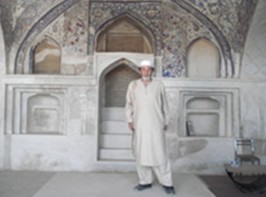 Synagogue in Herat
Shimon Yazdi also immigrated from Afghanistan to Israel. He and his family spent a night in a cave near the border in the Galilee, fearing they would be caught by the British. In the morning, Shimon went out to see where they were and if it was possible to move forward, and he saw a building with a sign "entrance." Afghan Jews refer to the synagogue as “entrance” and thus Shimon called his family to enter and pray and thank Hashem for their arrival in the land. But the mistake soon became apparent – the "entrance" was a customs entry, and the Arab policemen arrested Shimon and his family and sent them to prison.
Many Afghan Jews fled to India to immigrate from there to Israel. The journey was difficult, and the immigrants had to ride on pack animals or drive in an old vehicle, facing rainstorms and sleeping in deserts. The groups that arrived in India were not allowed to make Aliyah, and some remained in India for five years, almost without food, forced to work in degrading jobs for a living. Some Jews were drafted into the military, and the authorities did not allow the refugees to be within fifteen kilometers of the city. One group stranded in Pakistan was forced to return to Afghanistan, and the refugees tried to prolong their stay, but one day the authorities announced they had to leave immediately. Various Jewish organizations, like the World Jewish Congress and the Jewish Agency, fought with the authorities, delaying the deportation. Here is a snippet from the testimony of an eyewitness on Afghan Jews in India: "These refugees, who entered India thinking it would only be a transit stop to the Land of Israel, and under the pretext of medical treatment, received a permit to stay in India for six months, were extended a few more times, and when it ended, an order came that they must leave India within a week…"
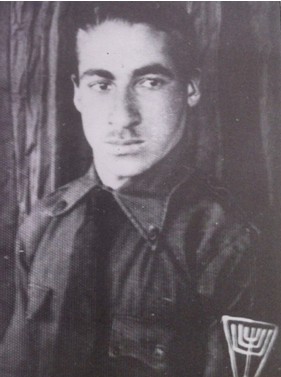 Jacob Raz, may God avenge his blood
Many Afghan Jews, upon reaching the land, joined the Etzel, Haganah, and Lehi, eager to fight for the liberation of the Holy Land. Jacob Raz was a young immigrant from Afghanistan who carried out many operations among Arabs due to his background. On July 26, 1938, Jacob Raz was sent to the Old City of Jerusalem to plant a bomb in the center of Arab gangs. He disguised himself as an Arab and carried a basket of vegetables on his back with a mine inside. Raz's commanders in the Etzel planned the action but were unaware that on the same day, the Arabs declared a general strike following numerous attacks by the Etzel in the land. When he reached the Arab market, Arab youths seized him, angered by the idea of an Arab suffering disrupting the strike, and when they turned over the basket, they were surprised to see the bomb. The Arabs attacked Raz and stabbed him with knives all over his body. They thought he was dead, left him bleeding, and ran away. British police arrived and transferred him in a critical condition to Hadassah Hospital and placed guards around his bed to interrogate him and extract information about his comrades in the underground. Jacob feared he would not withstand the interrogations, and courageously removed the bandages covering his body. Weeks later, on the 11th of Av 5698, Jacob Raz passed away due to blood loss. Jacob Raz was the first casualty in Etzel's attacks, and his heroism made him a symbol and example for fighters who followed his path, keeping the secrets of the underground. In his heart, Jacob Raz harbored a love for the Land of Zion and a desire to fight for his country's liberation. The Etzel likened Jacob to "the new Samson." They mentioned him alongside the Ten Martyrs from the Mishna and compared him to Rabbi Hanina ben Teradion, who the Romans encircled with wooden beams and burned along with the Torah scroll he studied. To prolong his suffering, the Romans placed pieces of wool soaked in water on his heart. The executioner, amazed by Rabbi Hanina's bravery, asked if he would bring him to the world to come if he removed the pieces of wool from his heart. Rabbi Hanina answered affirmatively and even swore to him. The executioner intensified the flame and removed the pieces of wool, and Rabbi Hanina expired. The executioner also jumped into the fire and was burned. Then a divine voice declared: "Rabbi Hanina ben Teradion and his executioner are destined for the world to come."
The last Jew living in Afghanistan is Zebulon Simantov, a carpet trader who resides in Kabul. During the Taliban regime, Zebulon lived with Isaac Levy, and they fought over the ownership of an ancient Torah scroll. Their dispute intensified until both were jailed by the Taliban, and during their detention, the Torah scroll was stolen. In 2005 Isaac Levy passed away, and since then Simantov has been the last Jew in the country. He lives adjacent to the last synagogue in Kabul, where Jewish American soldiers sometimes pray. Holiday staples are sent to him by a Jewish organization in New York before each holiday, and he slaughters meat himself after receiving special approval from a rabbi in Uzbekistan. Despite his children and family residing in Israel, he refuses to leave Afghanistan.
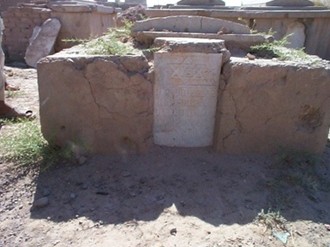 Jewish Cemetery in Afghanistan
Here are some Afghan proverbs:
"The unfortunate learn from their own mistakes; the fortunate learn from others' mistakes."
"The tool does the work, and the tool's owner takes credit for himself."
What is the secret of Jewish existence? How have ancient Jewish communities survived to this day? One answer is that the communities remained and clung to the same nation, never letting go of their faith. Since the inception of the Jewish people, a survival Jewish identity has been developed. Each community has unique customs and traditions. From Yemenite S'chug to Ashkenazi Gefilte Fish. It's worthwhile to know and experience each Jewish community and recognize its uniqueness.

