

Personal Stories
A Decade Since the Disengagement Plan: New Testimonies
Rabbi Ovadia Yosef, of blessed memory, wept with the people of Gush Katif. What did he pray for the enemies of Israel, and how was his concern for the fate of synagogues manifested?
- Avraham Yisrael Friedman / Yom Liyom
- | Updated
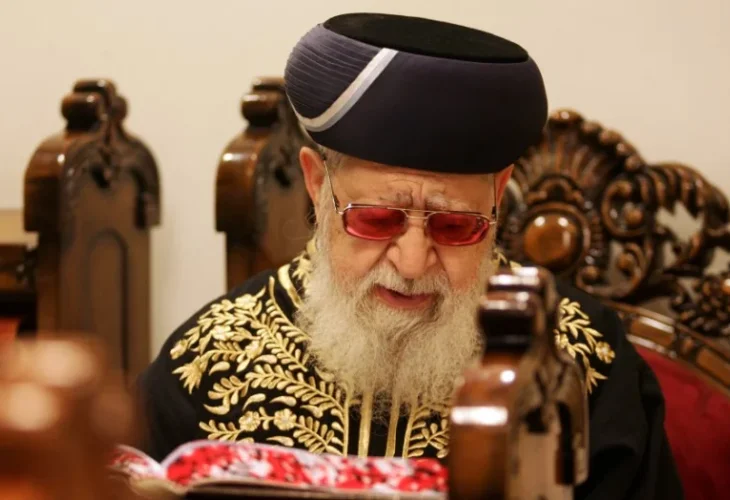
20th of Av, 5765. Days had passed since the merciless expulsion from the Gush Katif settlements. Rabbi Ovadia Yosef, zt”l, sat secluded in his room, weighed down with pain. Rabbi Shmuel Tal of Netzarim approached him with a halachic question regarding the temporary hotel accommodations arranged for the displaced residents of Gush Katif. After providing a halachic ruling, Rabbi Ovadia Yosef zt”l offered words of comfort and encouragement.
In his remarks, Rabbi Yosef zt”l related a parable: A Jewish man lived on the lower floor of a building, while a non-Jew resided above him. One day, a fire broke out and completely destroyed the building. The non-Jew wept bitterly over his lost possessions, while the Jewish man remained calm, even indifferent, smoking a cigarette. When onlookers questioned his reaction, the non-Jew cried out, “My god burned—how could I not cry?” Rabbi Yosef concluded, “They expelled us from our land, our Temple has been destroyed, and the Shechinah is in exile. We suffer as a result, yet we can take solace in knowing that Hashem will never abandon His people.”
This exchange was later recounted in an interview with Yom LeYom by Rabbi Eliyahu Shitrit, zt”l, Rabbi Yosef’s trusted editor.
“On the 5th of Tevet, 5766,” Rabbi Shitrit continued, “when rumors spread that Prime Minister Sharon—the architect of the disengagement—had died, Rabbi Yosef remarked: ‘He was overconfident. How many homes of widows and orphans did he destroy?’”
Those interviewed noted that Rabbi Yosef’s broader halachic position regarding the Gaza settlements was a separate matter and was not expressed in explicit rulings. This article focuses instead on his deep empathy for the suffering of every Jew. It should also be noted that decades earlier, Rabbi Yosef participated in the cornerstone-laying ceremony for the Yamit educational institution in Neve Dekalim.
The Unhealed Wound
A decade has passed since the expulsion from Gush Katif in Av 5765, yet the wound remains unhealed. The chaos it caused—particularly in people’s hearts—has yet to subside. The devastation of Gush Katif has become a historical trauma, often likened to the destruction of a Third Temple. For those who were expelled, it is a wound that will continue to bleed for years.
They were not alone in their pain. Rabbi Ovadia Yosef zt”l carried them in his compassionate heart. Now, ten years later, it is fitting to better understand Rabbi Yosef’s relationship to the disengagement and to the suffering of the settlers.
A visit to the Gush Katif Museum in Jerusalem returns us to those turbulent “orange days” and their searing pain. Without entering ideological debates, one’s heart breaks at the sight of Jewish tears flowing like rivers, nearly washing away the shores of Neve Dekalim, abandoned in broad daylight. Families stood stunned, unable to believe that their perceived “strong right-wing” ally had betrayed and expelled them. Stickers cried out, “Jews do not expel Jews,” but their voices fell on deaf ears. On the 5th of Av, 5765, tens of thousands bade farewell to the Gaza settlements and walked into an unknown future.
Museum chairman R’ Shlomo Wassrteil recalls one of the visits by former Gush Katif residents. “A decade has passed, so the details have faded,” he says, “but I remember how emotional it was.”
Roni Chori, who organized and attended visits to Rabbi Yosef’s home, also reflects: “We presented Maran with concerns about synagogues, Torah institutions, and the life-threatening dangers posed by the evacuation,” he told Yom LeYom. “Maran replied that evacuating was clearly forbidden. ‘The Torah says, “Do not stand idly by the blood of your fellow.”’ He also instructed Shas representatives to support the frightened and anxious residents of Gush Katif.”
“Maran,” Rabbi Shitrit recalled, “deeply appreciated the settlers of Gush Katif. On the 12th of Cheshvan, 5765, he rejoiced when others joined his criticism of the plan. ‘They enable us to eat bug-free lettuce on Seder night. Only they do this, and it is a great merit,’ he said.”
“What Will Your Answer Be on Judgment Day?”
In early Cheshvan 5765, as the disengagement plan moved closer to approval, Maran spoke out forcefully against it.
During his weekly Motzaei Shabbat lecture, broadcast by satellite just days before the Knesset vote, Rabbi Yosef declared from the Yazdim synagogue in Jerusalem’s Bukharan neighborhood:
“I call upon all Likud members and all Knesset members to unite and vote against this.”
“On Motzaei Shabbat, the 11th of Iyar, six months ago, when disengagement was already on the agenda, I said clearly: everyone must vote against it—without exception,” he emphasized.
Maran explained that his stance was not political but moral: “Do not stand idly by your neighbor’s blood. If these residents are expelled and terrorists take their place, they will be dangerously close to Ashkelon, Netivot, and Ashdod.”
“Thirty years ago I supported ‘land for peace,’ and I still do—but only for genuine peace with trustworthy partners. These people seek war, not peace. Leaving the land will not help. I call upon all parties to reflect on what they are doing to Israel. If terrorists occupy Gush Katif, what will your answer be on the Day of Judgment? How could you endanger the Jewish people?”
He added that even abstaining from the vote was forbidden: “If someone sees another drowning and says, ‘I abstain,’ what kind of abstention is that? The Torah commands us not to stand idly by. Those who abstain share responsibility.”
At the same time, Maran stressed unity and restraint: “We must not raise a hand against another Jew. ‘Her ways are ways of pleasantness.’ Violence against soldiers is forbidden.” He concluded with words torn from a heart full of pain.
“I Pray for You”
As public pressure mounted, delegations of Gush Katif rabbis and leaders repeatedly sought guidance from Rabbi Yosef zt”l.
“Our connection with Maran,” recalled Rabbi G. from Ganei Tal, “began during the Intifada. Maran welcomed us warmly and would pray daily, ‘They shall beat their swords into plowshares.’”
“Months before the withdrawal, we returned to him,” he continued. “We told him of our fear that Torah institutions would be destroyed. He was deeply moved, gently patting us again and again, saying, ‘I pray for you.’ We left strengthened, knowing how deeply he shared in our pain.”
Meir Yerimi, formerly of Gadid and now living in Nitzan, added: “While others wavered, Maran unequivocally instructed Shas representatives to oppose the expulsion—and they did. He banged on the table and said firmly, ‘This must not happen.’ He then blessed us and encouraged us warmly.”
When Maran Wept with the Rabbis
Pinchas Wallerstein, former head of the Yesha Council, recalls frequent visits before the expulsion. “Discussions often centered on the destruction of synagogues and schools, and it was clear how deeply it pained Maran. Some rabbis from Gush Katif met with him regularly. Those meetings were filled with tears—Maran wept together with them.”
It is therefore unsurprising that former Gush Katif residents mourned deeply at Maran’s passing and sent condolences to his family, particularly to Rabbi Yitzhak Yosef.
“The Gush Katif residents’ committee offers its condolences,” they wrote. “With Rabbi Ovadia Yosef’s passing, Israel lost a great leader. During our hardest days, his door was open to us. He received us warmly and prayed for us.”
“Even though the decree could not be prevented,” they added, “we will never forget his empathy, prayers, and instructions to help rebuild our communities. His Torah and compassion will be greatly missed.”
After the destruction of Gush Katif, the settlers, too, mourn on Tisha B’Av—raising Maran’s memory heavenward with the cry:
“My eyes, my eyes flow with tears, for the comforter is far from me.”
The comforter of the displaced—Maran—has left us, as though our Temple has fallen once again.
Abraham Israel Friedman

