

Personal Stories
Gideon Sa'ar: "It's Important My Son Grows Up with Jewish Values"
Gideon Sa'ar, currently taking a break from politics, gave an extensive holiday interview in 'Mishpacha' where he discussed his closeness to Judaism and how the birth of his son accelerated the process.
- Hidabroot
- | Updated
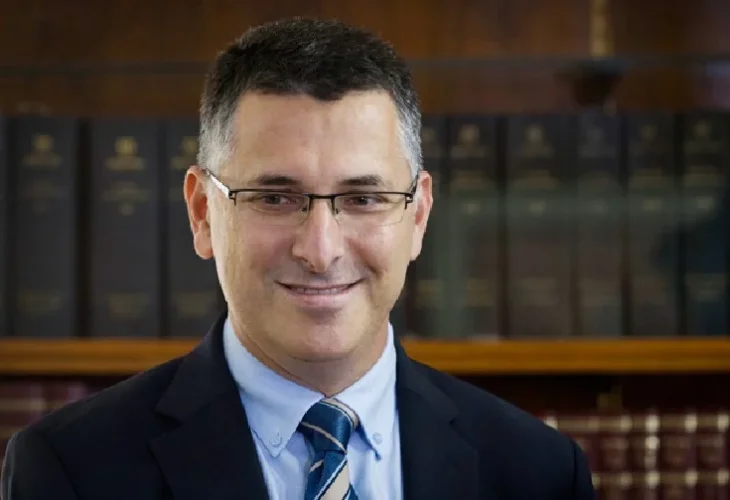
There is hardly a media outlet in the country that has not sought to interview Gideon Sa’ar, the former senior minister currently on a political hiatus, ahead of the Sukkot holiday. However, Sa’ar granted only one exclusive interview—to Yossi Elituv and Shimon Breitkopf of Mishpacha. While he remains reluctant to say when he will return to politics or to elaborate on his relationship with Prime Minister Netanyahu, he did speak openly about his growing closeness to Judaism.
“When David was born, I invited a prominent rabbi to serve as the sandek at his brit milah. Unfortunately, he was unable to attend. When I realized he would not arrive, I felt that it was my responsibility to be my son’s sandek. One of the rabbis present told me that a sandek must be a Jew who observes Shabbat. ‘What’s the problem?’ I said to him. ‘I’ll take it upon myself that from this day forward, I will observe Shabbat.’ And that’s exactly what happened. I accepted upon myself to keep Shabbat, and I have done so ever since.”
Sa’ar explains that this commitment was part of a broader process, one that happened to reach its culmination at his son’s brit milah. “It could have taken many more years,” he says, “but the sandek role accelerated it. David’s birth was connected to this. When my son was born, it was very important to me that he grow up with Jewish values—to give him the opportunity, when he is older and wants to make his own choices, to ensure that those choices are not made out of ignorance or lack of knowledge, but are instead rooted in a basic Jewish identity.”
Nearly one of Sa’ar’s final decisions as a public figure was to prohibit supermarkets in Tel Aviv from operating on Shabbat. “It was clear to me that if a bylaw allowing them to open were approved, then within thirty years Shabbat would look just like a weekday. I’m sure no one wants that to be the outcome. I need to clarify another point: for a religious person, Shabbat will remain the same regardless. He will always be in synagogue, eat three meals with his family, and observe the commandments. But Shabbat belongs to all of Israel, and therefore it is essential to preserve its unique character in the public sphere as well.”
In addition to his personal connection to Judaism, Sa’ar has also been seen frequently in the homes of leading rabbis in recent years, particularly at the home of Rabbi Chaim Kanievsky in Bnei Brak. “Unfortunately, I don’t go there as often as I would like,” he says, “but when I do, and I see his total dedication to Torah study and his modest way of life, it’s impossible not to be moved. Whenever I leave his home, I regret not having devoted more time to learning. It’s something I deeply admire, and I pray for the day when I am less occupied with public affairs and financial matters, and can devote more time to study.”

