

Personal Stories
From Holocaust Shadows to Creative Light: The Artist Preserving Her Grandmother’s Miracle Survival Story
Artist Devorah Karl transforms her grandmother’s Holocaust memories into hopeful expressions of faith, courage, and Jewish continuity
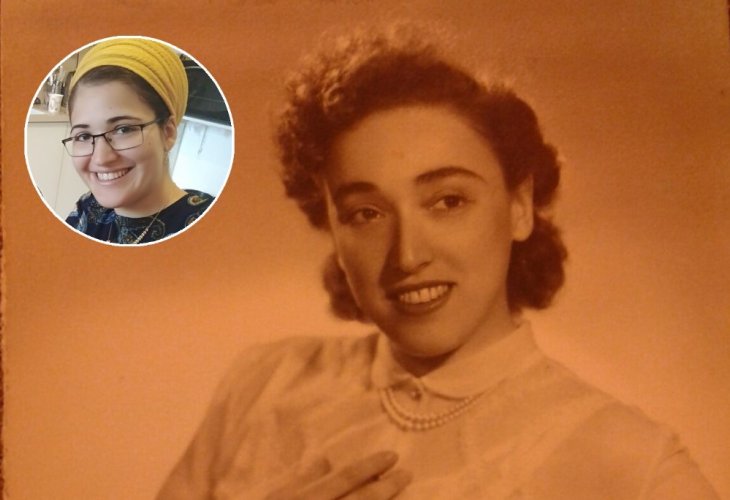 Deborah's grandmother and in the circle Deborah
Holocaust Remembrance Day reminds us all of chilling and heart-wrenching stories of the tragedy our people endured. But for artist Devorah Karl — a third-generation Holocaust descendant, these memories are not confined to one day a year. As an artist with a bachelor’s degree in Art Education, and a teacher who prepares students for matriculation exams in three schools, she finds herself documenting the Holocaust in various ways.
“It’s not that I officially decided I wanted specifically to document the Holocaust,” she explains, “but working in the field of art naturally leads me to express what I’m going through. In recent months I’ve had the privilege to develop this direction even further thanks to the ‘Art and Faith’ initiative led by attorney Omer Yankelevich.”
She shares an example from her recent experience: “Three months ago I gave birth to a precious baby girl, but for half of the pregnancy I was hospitalized on bed rest in a very difficult condition, with real uncertainty whether I would complete the pregnancy with a healthy baby. These were fears of life and death — and the only thing that gave me strength was drawing. I sat and painted, and poured everything in my heart onto the page. Art truly is the greatest and most precious gift I have.”
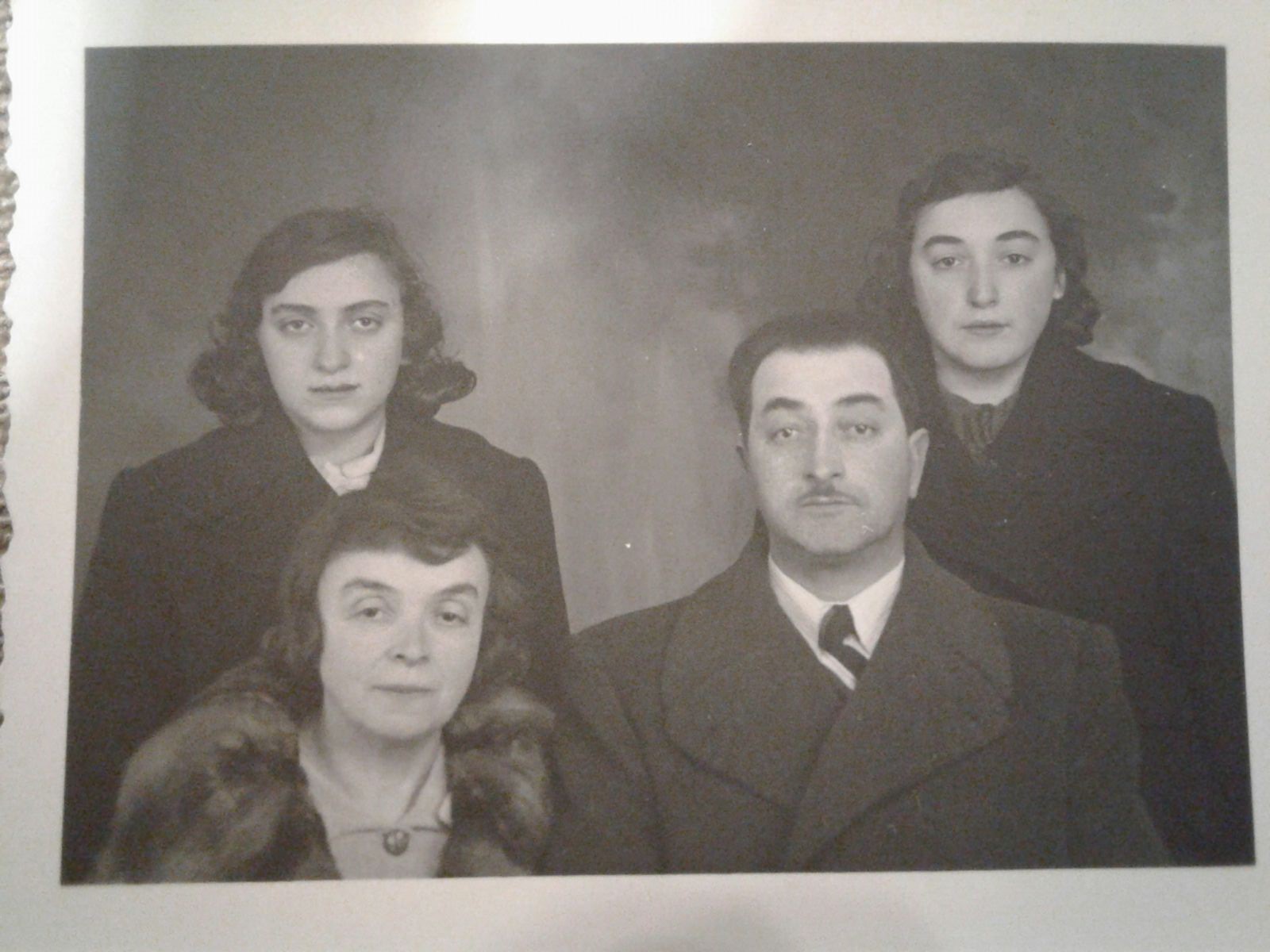 סבתה של דבורה ובני משפחתה
Light in a Time of Darkness
Devorah’s artwork relating to the Holocaust grew out of the stories of her grandmother — Gerda Lixenberg (née Zwick), who survived the war.
“My grandmother passed away when I was about seven,” Devorah recalls. “I remember her as being very ill, and I never really had the chance to experience her personality or her story directly. But she left behind a diary that she wrote in English right after the war — and I read that diary again and again.
“What makes the diary so special is that it is full of emotion. My grandmother constantly emphasizes the optimistic and strong side — she focuses on the points of light that existed even during the Holocaust. Between the lines you can clearly sense the terrible and unimaginable things she went through — but she continually highlights the miracles, which were extraordinary and astonishing.”
In one of the stories, her grandmother describes a day when she, her mother, and her twin sister were starving: “One day,” she wrote, “we had no money at all, and all three of us were extremely hungry. Mother suggested that we go out for a walk — perhaps the movement would distract us from the hunger and pain. It was early evening, the darkness began to fall, and we walked sadly through the street. Suddenly Mother expressed a thought aloud: ‘If only money would rain down from the heavens — even just enough for a small piece of bread to get us through the night.’ She smiled dreamily — and then a gust of wind arose, and paper bills began to fall out of nowhere. They fluttered through the air and landed beside us.
“We were stunned. We looked around but saw no one; the street was deserted. We tried to see where they came from, but all the surrounding buildings were dark and empty. Then the wind stopped. We bent down and gathered the bills — each one of very small value. After a moment Mother said, ‘If only I had prayed for a bit more…’ We ran to the market just before closing time — and that evening we had enough not only for bread, but even for butter and a little spread.”
Gerda ended the story with the words: “We never could explain what happened. It was simply a miracle.”
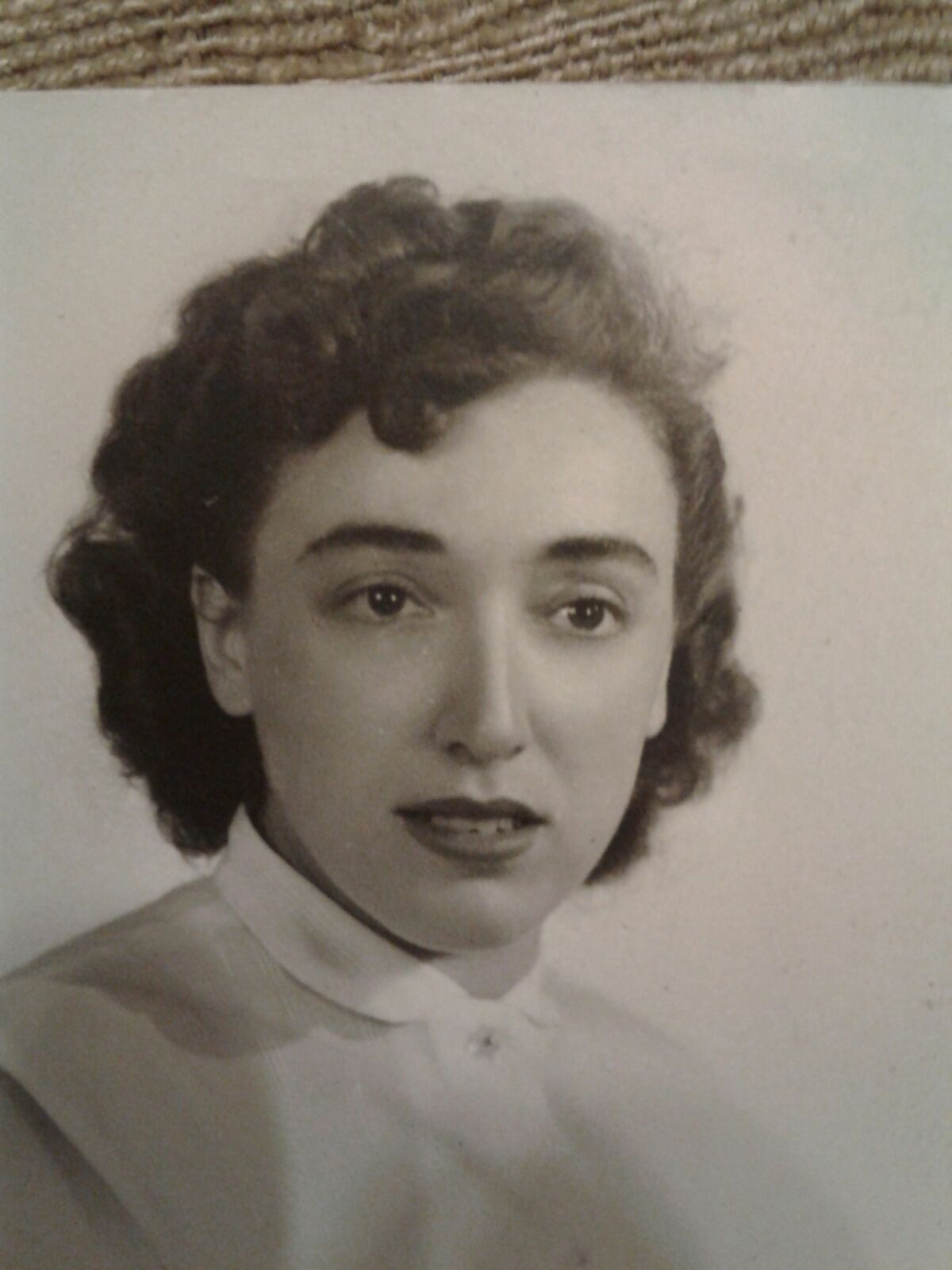 סבתה של דבורה
“Like Sheep to the Slaughter”
“Ever since I began working in art — already back in 12th grade, I felt very connected to Holocaust themes,” Devorah says.
“For my final project in high school, I created a large installation — a porcelain plate with a fetus lying on it, a fork stuck in its throat, and a knife placed beside the plate. I called it ‘Autumn Nazism.’ Through it I tried to express the cruelty of the German nation — who outwardly preserved refined etiquette and cleanliness, while the helpless Jews were like a defenseless fetus, led like sheep to the slaughter.
“The fork symbolized the tools the Nazis used to destroy the Jews — instruments of harm that literally took their lives, while the knife, placed nearby but not touching, represented emotional humiliation and psychological oppression.”
The staff at her school were deeply shaken by the work; they decided to place the project in a side room with a sign at the entrance explaining the content, so students could choose whether or not to enter.
“I understood it was powerful and disturbing — but that was exactly my goal,” she says. “As a third-generation descendant, I felt compelled to express the difficult feelings that accompany me. I grew up with these stories — they shaped me.”
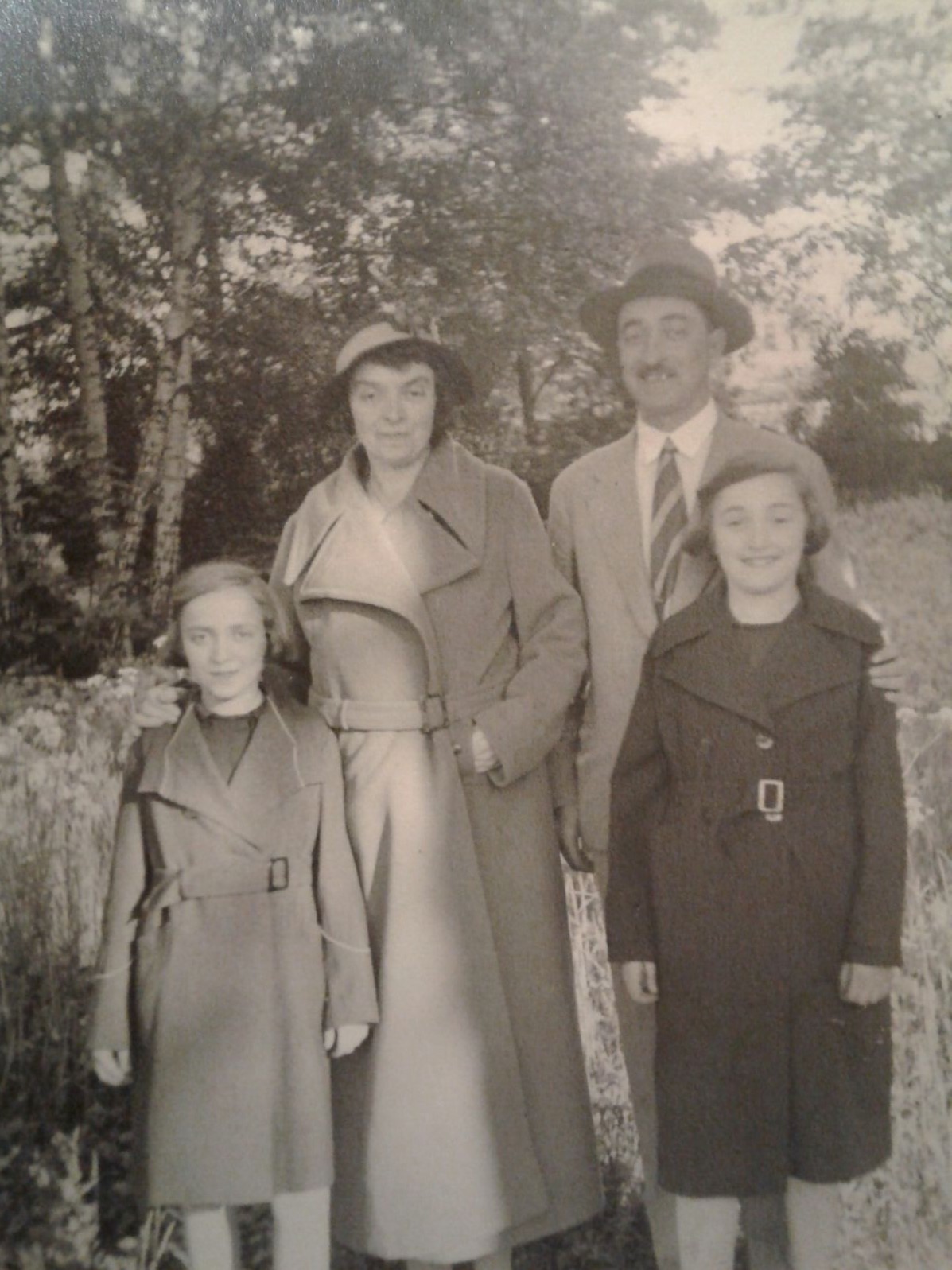 סבתה של דבורה ובני משפחתה
Saved by Human Kindness
Devorah recalls another story from the diary: Her grandmother, mother, and twin sister were once in Italy, hiding wherever they could. They received a notice ordering them to report to the city hall — clearly, someone had informed on them. They arrived trembling with fear.
“My grandmother spoke Italian best, so she did the talking,” Devorah says. “The official immediately declared, ‘You are Jewish.’ A colleague entered and said they must call the Gestapo.
“But the first official — who seemed gentle, said, ‘It’s not a good idea to call the Gestapo now. By the time they arrive it will already be late and we’ll be stuck here. Let’s tell them to come back tomorrow morning — they won’t be able to get very far anyway.’”
“We promised we would return at eight the next morning, and they released us. That same day we escaped, running nonstop, and were saved. My grandmother writes that she is certain the official knew exactly what he was doing, and that he saved their lives.”
On the Train Tracks — and a Symbol of Victory
One of the most astonishing miracles occurred when Gerda’s father had already been sent to a labor camp.
Her grandmother, mother, and twin sister were desperately trying to escape. They reached a train station. A train stood ready to depart — all the cars were packed, except for one door left slightly open.
“They tried to squeeze inside,” Devorah says, “and then a man appeared, carrying a lantern, and walking slowly. He whispered quietly: ‘Whoever boards this train does not get off — it goes directly to a death camp.’ He walked away and disappeared into the darkness — like an angel sent to save them.”
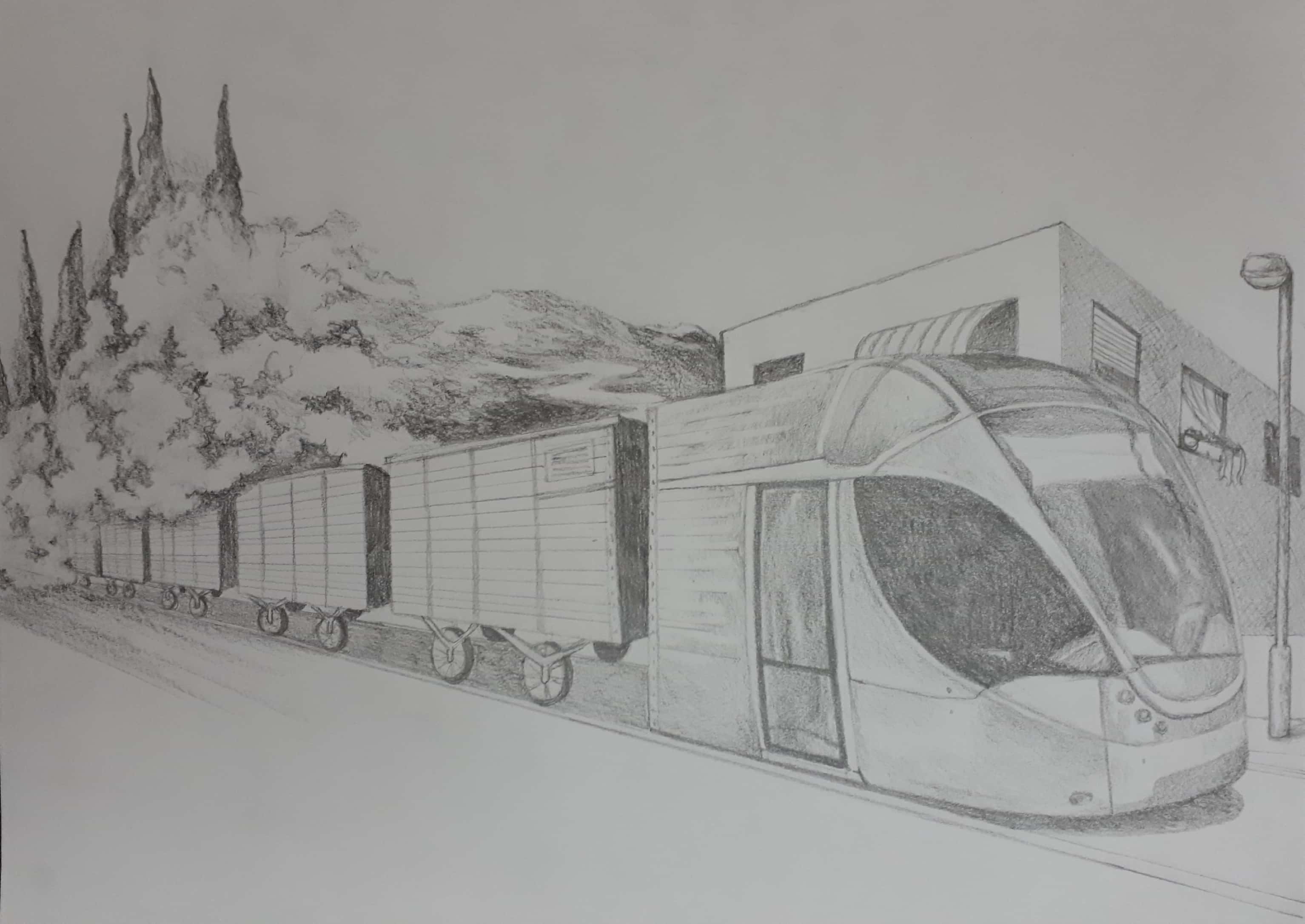
Devorah later expressed this story in a powerful drawing — a train to the death camps that gradually transforms into the Jerusalem light rail.
“That image expresses our story,” she explains. “Despite the terrible past and the suffering of our people — I, as a descendant of Holocaust survivors, get to travel freely on the light rail in Jerusalem, the holy city. That is our greatest victory.”
She concludes: “My dear grandmother survived the Holocaust together with her mother and twin sister. They immigrated to Israel, later reunited with her father — and together they built generations upon generations — living proof that the Jewish people will never be destroyed.”

