

Pregnancy Tests
The Israeli Fetal Surgeon Saving Unborn Lives: The Remarkable Work of Dr. Yuval Gielchinsky
Inside the groundbreaking fetal surgeries transforming modern medicine, and the doctor offering hope to parents facing devastating diagnoses
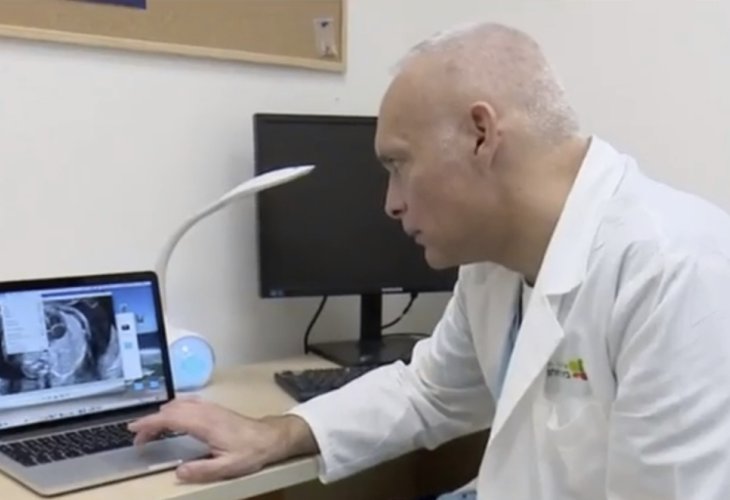 Dr. Guy Gialchinsky
Dr. Yuval Gielchinsky is one of the most fascinating — and likely one of the bravest physicians in Israel today. He is an obstetrics and gynecology specialist, and his résumé includes a subspecialty in fetal medicine under one of the world’s pioneers in the field, Professor Kypros Nicolaides, with whom he trained in London.
Just before completing his fellowship and returning to Israel more than a decade ago, he witnessed Professor Nicolaides performing an intrauterine surgery — one of the first procedures of its kind ever performed worldwide. During the operation, Professor Nicolaides inserted a camera into the uterus, allowing viewers to see the fetuses up close.
“It was breathtaking,” Dr. Gielchinsky recalls. “I knew immediately that this is what I wanted to do.”
A number of years ago, Gielchinsky moved from Hadassah Hospital to Beilinson Medical Center. Today, he performs a wide range of treatments and surgeries on fetuses that have not yet been born — often with the goal of saving their lives and enabling the mother to complete her pregnancy safely. To make this possible, he must remain available around the clock for urgent fetal cases requiring immediate intervention.
“You can’t give up on a patient just because they haven’t been born yet,” he says — and it’s hard not to agree.
When Expectant Parents Receive the Worst News
Many parents learn during pregnancy — often with shock and fear, that their fetus suffers from a serious anomaly, one that could lead to death or severe lifelong disability. In most of these cases, doctors recommend termination of the pregnancy.
This emotional struggle is excruciating. No parent dreams of raising a child with a severe birth defect… but how can one simply give up on a life? On a child?
Today, Dr. Gielchinsky offers hope in many of these cases. Many parents come to him as a last resort before agreeing to an abortion, hoping for one final chance to save their baby. Numerous pregnancy complications can be resolved through the procedures he performs, and countless dramatic stories of fetuses who survived because of his work circulate from family to family.
One such case involved a fetus with a massive lung tumor. The mother was 28 weeks pregnant when Dr. Gielchinsky inserted a needle into the single blood vessel feeding the tumor and ablated it — cutting off its blood supply. Two weeks later, an ultrasound revealed that the tumor had completely disappeared. The lung that had been compressed and unable to grow properly suddenly expanded to normal size. This was the first procedure of its kind ever performed in Israel — and one of very few ever performed worldwide.
“The Fetus’ Heart Stopped — And We Brought Her Back”
In one of the most dramatic procedures in his career, a mother at 22 weeks discovered that her fetus suffered from severe anemia. Fetal anemia can occur for many reasons, but the outcome is always the same: without sufficient blood, the fetus may die in the womb.
Diagnosis today is simple — a Doppler ultrasound shows the speed of blood flow in fetal vessels. The treatment, though complex, is routine for Dr. Gielchinsky: he inserts a thin needle into the uterus, similar to an amniocentesis, anesthetizes the fetus’ leg so it doesn’t move, and then transfuses blood into the fetal abdomen, umbilical cord, or directly into the fetal heart, depending on the degree of anemia. This treatment is usually repeated several times during pregnancy.
But in this case, the fetus was in critical condition. Dr. Gielchinsky decided the only chance was to inject blood directly into the fetal heart. Midway through the injection, the heart stopped.
He knew he had only minutes before irreversible brain damage or death would occur. He began massaging the fetal heart using the ultrasound probe. Then, in a split-second decision, he accepted a suggestion from another doctor in the room — to inject adrenaline into the fetal heart, exactly as is done during cardiac arrest in adults. The adrenaline was brought quickly, and Dr. Gielchinsky injected it straight into the tiny heart.
The heart began beating again.
This took place a number of years ago. The child, who has no idea that her life was saved in the womb, is now in school — healthy and whole. Since then, Dr. Gielchinsky keeps a dose of adrenaline prepared before every fetal procedure… just in case.
 (photo: shutterstock)
Not Every Story Has a Happy Ending
Fetal medicine is delicate and unforgiving. The months a fetus spends in the womb are critical. “Everything can end in one second,” he explains.
Outcomes are stark: “It’s black or white. Either the treatment succeeds and the fetus lives — or it doesn’t.”
Among the many stories he shares, there are sadly also cases where the intervention failed or helped only partially, and the baby did not survive. Yet without these procedures, most of those babies would have had no chance at all. His treatments give them a real possibility of life — and in many cases, life is exactly what they get.
Dr. Gielchinsky treats a wide range of complications. For example, in identical twins who share a placenta, blood often flows unevenly between them, causing one twin to thrive while the other deteriorates or dies. Using laser surgery, he separates the blood vessels so each twin receives an equal share.
Similarly, in twin pregnancies where one fetus stops developing entirely — a situation that may endanger the healthy twin, he surgically separates the blood supply to allow the surviving fetus to grow safely.
He also places chest drains in fetuses with fluid around the lungs, performs fetal cardiac catheterization for babies with blocked heart valves, and more.
Fetal medicine, he emphasizes, is entirely different from pediatric or even neonatal care. “The fetal organs are built for life in water,” he explains. “They are rapidly changing structures. Treating a fetus inside the womb has enormous advantages because of its protected environment and the presence of stem cells that improve healing.”
Many parents who turn to him do so because they refuse to accept the recommendation to abort and want to fight for their child’s life. “Some of my patients are religious — but not all,” he says. “In some cases the treatment is actually simple. They just need to reach the right place.”
“It Looked Like Science Fiction”
In addition to life-saving procedures, Dr. Gielchinsky performs a highly complex surgery that does not save life directly — but prevents severe lifelong disability in fetuses with spina bifida. In this condition, part of the spinal cord develops outside the body. Babies born with spina bifida often suffer from paralysis of the legs and cognitive difficulties.
Every year, several dozen babies in Israel are born with this condition. Due to increased folic acid consumption, the numbers have dropped significantly, but the cases that remain are serious.
Dr. Gielchinsky offers parents an intrauterine surgery to repair the defect. The operation is performed from week 24 onward. The amniotic fluid is drained and replaced with carbon dioxide so that surgeons can work inside the uterus. Through four tiny entry points, a multi-disciplinary team inserts miniature surgical tools and repairs the spine.
Success can be measured only after birth — the first sign is whether the newborn can move their legs. Movement does not guarantee complete healing, but it proves that paralysis has been avoided.
Dr. Gielchinsky first heard about this surgery at a medical conference from the Brazilian surgeon who pioneered it, Dr. Denise Lapa. The technique has existed for only five years. He approached her afterward and asked to learn the procedure. She agreed immediately, and since then, the surgery is available in Israel through him.
Five fetuses in Israel have undergone this surgery. While long-term outcomes are still being monitored, all show signs of normal leg movement, and none of the mothers experienced major complications. Worldwide, no fetus has died as a result of the procedure, and babies who undergo the surgery in utero show significantly better developmental outcomes than those operated on after birth.
Many of these extraordinary surgeries are documented in remarkable images and videos. Yet Dr. Gielchinsky performs them despite a real personal risk.

A System That Pushes Toward Abortion
In recent years, Israel’s Supreme Court expanded the legal grounds for parents to sue in cases where a baby is born with a defect. If any medical error occurred, parents may be awarded large sums to cover lifelong care.
This has caused widespread fear among physicians, leading to excessive testing and an overabundance of recommendations to terminate pregnancies. Statistics show that one-fifth of abortions in the past 25 years were due to suspected fetal abnormalities — and that terminations for this reason have risen 17% in the last two decades.
The situation is absurd, says Dr. Gielchinsky: “A doctor whose job is to protect the fetus is the one declaring that it has no right to live. A doctor trying to protect himself feels forced to ‘cut’ one way or the other — and any case with uncertainty is pushed toward abortion.”
He adds that many genetic tests show variants whose meanings are not understood at all. As a result, countless healthy fetuses have been aborted simply due to unclear results.
Dr. Gielchinsky chooses a different path. He shares full information with parents — the potential benefits, risks, and realistic expectations, and when possible, gives them a few days to decide.
“It’s an enormous responsibility,” he concludes. “But I feel that there is no choice. You cannot look at a human being who is about to die and not try to save them.”
If you or someone you know is considering termination and is unsure what options exist, this story is a reminder that in many cases, hope still exists.

