

For the Woman
From Christianity to Judaism: The Powerful Journey of Batsheva Menachem
How a Peruvian woman discovered truth, embraced Jewish life, and built a Torah home with faith, courage, and divine providence
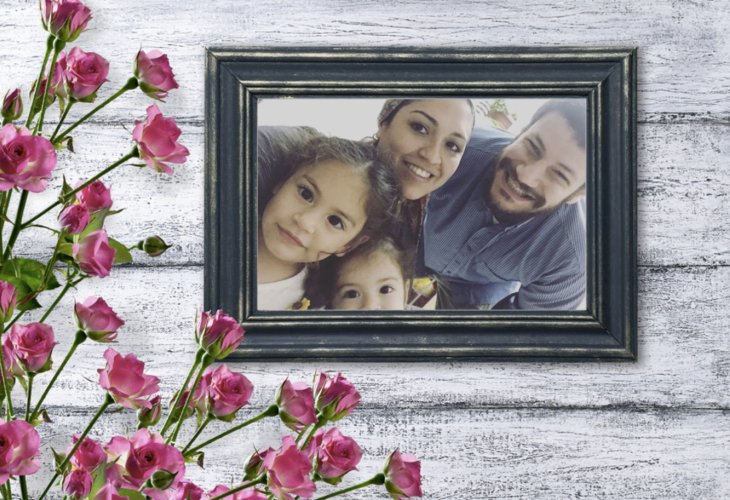 Bat-Sheva Menachem, the righteous convert, and her family
Batsheva Menachem was born into a Christian family and was given the name Pierina. She grew up strengthening her knowledge of Christianity, but she always felt that something about it wasn’t right. When she met Oz, a young Israeli Jew who had traveled to Peru, she began asking him tough questions about Judaism. He answered — and both of them ended up gaining something life-changing: Batsheva converted, Oz strengthened his Judaism, they married, and today they are parents of three daughters and fully observant Jews.
To understand the depth of divine providence in Batsheva’s life, we go back 20 years. When she was 12 years old, her parents divorced, and her father became more religious as a Christian.
“At first I followed my father’s path without asking questions. When I was 18, we visited the holy sites in Israel. When I came back home, I constantly felt that I needed to return to Israel,” she says.
“I drew closer to Christianity — I studied theology and Bible stories and began to pray. I saw my prayers were being answered. When my father became seriously ill, it was very hard for us, and I wondered, ‘How can I help him? I’m not a doctor.’ I decided to pray every night with determination,” she recalls. “My father was supposed to undergo strong treatments, and before them he went for a routine checkup. The results shocked us: nothing. No illness. He was completely healthy. We were stunned. I understood that this was a miracle brought through prayer, and I made prayer my habit. Sometimes I lost track of time because I was speaking to God so much, and it brought me peace.”
Batsheva continued praying for everything she wanted, and almost all her prayers were answered. One of her main prayers was to merit building a family. “I was afraid to get married and end up divorced with children. My childhood experience affected me. So I prayed to find a good man and a marriage for life. And then I met Oz — my future husband.”
Oz was traveling in Peru. He walked into a restaurant where Batsheva — then Pierina — was sitting. Oz, a young religious Israeli with a kippah, was struggling internally: Should he strengthen himself and go learn in yeshiva, or should he abandon everything and become secular?
He approached her and asked if they could talk. That moment became the beginning of his spiritual growth and her unofficial introduction to Judaism — all through long phone calls.
“We talked a lot. The day after we met, he had to go to Mexico. We had only one day to meet, but it was enough to keep us talking. We discussed religion. I thought I was a Christian with firm beliefs. I only thought — but I realized I knew nothing. My foundation crumbled after our conversations.”
Batsheva asked questions that Christian clergy had never answered for her, but Oz gave her clear answers, such as: Why do Jews keep Shabbat? God created the world in six days, and Shabbat expresses belief in God. So why don’t Christians keep Shabbat?
She also asked about kosher laws. The Torah forbids eating certain animals. Christians know this, but they don’t keep it. For Christians, it’s “just a story.”
Batsheva brought these questions to her father. “He told me that once the founder of Christianity appeared, everything changed. It made no sense to me because the Torah doesn’t change. I felt like I was losing my mind. I didn’t know anything, Oz knew so much, and he was right. I couldn’t win with the knowledge I had. Each of us was investing energy in discovering the truth. And once I realized I had been on the wrong path, I wanted to study Judaism. Without knowing it, I was doing my ‘internship’ in Judaism through those phone calls. We learned with books — he was in Israel and I was in Peru. Later he returned to Peru, we met, continued discussing Judaism, and he visited my home and met my family,” she says.
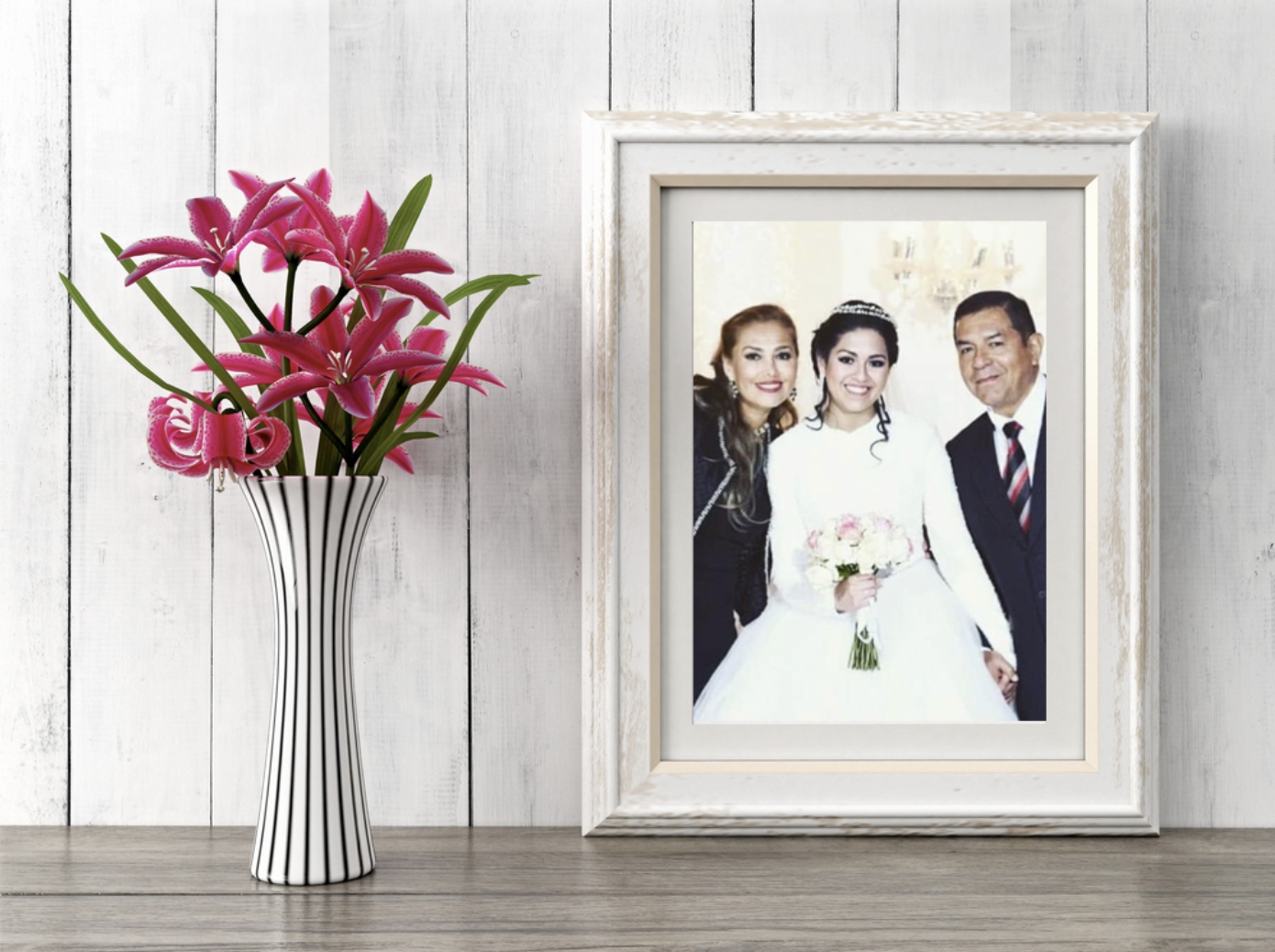 Bat-Sheva's parents
“I realized Christianity is not my religion”
Through their discussions, Oz came to understand his own Judaism more deeply and began strengthening his observance. Still, he never placed any conditions on Batsheva for their relationship.
“He never said I would need to convert for him, though later I understood that this was risky for him. For me, they were simply informational conversations. I was sincerely exploring Judaism because I believed Christianity was not my religion.”
When did you begin the conversion process?
“I checked which places in Peru could teach me about Judaism. I watched lectures and wanted to try,” she says. “I went to a synagogue in Peru, and they rejected me. They said they don’t convert people: ‘Sorry, goodbye.’ They wouldn’t give any information. I sent messages, called, emailed, and always received the same answer. I became more persistent and more curious.”
Eventually she understood that conversion in Peru would be impossible. “I thought, ‘Maybe this isn’t for me?’ And then Oz returned to Israel. After seven months of phone conversations, I had theoretical knowledge that I wanted to put into practice. Oz guided me, and I wanted to see how it felt. I tried keeping Shabbat at home as best as I could, I began separating meat and milk, and I tried celebrating Chanukah.”
Her family laughed at her attempts. “They claimed it was because I had feelings for Oz. I told them that if I were in love, I would have run to Israel. Then they understood I was serious. When I changed the way I dressed, it was a big step. I worked at a large company, Peru is a hot country, and suddenly I was wearing long clothing. People at work were shocked — they didn’t see the inner transformation happening at home.”
Her father, a devout Christian, responded calmly. “He asked how I felt and if I was sure. He was relaxed — maybe because I was so clear. After acting like a Jew for a while, I wanted to be one.”
She had two options: converting in the U.S. or in Israel. She wanted Israel because some U.S. conversions are not recognized. At the time, her manager at work was fired and she had a chance to be promoted. She prayed to receive the promotion, but God had other plans. A higher-level boss refused to promote her, and that helped her decide to pursue conversion in Israel.
In 2016, Batsheva came to Israel. Oz’s family knew her intentions and welcomed her warmly. The rabbinate does not rush to help a woman convert when she is in a relationship with a Jewish man — because she might have ulterior motives rather than sincere love of Judaism.
“I thought they might say I wanted to convert for citizenship,” she explains. “But I met with the conversion instructor, and she knew our story — she knew Oz wanted to strengthen his Judaism, and so did I. She met with me to assess how serious I was. I gave up everything: work, my car, my family, my homeland, my friends. After the meeting I cried like crazy. She asked difficult questions. I was nervous and wanted it so much, so I felt like I had to prove my seriousness unnaturally. I felt the meeting didn’t go well. She was doing her job — asking the hard questions. I wanted another meeting. But she was convinced. She gave us a chance.”
The conversion studies were supposed to take over a year, but Batsheva finished them in nine months. “I studied seriously, wrote and recorded the lessons, and then went to the rabbinical court. In 2017, I was born again. I became a Jew. It was amazing. I felt something in my heart and soul,” she says tearfully.
She didn’t waste time. Less than two weeks after her conversion, she married Oz, who by then was strongly committed to Torah observance. Her family flew to Israel for the wedding, happy that she completed the process and found joy.
The couple now has three daughters, and Batsheva is a full-time mother. Her favorite mitzvah is family purity. “Every time I go to the mikvah I feel the same feeling — it reminds me of my first immersion as a Jew. It’s like closing a circle every month.”

