

Personal Stories
From Krakow to Israel: Lili Haber’s Mission to Revive Poland’s Lost Jewish Heritage
Through archival research, heritage projects, and a monthly bulletin, Lili Haber works to safeguard Jewish memory in Poland
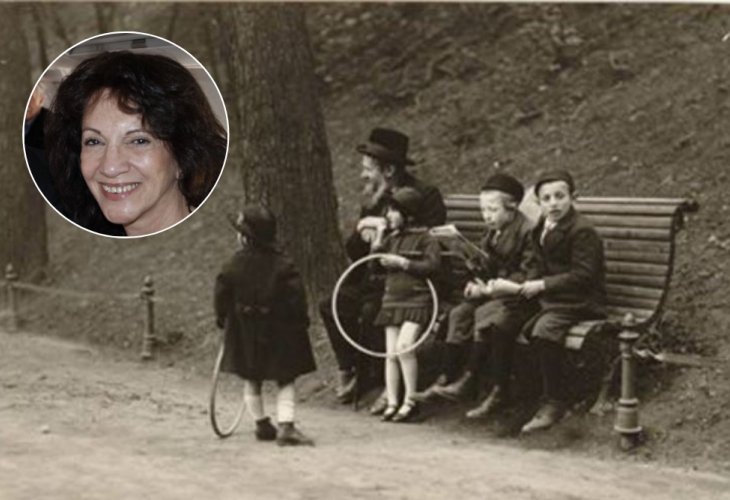 The 1930s in Planti, in the circle: Lily Haber
Lili Haber lives in Israel, but for the past 20 years she’s been flying back and forth between Israel and Poland quite frequently.
“Even when I’m in Israel, I’m thinking about Poland and breathing Poland,” she says, “or more precisely – the Jewish life that once existed there.”
Lili was born in postwar Poland to parents who survived the death camps. But surprisingly, she, who is now so deeply connected to what took place in Poland, had no idea for a very long time that her parents were Holocaust survivors.
“Maybe it sounds crazy,” she says, “but I came to Israel with my parents in 1950, when I was a two-year-old girl. My parents were among those survivors who didn’t speak at all about what they went through – literally not a word. The press was not developed like it is today, and you couldn’t follow the news like now. So even though I was born in Poland and was part of the first circle of people around survivors, I actually didn’t know anything about the Holocaust.
The first time in my life that I heard about it was when I was in ninth grade and the Eichmann trial took place. Even then, it felt theoretical to me – like the Crusades or ancient Rome. I knew my parents had come from Poland, but I never understood what that meant, and they on their part didn’t bother to explain.”
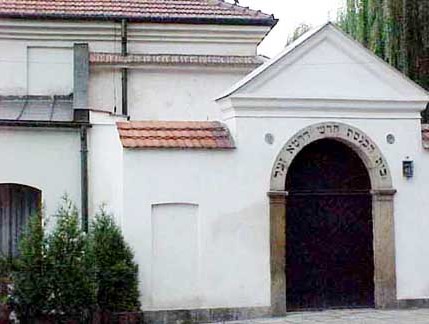
Kaddish at My Grandmother’s Grave
In 1987, when Lili was already married with three children – the oldest in 11th grade – her father noticed a notice in the newspaper saying that a group of first and second generation Holocaust survivors was organizing a trip to Poland.
“These were days when Poland was still communist, so the flight and the stay there were not simple at all,” Lili recalls. “Even so, my father decided to take me and my sister, in order to ‘show’ the Poles that he had managed to survive and even build a family.
We flew to Poland for ten days, and looking back I can say those were the ten days that changed my life. It was the first time Poland wasn’t just a theoretical concept for me, but became part of my personal history – part of my life.”
The most emotional moment came when they reached Krakow. “At some point my parents suddenly started looking very moved. We walked around there for a whole day, and it turned out they remembered everything – addresses, places, names… nothing had been forgotten over the years.
One day we arrived at the cemetery in Krakow and located the grave of my grandmother – my father’s mother – who had died before the war. I had never heard anything about my grandmother, and suddenly I was standing there at her grave.
That image is the most powerful one I remember in my entire life – more than the births of my children and more than their weddings… My father standing and saying Kaddish at his mother’s grave.”
Later they also visited the concentration camp connected to Schindler’s list, thanks to which her father was saved.
“And then I saw my father break,” she says. “He simply couldn’t comprehend how a place that had once been full of thousands of prisoners could suddenly be completely empty – and green. For him it was inconceivable. He kept saying to us over and over: ‘There’s nothing here… there’s nothing here…’”
Lili returned from that trip with a thick photo album, and for two years she barely put it down.
“Although my father shared a little with us, he still kept a lot inside and we barely knew what they had actually gone through. My mother preferred complete silence, and we couldn’t get anything out of her.
Around the year 2000, my parents passed away, and I suddenly realized that I hardly knew anything about my family history – and that I no longer had anyone to ask. That’s when I threw myself deeply into researching the heritage of Poland. I started investigating on my own – learning about Poland, its Jewish heritage and the life that existed there before the war – and of course about the Holocaust.
I was interested in all of Poland, but for me Krakow was the crown jewel, and most of the research focused on it.”
Lili has been involved in this field for about 20 years, but during COVID she took her research one step further.
“I used the free time and published a book with more than 200 names of prayer houses that once existed in Krakow. For some of them, I managed to reach almost maximum detail – descriptions of what they looked like, the names of the wardens, and even the names of regular worshipers.
In the book I also discussed the differences that existed at that time between a ‘prayer house’ (Beit Tefillah) and a shtiebel, whereas today we tend to call every place of prayer by one name – ‘synagogue.’
I invested hours and hours in this work – and that’s still just a small part of what I do.”
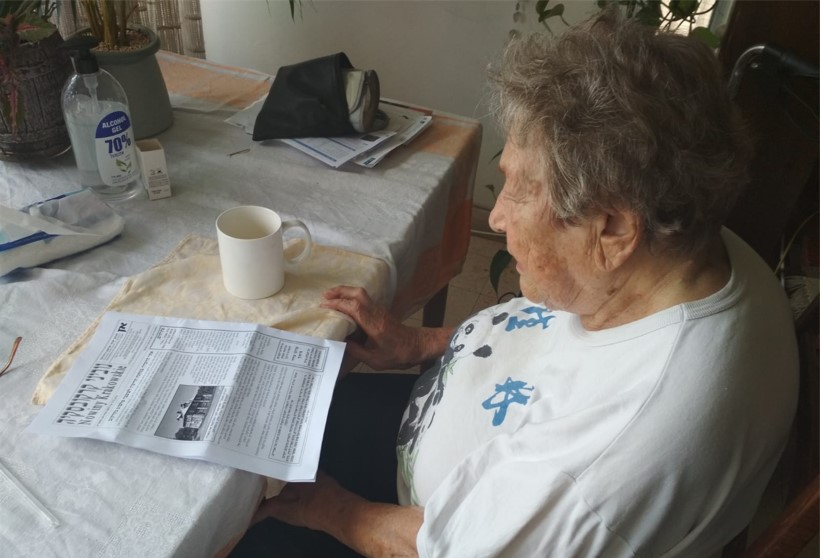 ניצולת שואה בת 95 קוראת את העלון החודשי של הארגון
What is your goal in gathering all this material?
“Poland fascinates me,” Lili answers simply. “But in this case it’s not just curiosity – it’s much more than that. There is a deep emotional connection that I don’t really have a way to explain. I feel like part of that world. I really belong there. And when I’m in Israel, I often find myself missing Poland – or more accurately, missing Polish Jewry.”
Another part of her activity is a monthly bulletin that she produces for former residents of Krakow.
“I publish stories that took place before the Holocaust, during it, or after it – all connected to Krakow. I do this with a clear understanding that if no one takes responsibility for continuity, no one will remember.
I send the bulletin to 1,200 postal addresses – most of them older people who don’t have email or printers – and to another roughly 2,000 email addresses around the world and in Israel. I get lots of responses from former Krakow residents, some Holocaust survivors and some from the following generations. Sometimes they add information or correct me, and in that way my knowledge grows and expands.
Just recently someone from abroad sent me a picture of her 95-year-old mother sitting with her morning coffee and reading the bulletin I sent. When I see such pictures, I feel that all the effort is worth it.”
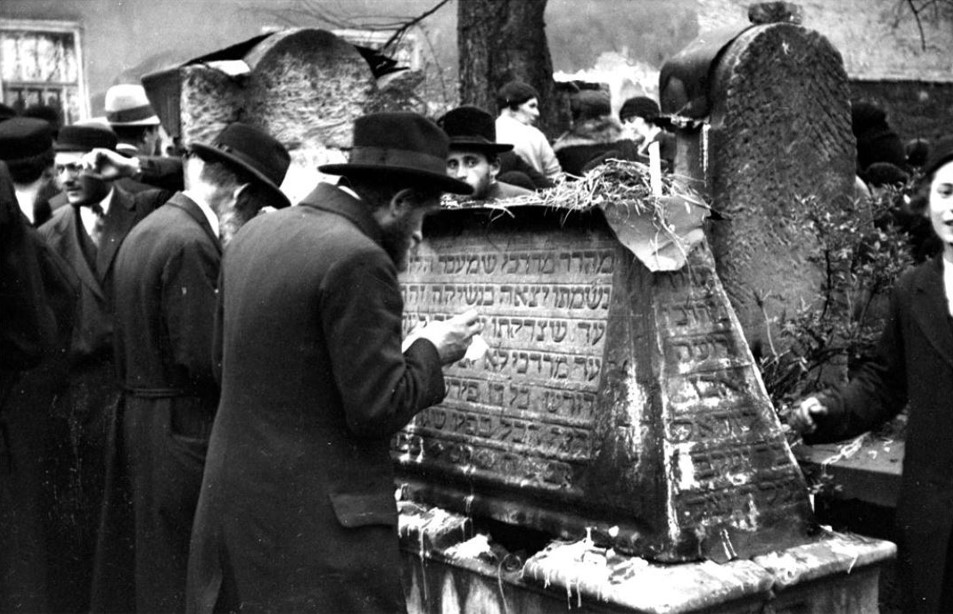 על קבר הרמ"א
What is the situation of Jews in Poland today? What do the Jewish communities look like?
“In Poland, unlike some other places in Europe, there are almost no real Jewish communities. According to estimates, there are between 5,000 and 10,000 Jews in the whole country. But if we talk about people of Jewish descent, then we’re talking about tens of thousands.
After the Holocaust there was very heavy assimilation, and many Jews in Poland married non-Jewish spouses. Even the current First Lady of Poland is the granddaughter of a Jew.
“One of my Polish acquaintances once told me that she salts meat, because her grandmother always did that. We both understood that it’s possible her grandmother was Jewish – but it’s also possible she wasn’t; maybe she just knew Jews and learned from them how to salt meat… These are the kinds of stories you hear all the time in Poland. The country is full of Jewish roots, and it’s often hard to identify or know who truly has a connection to Judaism.”
Lili is also very active as a member of Krakow’s Council of Museums. “This is an important role in my eyes,” she notes. “I’m very much an outlier on the team, because everyone else is Polish – important professors and PhDs – but I’m sure my presence there contributes a lot.
Among other things, we deal with memorial sites and documenting events that took place. Many times we literally have to fight with local residents who don’t want commemoration or documentation, and feel it comes at the expense of their land or their convenience.”
She adds that until about 15 years ago, she did not speak a word of Polish. Today she speaks fluently, and often has fascinating conversations with citizens and even senior government officials.
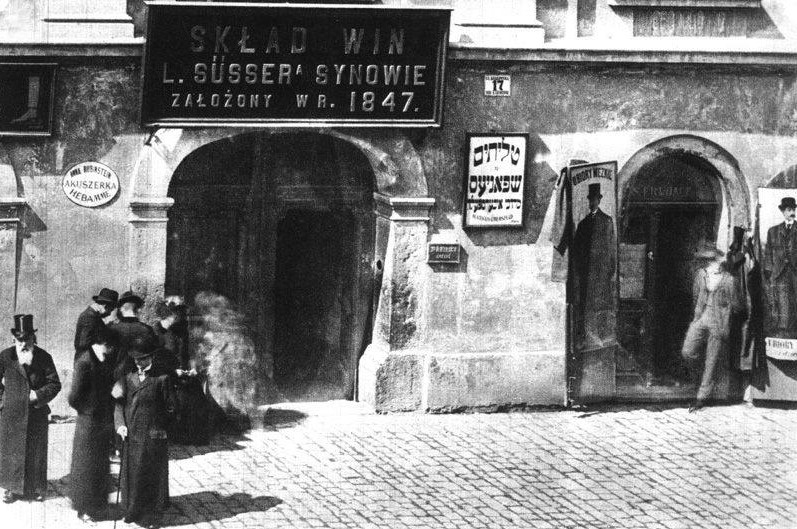 רחוב קרקובסקה
Is there Antisemitism in Poland?
“I don’t want to generalize, because it definitely varies,” she says. “Generally, you can see that the less educated social layers — people who live in villages and in the east of the country — are simple, working people, many of them farmers. Most are deeply influenced by the Church and are convinced that the Jews killed ‘that man’ (Jesus).
By contrast, the city dwellers, who tend to be more educated, are often sympathetic to Israel and interested in the Israeli story and our problems in the Middle East. Sometimes it even saddens them that we haven’t yet reached our own peace.
Among them there are people who are clearly interested in the Jewish people and even go to volunteer on Sundays in Jewish cemeteries — cleaning, maintaining, putting up signs. They’re very curious about Jewish holidays and want to hear about them. That’s something quite unusual, because they’re not taught equally about other cultures.
“By the way, in recent years you can see that there are more than 40 cities and towns in Poland where an annual Jewish culture festival takes place — with Jewish cooking workshops, Jewish music and klezmer. Quite a few people participate and openly say that in their home they ate that kind of food or sang those kinds of songs. As I mentioned, in most cases these aren’t fully Jewish people, but families that assimilated, or people who once lived next to Jews and adopted some of their customs.”
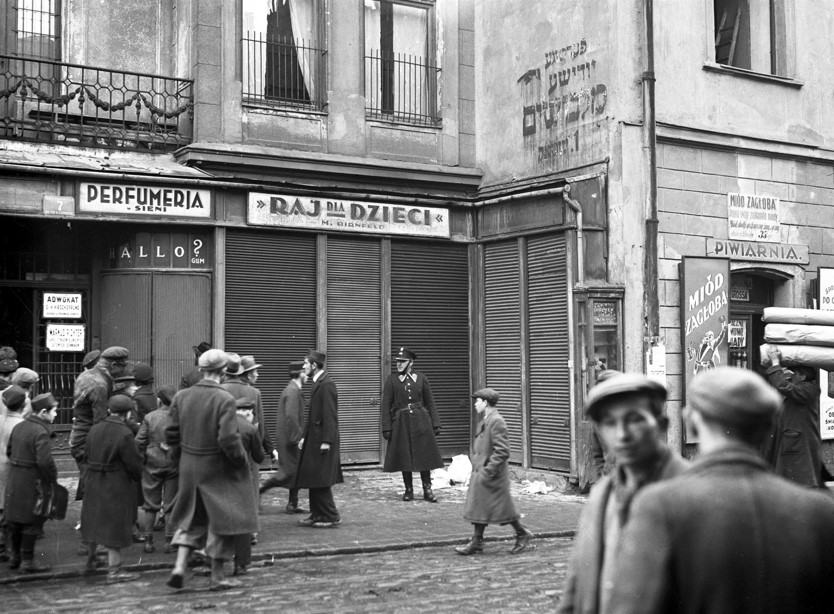 רחוב קרקובסקה
Israel’s Unofficial Ambassador
Today there are basically three types of tourists who come to Poland:
Chassidim, who often come to pray at cemeteries, mainly at the grave of Rabbi Elimelech of Lizhensk.
Israelis who come to shop, like they do in many other countries.
Youth trips.
During the COVID period, there were no youth trips at all, and now there is talk of not renewing them. Personally, I think that’s actually a good thing. Age 16 is very early to be exposed to such things. It’s an age that isn’t truly capable or mature enough to process this horror.
Quite a few studies have compared teenagers who went on these trips to adults with families, and the findings show that the older a person is and the more rooted they are — with children and family — the greater their ability to absorb and understand what happened.
I’m not saying we shouldn’t teach the Holocaust in high school — absolutely not. But there are plenty of ways to do that here in Israel. There’s no real need to fly them far away for it.”
Regarding the issue of abandoned Jewish property in Poland, Lili wants to clarify: “All over Poland there are two types of property:
Communal property – cemeteries, mikvehs, study halls and the like. These are assets that belong to the Jewish community, and the Polish government does recognize this. They are slowly returning the property itself, or its equivalent in money or alternative property.
Private property – in such cases, if someone wants to prove ownership, they must go to court and, if the court is convinced, they get the property back. But today this almost never happens, because there are so many descendants for every original owner, and once the inheritance is divided among them all, the sums are very small and don’t justify the effort.
“In addition, there is property that was nationalized by the communist regime, and right now there is a struggle with Poland over this issue. The Polish government claims that property owners whose assets were nationalized and who did not come to claim them until now have lost their chance, and the assets revert to the state.
In contrast, Minister Yair Lapid protested strongly and argued that it’s unacceptable to limit the possibility of reclaiming Jewish property in this way.
“On top of that, there is also a huge amount of property classified as ‘property without heirs.’ According to Polish law, such property goes to the state, and that too has aroused anger among senior officials in Israel. They argue that this property belongs entirely to Jewish communities and should be transferred to them.
Personally, I think it’s possible to talk to them. I flew to Poland to meet with the Minister of Heritage and Culture. I suggested an original idea that could allow the dispute to be resolved in a good way, and right now they’re checking whether it can be implemented.”
Are you also in contact with the Israeli government?
“Of course. I wrote to Minister Lapid several times, and I’ve also spoken with many senior officials from the Foreign Ministry, with Knesset members and ministers.
On the face of it, it looks hard to achieve real dialogue between the Polish government and the Israeli government, but I believe that if we act wisely, we’ll be able to achieve significant gains. This is our mission on behalf of those who were and are no more.”

