

Health and Nutrition
Maimonides’ Medical Wisdom: How an 800-Year-Old Healing System Is Transforming Modern Health
Dr. Gil Yosef Shachar explains why Rambam’s holistic approach, lifestyle principles, and nutrition guidelines are more relevant than ever in the 21st century
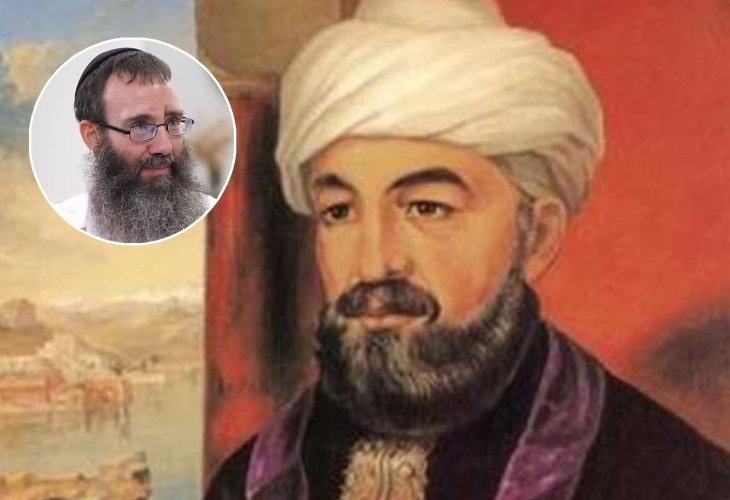
When we hear the phrase “Rambam's Medicine”, most people imagine herbal mixtures and old-fashioned potions that seem far removed from modern Western medicine.
Dr. Gil Yosef Shachar (M.D.), head of the Rambam Medicine Center, argues that Rambam’s medical teachings go far beyond ancient recipes. We met with him to explore whether Maimonides’ 800-year-old medical guidance is still relevant today.
How Does a Technion-Trained Doctor End Up Studying Ancient Medical Texts?
“During my medical studies, I realized that Western medicine offers excellent solutions for medical emergencies but often has very limited answers for chronic diseases.
“I understood that lifestyle — especially nutrition, plays a crucial role in both preventing and healing chronic illness.
“Unfortunately, in medical school we learn almost nothing about nutritional medicine or its power to prevent and cure disease. So alongside my studies, I began to learn nutritional medicine independently. I read dozens of books and thousands of scientific papers.
“In that period, I happened to walk into a Judaica bookstore and discovered a set titled ‘Rambam – Medical Writings’. As a medical student, I was curious to see what medicine looked like 800 years ago and what Maimonides could possibly teach our generation.
“I bought the series and began reading — and quickly found myself studying it in depth. I was stunned to discover that many of Rambam’s medical guidelines align perfectly with modern scientific findings — some of which were discovered only in recent decades.”
Did Rambam’s Writings Influence Your Medical Training?
“Yes. After reading his medical texts, I requested to write my doctoral thesis comparing Rambam’s medical teachings to modern scientific research. The Technion approved it. The work compared Rambam’s teachings to over 100 scientific studies — and was accepted as an outstanding thesis.”
What Impressed You Most in Rambam’s Writings?
“First of all, I discovered a holistic medical approach — one that addresses every aspect of human life: nutrition, movement, breathing, sleep, sunlight exposure, marital intimacy, hygiene, and, of course, extensive attention to emotional and mental health.
“It moved me to realize that we have, in our own heritage, such a profound medical system that comes from one of the greatest Jewish leaders in history.
“But what impressed me most were Rambam’s dietary guidelines. As I was deeply immersed in nutritional medicine, I was amazed by how precise and scientifically accurate his nutritional recommendations were.”
The Rambam's Guidelines on Fish
“For example, Rambam writes that most fish are a poor-quality food, and one should eat only salt-water fish — and even then, choose the smaller ones.
“Today, with advanced lab analyses, we know that omega-3 — the essential fatty acid, is found mostly in ocean fish and almost absent in freshwater fish.
“I was especially amazed that Rambam knew one should avoid large fish and prefer smaller ones. Today we know that larger fish contain higher levels of mercury, heavy metals, and PCBs.
“But in Rambam’s time the world was clean! There were no pesticides, no industrial wastewater, no coal plants emitting mercury. So what toxins could Rambam possibly have been referring to?”
“Rambam didn’t explain his reasoning. But remarkably, I later came across a scientific paper analyzing air bubbles trapped in deep layers of ice in a Wyoming glacier. These bubbles preserve samples of ancient atmospheric air.
“It turns out the atmosphere always contained small amounts of mercury. And throughout history, scientists found sudden spikes — lasting several years, in atmospheric mercury. These spikes matched periods of major volcanic eruptions.
“When volcanoes erupt, they release significant amounts of mercury into the atmosphere.
“I can’t say for certain this is what Rambam meant — but clearly he knew that toxins exist in the sea, and that large fish accumulate more toxins than small ones. That precision appears again and again in his work.”
How Did Rambam Know These Things?
“That’s a good question. I don’t have a definitive answer. Beyond being a towering genius — as seen in his halachic, philosophical, and medical writings, he likely possessed extraordinary observational skills and the ability to draw profound conclusions.
“He treated thousands, maybe tens of thousands of patients. His experience was immense. Some might also say he had Ruach HaKodesh (divine inspiration), especially as a righteous spiritual leader.
“Probably it was a combination of experience, sharp intellect, deep observation, and perhaps a touch of divine insight.”
Are Rambam’s Recommendations Still Relevant Today?
“Absolutely. Not only are they scientifically accurate — they are more relevant today than in Rambam’s time.
“Today we live in a far more polluted world, under constant stress, exposed to processed food, with much less physical movement. Our bodies face burdens unknown in earlier centuries: pesticides, preservatives, air pollution, electromagnetic radiation, and more.
“The rise in chronic diseases — heart disease, stroke, cancer, diabetes, hypertension, autoimmune diseases, shows how far we’ve drifted from natural living.
“People who follow Rambam’s guidelines dramatically reduce their risk of disease and accelerate healing.
“In our clinic we see it daily: people reversing diabetes, clearing arteries, lowering blood pressure, reducing medication use, healing digestive issues — and more.”
Are Rambam’s Teachings Enough, or Do We Need Modern Science Too?
“Rigid thinking is never good. Rambam himself learned from Greek and Muslim physicians, and advocated learning from everyone — Jew or non-Jew, and advancing human knowledge.
“So yes, often Rambam’s guidelines aren’t enough on their own. We should use every available tool to promote healing: nutritional strategies, herbal medicine (Ayurvedic, Chinese, Western), modern supplements, and more.
“I believe we must live as Rambam recommended — yet in today’s world that is not always sufficient. “If Rambam lived today, I am certain he would endorse integrating ancient wisdom with modern scientific discovery.”
What About Western Medicine? Does It Have a Place?
“Of course. Western medicine saves lives every single day. I don’t oppose medications entirely — only the automatic and immediate reliance on them. Western medicine rarely attempts to heal illness through nutrition or lifestyle.
“Doctors simply aren’t trained in nutritional medicine — it’s not taught in medical school. I believe medication should be the last line of treatment, after natural approaches have been tried — not the first.
“Drugs have side effects and don’t address root causes. Nutritional and lifestyle changes often heal the problem completely — or at least greatly improve quality of life.”
One Rambam Recommendation for a Healthier Life?
“To choose only one tip is difficult — but if I must, I would choose investing in our soul and emotional well-being.
“Rambam emphasized reading books that shape healthy thinking and help us cultivate inner peace. Emotional tranquility is among the most important factors in preventing and healing illness.
“For a practical tip: Before every meal, pause for 20 seconds.
Close your eyes. Reflect on the blessings in your life and simply say ‘thank you.’
“Genuine gratitude brings immediate joy — and joy, Rambam writes, is one of the most powerful forces for healing. “He notes that many people recovered against all odds because they were joyful.”

