

Raising Children
Living as a Highly Sensitive Person: Signs, Traits, and Healthy Ways to Cope and Grow
How validation, support, and self-acceptance transform sensitivity into strength
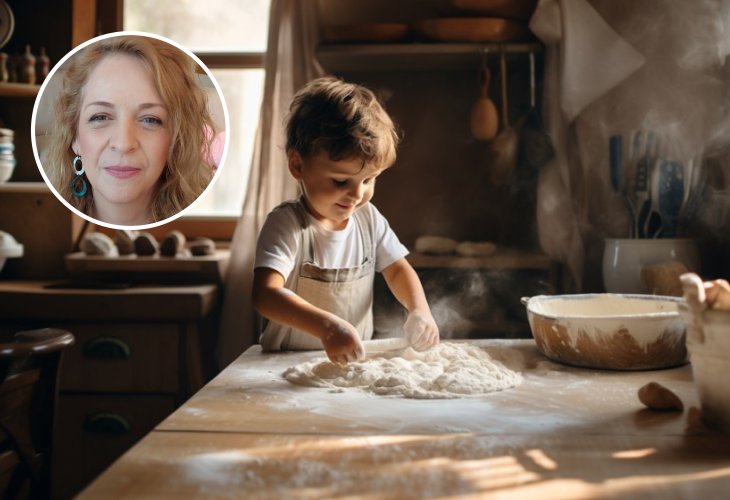
There are moments in life that are considered defining moments — moments of discovery that significantly change the course of one’s life. For Shira (a pseudonym), age 30, such a moment came when she first learned that the collection of symptoms she had been dealing with actually had a name and a clear psychological definition.
“From a young age I was considered a much more sensitive and emotional child than others,” she recalls. “I remember that at family events, for example, I would always cling to my mother, because I couldn’t handle the crowds, the loud noise, and the overstimulation it created for me. I always hoped it would pass as I grew older — that it was just something characteristic of children.”
“But the years went by, and that sensitivity didn’t change,” she continues. “At the same time, I was always this kind of ‘little adult’ — someone who deeply sensed the people around her, was extremely empathetic, understood things quickly, and had emotional intelligence far beyond others my age.”
“Even as an adult woman, there were periods that were very difficult for me. I knew there was something delicate inside me that struggled with loud sounds and noise. Many times I would feel things — either about myself or about the people around me — with much greater intensity than others, and I had to deal with the consequences of that, both for better and for worse.
Deep inside, I felt that I was somehow different from most people, but I couldn’t quite put my finger on what it was. I think my parents and close friends sensed it too. On the one hand, they deeply valued this gift of sensitivity I had toward them — but on the other hand, they sometimes felt afraid to hurt me, or felt a need to ‘protect’ me, which ironically is an experience I actually dislike.”
A few years ago, Shira’s life changed after she came across a groundbreaking book titled The Highly Sensitive Person, written by researcher Dr. Elaine Aron. The book describes a group of people born with a more sensitive nervous system, who experience various symptoms associated with heightened sensitivity.
“I’ll never forget the day I saw the first article about it in a major newspaper,” Shira says. “At the beginning of the article, it described — almost word for word — the symptoms I knew so well from my own life, and then it finally gave them a name: ‘Highly Sensitive Person.’ Later, it also opened a window into all the beautiful strengths that exist within this sensitivity, as well as tools for managing emotional overwhelm. Over the years, I’ve really learned how to work with it — and today, it actually serves me.”
Ruti Lax, an emotional therapist, is also deeply familiar with this field.
“My connection to the topic comes from my own personal experience and from people close to me,” she explains. “Professionally, I am an educational counselor and therapist, and I specialize in working with people who have high sensitivity — especially those who didn’t receive the proper understanding or support for it during childhood, causing it to eventually develop into an emotional challenge. I meet many such people in my clinic.”
Ruti arrived at this field through her own journey. One day my mother brought me a new book called The Highly Sensitive Person and asked me to read it — and that’s where it all began. Suddenly I realized that this thing I’d been carrying all my life actually had a scientific definition. I wasn’t alone — and there were also ways to work with it.”
What exactly is a “Highly Sensitive Person”?
“Statistically, we’re talking about around 15–20% of the population,” Ruti explains. “Interestingly, research shows that in the animal kingdom too, about 15–20% of animals display heightened alertness and sensitivity.
A highly sensitive person processes what happens around them on a much deeper and more intense level. Because of that, they are more affected by their environment than other people, and often become tired more quickly due to the emotional and sensory processing load.
It’s important to emphasize: they’re not spoiled, not hysterical, not exaggerating — and it’s not a ‘female trait,’” she laughs. “Men are just as sensitive — and in fact, they often struggle more, especially in a culture where social expectations tell men they need to be tough. So many of them try hard to hide it.
On the other hand, this same sensitivity also makes them more empathetic, caring, and perceptive — they naturally sense the feelings and needs of others much more deeply.”
Is high sensitivity something you’re born with — or something life develops?
According to Ruti, the answer is clear: “There is a strong genetic factor showing that people are born with it. But what happens afterward depends heavily on the environment. If the environment is accepting, understands the person’s needs, helps them regulate their sensitivity, and recognizes the enormous strengths and potential within it — that person thrives.
If however the environment dismisses it, belittles it, or treats it as a flaw — the sensitivity can become a real emotional struggle.”
![(Photo: ShutterStock)]() (Photo: ShutterStock)
(Photo: ShutterStock)
 (Photo: ShutterStock)
Can high sensitivity be ‘treated’?
“It’s not a disorder and it’s not an illness, ” Ruti clarifies. “It’s a genetic trait. But when it isn’t acknowledged or supported properly — it can develop into various difficulties.
Sometimes it’s confused with ADHD or with autism — when a child withdraws socially. But in reality, it’s none of those things. It is simply a genetic trait that can become unbalanced when it doesn’t receive the right care.
Preventative emotional support is extremely important. First, it requires deep self-awareness — understanding and accepting that you’re a highly sensitive person. Then, it involves developing emotional regulation and self-management tools. For parents of sensitive children, it means respecting their boundaries and giving them space when needed.”
She adds: “As adults, it’s important to build habits that allow emotional processing — such as journaling, art, sports, creative expression, or emotional therapy. Approaches like CBT and DBT are especially effective for sensitive individuals.”
Sensitivity inside relationships
Ruti also addresses the relational side: “Highly sensitive people often find themselves in unhealthy or harmful relationships — precisely because of their sensitivity. The internal belief of ‘I’m too much’ or ‘I’m not enough’ can lead them to tolerate emotional harm or stay in situations where they don’t feel valued.
When they are seen, respected, and understood — when others recognize the beauty in their sensitivity, they flourish, and their relationships become much healthier.”
Is being highly sensitive a positive or negative trait?
“The trait itself is neither positive nor negative — but when channeled correctly, it is absolutely a strength,” Ruti says.
“In today’s younger generation, sensitivity is increasingly seen as something valuable — and when it’s validated properly, it becomes an incredible gift.
Highly sensitive people often excel in leadership roles because they understand emotions, notice subtle developments, and communicate deeply with others. I once had a manager like that — he saw me, empowered me, and it made all the difference.
They also tend to be wonderful parents, deeply attuned to their children.”
She adds: “Sensitivity also creates a natural openness to spirituality, depth, and meaning. Meditation, prayer, mindfulness, emotional awareness — these tools often feel intuitive to sensitive people. They search for meaning and connection rather than superficiality — and that’s a tremendous source of strength.”
 (Photo: ShutterStock)
What does parenting a highly sensitive child look like?
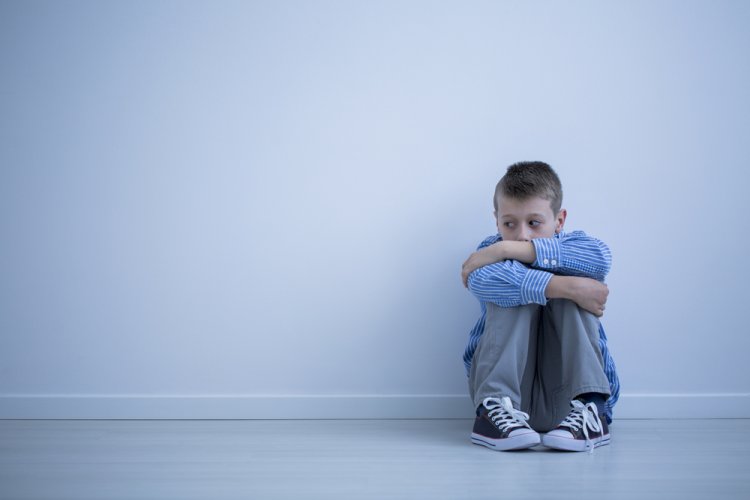
“The most important thing is validation,” she says. “The child needs reassurance that it’s okay to be this way, and that their sensitivity is something beautiful.
Sometimes it also helps to prepare them in advance for challenging situations — almost like rehearsing. You sit together and say: ‘Okay, something may happen at school — let’s practice how you’ll handle it.’ This works for adults too, and it can be incredibly empowering.
Beyond that, children should learn to take care of themselves. They need to understand that alongside the gift of deep empathy and emotional awareness, there is also intensity — and sometimes they need to ‘put on their oxygen mask first,’ like on an airplane, so they have the strength to function.
When a sensitive child grows up feeling safe, validated, and supported — the sky is truly the limit.”

