

Health and Nutrition
Can the Pomegranate Help Us Stay Forever Young?
A new study suggests that a substance derived from pomegranates could reverse aging processes and rejuvenate cells.
- Hidabroot
- | Updated
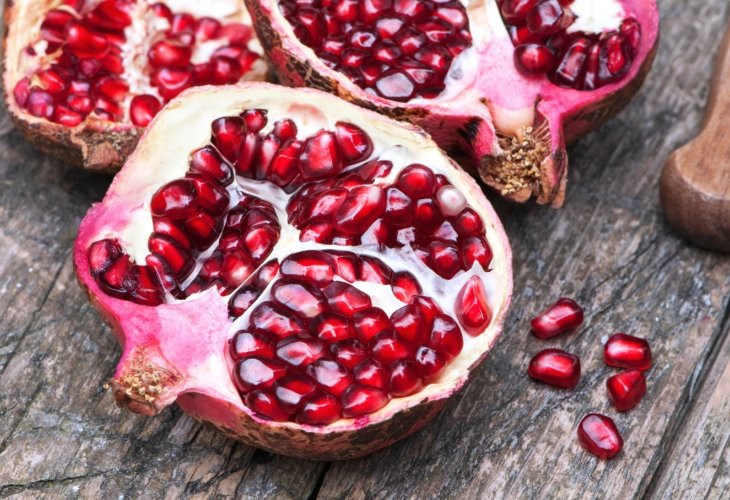
A group of researchers from EPFL University in Lausanne, Switzerland, believes it has discovered a potential fountain of youth in an unexpected source: the ruby seeds of the pomegranate.
As we age, our cells struggle to recycle their “power stations.” These power stations—the mitochondria in each cell—gradually lose their ability to function properly, leading to their accumulation within the cell. This decline affects the health of various tissues, including muscles, which weaken with age. Additionally, the buildup of dysfunctional mitochondria is suspected to contribute to age-related diseases such as Parkinson’s.
This is where the pomegranate comes into play. Scientists have identified a molecule capable of independently restoring a cell’s ability to recycle defective mitochondrial components: a molecule known as Urolithin A. “This is the only molecule we know of that can restart the cleaning process of mitochondria. It is entirely natural, and its effects are both measurable and significant,” says Patrick Aebischer, a leading figure in the research.
The researchers began their study using nematodes—worms considered elderly at just 8–10 days old. Exposure to Urolithin A extended their lifespan by more than 45% compared to the control group. The benefits were then tested in animals closer to humans: mice. Once again, the molecule rejuvenated the mitochondria, and older mice—two years old—demonstrated 42% better physical performance than mice in the control group.
Before rushing out to buy pomegranates, it’s important to note that the fruit itself does not contain the magic molecule, only the precursors needed for its production. When we consume a pomegranate, some components are converted into Urolithin A by the friendly bacteria in our gut. As a result, the benefits derived from pomegranates vary greatly between species—and even between individuals—depending on the type and abundance of gut bacteria they have. Some people lack the bacteria capable of producing Urolithin A from pomegranates. This is why the Swiss scientists hope to develop a Urolithin A supplement that anyone can take directly, gaining the benefits regardless of their gut bacteria.

