

Health and Nutrition
Maimonides’ Medicine vs. Modern Science: What the Rambam Really Taught About Health and Healing
How smart nutrition, fewer empty calories, and natural balance can help prevent today’s biggest diseases
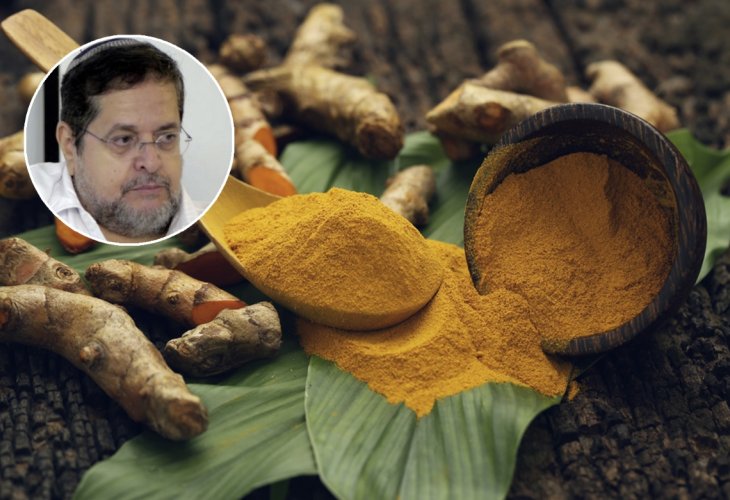 In circle: Prof. Haim Gamliel (Background photo: shutterstock)
For thousands of years, ever since human beings first became aware of the healing forces around them — and no less, within themselves, mankind has searched for ways to cure illness and relieve physical suffering. Throughout history, countless methods have appeared, each claiming to offer true and enduring healing. Yet with time, many of them faded away and disappeared.
What, then, is the secret of the healing approach of the greatest physician of all time — the Rambam (Rabbi Moses ben Maimon) — whose writings, composed between 1138–1204, have since been translated into dozens of languages, including Latin, English, German, French and Hebrew?
Today, on the shelves of both conventional and alternative medicine, one may find dozens — if not hundreds — of books, methods, and practitioners who claim to “represent” the Rambam’s medical teachings. Their intentions may be sincere, but not all of them truly understood what he meant, or what his approach actually was.
“Much Confusion, and Misunderstandings”
“In the attempt to interpret the Rambam’s teachings, various topics he discussed were given different — and sometimes contradictory — interpretations,” explains Professor Chaim Gamliel, author of the bestselling book Maimonides’ Medicine in the Light of Contemporary Science and head of the ROTEM Institute for Preventive Medicine and Nutrition.
“As a result, confusion has overshadowed truth, and many have completely distorted his original intent.”
One example he gives is of a figure in Israel who presents himself as a “specialist in Rambam’s medicine,” and who claims that the Rambam opposed the consumption of animal-based foods such as meat, fish, and dairy products.
“This claim is fundamentally false,” says Prof. Gamliel. “Anyone who seriously studies the Rambam’s writings will see that, for example, under the subject of ‘milk,’ the Rambam mentions dairy products at least one hundred times — and in every instance he praises them, without writing a single negative word against their consumption.”
“The same is true regarding meat, fish, eggs, and cheese. Those who try to portray the Rambam as if he were ideologically vegan are simply mistaken — and misleading others.
Likewise, there are ‘experts’ who claim to produce remedies according to the Rambam’s method — but a brief examination reveals that many of the ingredients they use were never used by the Rambam and even contradict his clear instructions not to rely on mixtures containing too many components.”
From a Small Booklet — to a Lifelong Research Project
In light of the widespread confusion he encountered, Prof. Gamliel decided to take on the challenge. He embarked on an intensive process of research and study that lasted more than three decades.
The outcome of this long and rigorous journey was a comprehensive book — reviewed by leading rabbis and experts in the Rambam’s writings, and warmly received by readers in Israel and abroad. Some scholars have even referred to it as “the Bible of Rambam-based medicine,” calling it a groundbreaking work.
What makes this book different?
“There are many reasons,” says Prof. Gamliel. “For example — even in an area as basic as the Rambam’s biography, there are numerous errors and conflicting versions. The first section of my book is already a breakthrough — it presents a detailed chronological table of the Rambam’s life, the events he experienced, the figures who influenced him, and the precise dates of his halachic, philosophical, and medical works.”
“This organization of events — especially according to the Rambam’s age at each stage, allows us to better understand his extraordinary intellectual capacity.”
From this table, researchers were able to determine that:
His halachic works were written primarily between his 20s and 40s
His philosophical writings mainly between his 30s and 50s
His medical writings — mostly from his 40s onward, until his death
The book’s second major section focuses on the Rambam’s psychological model of the Five Faculties of the Soul, which Prof. Gamliel compares to Howard Gardner’s theory of Multiple Intelligences.
The third section includes a precise encyclopedic glossary of Rambam-era medical terminology — enabling readers to determine with clarity the Rambam’s actual position on foundational concepts in medicine and nutrition.
The fourth section offers a comprehensive analysis of Hilchot De’ot (The Laws of Character Development) — interpreted through the lens of modern scientific research. According to Prof. Gamliel, this is the first time these teachings have been evaluated using contemporary scientific standards.
“Dietary Change Can Prevent and Heal Disease”
In the seventh section of his book, Prof. Gamliel examines medicinal plants and culinary herbs mentioned by the Rambam — alongside scientifically verified medical properties supported by modern research.
“Turmeric is a classic example,” he explains. “The Rambam described numerous healing qualities associated with it eight hundred years ago — and only in the past two decades has modern science begun confirming his conclusions.”
The book took nearly ten years to complete, undergoing major revisions throughout the process. Although it was originally intended to be a small introductory volume, it eventually expanded into a single comprehensive work — in response to students and readers who sought deeper guidance.
Prof. Gamliel also recalls, with sadness, his academic assistant, Mrs. Chaya Bar-Oz, who devoted years to researching historical elements of the Rambam’s life, but passed away from cancer before the book’s publication.
How Do We Change Our Lifestyle — in an Instant-Gratification World?
When asked which first steps he recommends for those seeking to improve their health, Prof. Gamliel explains that meaningful change in a Western diet must be based on two core principles of the Rambam’s medical approach:
Caloric reduction
Purpose-driven, disease-preventive nutrition
In his words: “The real problem of our generation is the consumption of calorie-dense foods, combined with difficulty controlling portion size and total caloric intake.”
Therefore, he advises beginning with the removal of foods that do not belong to the three essential nutritional categories:
complex carbohydrates
healthy fats
complete proteins
Four Small Steps — Toward a Major Transformation
According to Prof. Gamliel, the foundation of healthy living begins with four simple but powerful habits:
Consume healthy fats daily — such as butter, olive oil, and omega-3 oils — and eliminate trans fats, soybean oil, corn oil, and similar industrial oils.
Prefer whole, complex carbohydrates — such as rye, oats, and barley — rather than refined or “empty” starches.
Increase consumption of high-quality animal-based proteins, suited to the body’s needs.
Chew food thoroughly and avoid overeating — which the Rambam referred to as “a deadly poison.”
This approach, he explains, forms the basis of purpose-driven, disease-preventive nutrition — capable of significantly reducing the risk of obesity, diabetes, cardiovascular disease, neurodegenerative illness, and even cancer.
What Is Missing From Our Approach to Nutrition?
“The greatest gap,” says Prof. Gamliel, “is the absence of a central scientific authority that defines up-to-date nutritional guidelines. It is frustrating to see how outdated and inaccurate our current food pyramid is — and how its recommendations not only fail to improve public health, but actually contribute to its decline.”
In response, he proposes a science-based nutrition model grounded in the Rambam’s principles — including:
caloric moderation
preventive nutrition
increased intake of complete proteins
proper hydration
emphasis on beneficial fats
physical activity
and essential nutritional supplementation
As the Rambam famously wrote: “Whoever conducts himself according to these ways that we have taught — I guarantee that he will not fall ill all his days, until he grows old and dies; and his body will remain strong and sound throughout his life.” (Hilchot De’ot 4:20)

