 עברית
עברית

Magazine
When Should You See a Dermatologist and What Should You Ask?
In recent years, the awareness of the importance of screening tests for early cancer detection has risen significantly. What questions should you ask your dermatologist, and how often should you have a check-up?
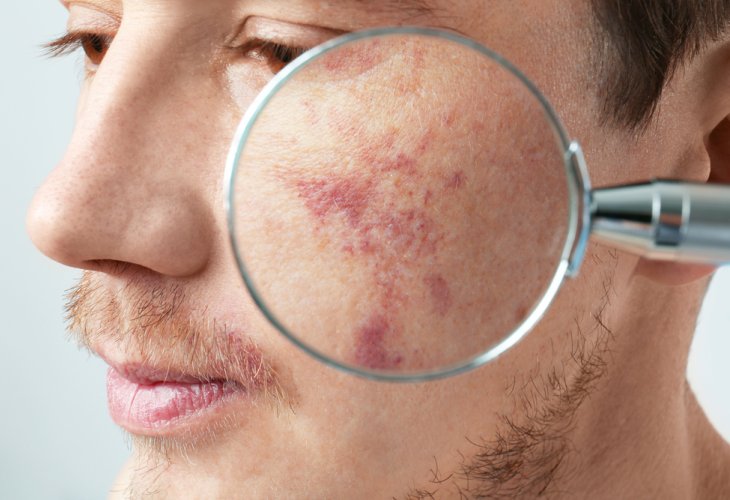 (Photo: shutterstock)
In recent years, awareness of the importance of screening tests for early detection of cancer has risen significantly. In women's cancer, for example, the awareness is so high that many cases are detected annually through mammography when the disease is still at a very early stage, and treatment options are many. In contrast, the most common cancer, skin cancer with its various types, lags slightly behind in terms of awareness.
"The recommendation is that everyone visits a dermatologist at least once a year for a 'mole screening', which includes an evaluation of all moles and skin lesions," explains Dr. Myudovnik. "Unfortunately, there are no guidelines, and it's not a recognized screening test like mammography or colonoscopy, but its importance is equal to other, more well-known tests." The recommendation to get checked once a year applies to everyone, "both dark-skinned and light-skinned individuals," says Dr. Myudovnik, "especially in a sunny country like Israel." It's commonly thought that only people with fair skin are at risk for developing skin cancer and therefore should see a dermatologist, but according to Dr. Myudovnik, this is not the case. "It's true that the sun has a more noticeable impact on people with fair skin, but the risk of skin tumors exists among those with darker skin as well, so it's important that they also get examined. Nail melanoma, for example, is relatively common among people with darker skin."
The main role of the dermatologist is to perform a thorough and comprehensive examination of the skin. Dr. Myudovnik clarifies that the examination should include the scalp, palms, soles of the feet, and the genital area, as melanoma and other skin tumors can develop even in places not exposed to the sun. If the doctor notices a suspicious lesion, a biopsy should be performed for an accurate diagnosis of the lesion. "In certain cases, when a dermatologist diagnoses a pre-cancerous lesion, they may treat the area with liquid nitrogen freezing or prescribe local treatment with cream. However, if the nature of the lesion is not clear-cut, it's recommended to remove it," explains Dr. Myudovnik. "Another role of the dermatologist is to know the follow-up protocol for at-risk patients and ensure its implementation, such as more frequent examinations for those who have been previously diagnosed with skin cancer."
What should you make sure of during a visit to the dermatologist?
It's important to ensure the dermatologist uses a device called a dermoscope during the examination. According to Dr. Myudovnik, "A dermoscope is, in fact, an indispensable tool that takes advantage of polarized light and magnifies structures by about 10 times on average, helping us to see structures in the lesion with better resolution and distinguish between benign and malignant lesions." "As mentioned, the examination should include the entire body, even areas not chronically exposed to the sun." Dr. Myudovnik also notes the option of photographic surveillance, "Photographic monitoring allows for a more precise and efficient examination for people characterized by numerous moles/pigmented skin lesions. Photographing the lesions allows for objective comparison over time and detection of changes in space and time."
Can suspicious lesions be detected independently of a dermatologist's examination? "Definitely, there are rules of thumb the general public should be aware of," details Dr. Myudovnik: "Asymmetry, irregular borders, multiple colors in the lesion, size over 6mm, and changes over time – growth/bleeding/change in color; in addition, the 'ugly duckling' sign – a lesion that stands out from the usual ones on the patient's skin. All these are red flags that signal the need for a specialist dermatologist's examination."
"While most skin tumors are directly associated with prolonged sun exposure, meaning the highest risk is among older, fair-skinned individuals, we are witnessing cases of melanoma also among younger people and those with relatively darker skin," Dr. Myudovnik explains: "Melanoma can also develop due to other causes, such as genetic cancer syndromes and conditions of relative immune suppression, and thus, we can find the tumor even in less typical groups." Dr. Myudovnik explains that "The contribution of sun exposure to melanoma development is clear. UV radiation causes a variety of DNA damage, leading to a chain of events resulting in the cell becoming cancerous. One DNA mistake occurs early in the process and leads to damage of a protein called BRAF. This damage is identified in about 50% of melanomas. On the other hand, there is an effective, targeted treatment that inhibits the activity of the defective protein, which is used in advanced melanoma cases. Therefore, the presence of the defective gene leading to the creation of the defective protein is tested in every diagnosed advanced melanoma case, in order to identify the patients who will benefit from this treatment."
The good news is that many melanomas diagnosed today are in the early stage, thanks to early detection. Even in cases where melanoma is advanced, effective treatment can be offered. "The two main treatments are immunotherapy and targeted therapy. The targeted treatment, the BRAF inhibitors, as mentioned before, directly targets the cancer cell. Conversely, immunotherapy uses the patient's immune system as a third party to efficiently identify and attack the cancerous cells," Dr. Myudovnik concludes. "The field of melanoma treatments has developed greatly in the past two decades thanks to understanding the mechanisms underlying the disease, and we can now treat patients very effectively and provide long-term benefits."
Dr. Mor Myudovnik is a specialist in dermatology and medical oncology, head of the melanoma and skin tumors center at the Tel Aviv Medical Center.


