

Relationships
142 Years Since Rabbi Yisrael Salanter's Passing: Stories and Teachings
Explore the Life and Legacy of Rabbi Yisrael Salanter Through Captivating Stories and Timeless Quotes
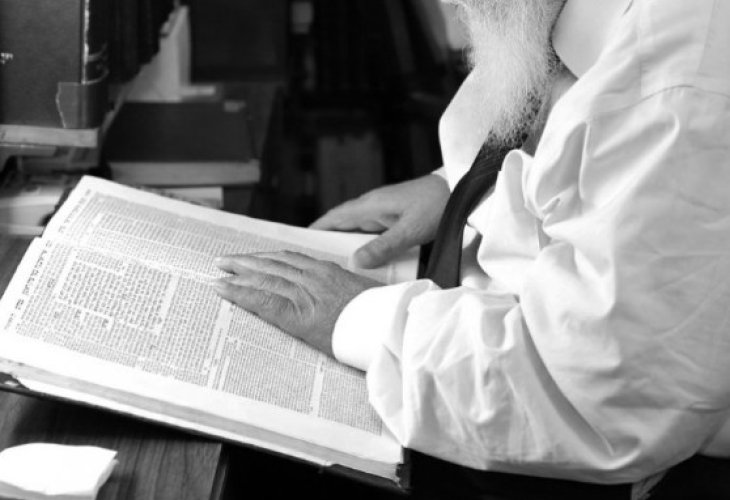
Commemorating His Legacy Today
Today, the 25th of Shevat, 5785, marks 142 years since the passing of Rabbi Yisrael Salanter, a pivotal figure in the establishment of the Mussar movement in nineteenth-century Lithuania.A Prodigy from Youth
Recognized early for his brilliant intellect, Rabbi Salanter could recite the entire Talmud by heart before the age of thirteen. After his marriage, he met Rabbi Yosef Zundel of Salant, whose influence on him was profound. From that point on, Rabbi Yisrael Salanter regarded Rabbi Zundel as his primary teacher and followed his path closely. Rabbi Zundel famously advised him, “Yisrael, learn Mussar and be God-fearing.”Sparking a Movement
Rabbi Salanter felt a deep responsibility to influence others and could not remain passive. He sought to ignite a Mussar movement, aiming to awaken hearts and chart new spiritual paths for the community, as described in Rabbi Isser Frankel’s Yechidei Segulah. To accomplish this, he first had to establish his greatness in Torah scholarship. He therefore traveled from town to town, delivering profound Torah lectures while simultaneously preaching ethical refinement and fear of Heaven.The Establishment of Mussar Houses
Leveraging his recognition as a Torah scholar, Rabbi Yisrael actively promoted the study of Mussar and established “Mussar Houses.” From 1840 to 1848, he served as Rosh Yeshiva in Vilna, where his passionate sermons on ethical responsibility deeply moved his listeners and further elevated his stature.Emotional Teachings on Poverty
In his sermons, Rabbi Salanter’s emotionally charged delivery, especially when addressing the suffering of the poor, often brought both him and his audience to tears. His heartfelt words emphasized the mitzvot between one person and another, underscoring their foundational role in Jewish law.Compassion for Orphans and Widows
When asked about excessive ritual meticulousness, Rabbi Salanter advised focusing instead on avoiding distress to orphaned and widowed women who were tasked with preparing dough. He emphasized that causing them pain was a far greater prohibition than any ritual concern.Sensitivity Between People
When invited by a wealthy man to eat a Shabbat meal, Rabbi Salanter insisted that the meal conclude within an hour, rather than the customary three hours. He did so to avoid overburdening the cook, a widow caring for tired children. Through this, he demonstrated the importance of considering others’ hardships even while fulfilling religious observance.Do Not Observe at Another’s Expense
During a visit to Kovno, Rabbi Salanter limited his use of water for ritual handwashing upon realizing that the housemaid struggled to carry water from a distance. He emphasized that religious stringency should never come at the cost of another person’s suffering.His Lasting Influence
Rabbi Salanter left a profound and lasting impact through his many students and the teachings of the Mussar movement. His legacy includes institutions such as the Telz Yeshiva, the Navardok Yeshiva, and the Slabodka Yeshiva, each emphasizing different aspects of human character and spiritual growth. His foremost students included Rabbi Yitzchak Blazer, Rabbi Naftali Amsterdam, and Rabbi Simcha Zissel Ziv. His teachings were later compiled in the book Ohr Yisrael.Memorable Moral Teachings
“The material needs of others are my spiritual needs.”
“Those who wish to rise above others should not dig pits for them, but rather raise themselves higher.”
“Seeing arrogance makes me feel nauseous.”
“It is easier to learn the entire Talmud than to correct one character trait.”
“As long as the candle is still burning, it is possible to make amends.”
Rabbi Yisrael Salanter passed away on the 25th of Shevat, 5643, and was laid to rest in Königsberg. May his memory be a blessing.

