עברית
עברית

Israel News
45% of Palestinian Produce Contained High Pesticide Residues, Knesset Told
Health Ministry data from 2024–2025 shows high contamination rates in cucumbers, tomatoes and peppers; stricter enforcement set within eight months
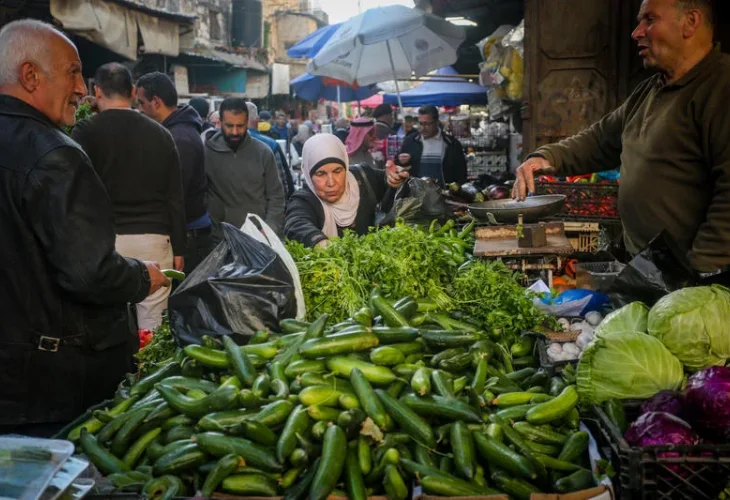 Shechem market (Flash90)
Nearly half of agricultural produce sampled from Palestinian Authority-controlled areas in 2024–2025 contained irregular pesticide residues, Health Ministry officials told the Knesset Health Committee on Monday.
According to data presented at the hearing, approximately 45% of tested samples showed abnormal levels of pesticide residues. Roughly 15,000 tons of produce enter Israel annually from P.A.-controlled areas.
A breakdown of specific crops presented to the committee showed that 50% of sampled cucumbers contained high pesticide residues, along with 49% of tomatoes and 66% of hot peppers. In 13% of samples, more than five different pesticides were detected, and 14% contained organophosphate compounds, which health officials said are neurotoxic substances that may pose risks to fetal development and, with prolonged exposure, increase the likelihood of Parkinson’s disease.
Health Ministry representatives also told MKs that although regulations require produce from the Palestinian Authority to be held pending laboratory testing, in practice shipments are distributed immediately, with results arriving days later.
Amos Zuaretz, the ministry’s coordinator for Judea and Samaria, said the regulations were not fully enforced due to “economic and security considerations.” Referring to the aftermath of October 7, he added: “After October 7, they realized that public health is more important.”
Following discussions with the Coordinator of Government Activities in the Territories (COGAT), stricter policies requiring all Palestinian Authority produce to be held until lab results are received are set to take effect within about eight months. Officials said additional enforcement measures are planned, including expanded field testing, computerized tracking of authorized farmers, more frequent sampling at crossings and financial penalties for violations.
Civil Administration agriculture official Samir Muadi told the committee that of roughly 3,000 Palestinian farmers who export produce to Israel, several hundred have been barred from selling their goods after contamination findings. Farmers whose produce is found to exceed permitted pesticide levels are disqualified for three months and must undergo additional testing before resuming exports.
The hearing also referenced a State Comptroller report covering 2015–2022 that found abnormal pesticide residue levels in between 27% and 40% of plant produce samples transported from the Palestinian Authority to Israel, indicating a rising trend over those years.
Health Committee Chairwoman Limor Son Har-Melech (Otzma Yehudit) said, “In my opinion, we must not allow agricultural produce from the Palestinian Authority to enter at all.” She added, “I do not trust my enemy to grow my food for me when it can easily be poisoned.” Addressing the public directly, she said: “Citizens of Israel: You are being poisoned.”
Likud MK Amit Halevi called on those who believe they contracted cancer as a result of consuming contaminated produce to sue the commander of the Civil Administration who issued the regulations. “Israeli citizens have been sick with cancer for years because of this produce, and the Health Ministry is silent,” he said. Halevi also argued that while official figures show imports declining from 70,000 tons in previous decades to 14,000 tons today, the actual volume has not changed, claiming smuggling has increased.
No immediate response from the Palestinian Authority was reported following the hearing. The new enforcement framework is expected to be implemented later this year.