עברית
עברית

Magazine
Healing Through Music: Yochai Moreno on Loss, Faith, and Song
As the nephew of Israeli hero Emmanuel Moreno and the cousin of Itai Moreno, musician Yochai Moreno has faced profound loss. Through songwriting, he shares how music became a path for healing, faith, and connection.
- Michal Arieli
- |Updated
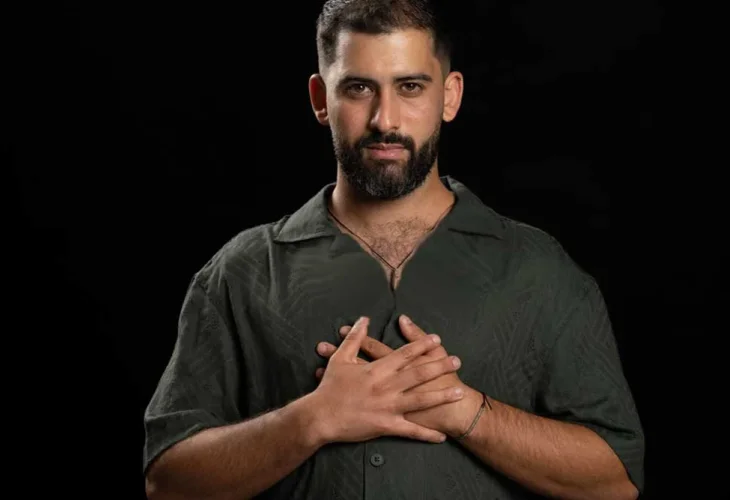 Singer Yohai Moreno
When creator and musician Yochai Moreno was ten years old, he encountered loss and bereavement for the first time. It was when his uncle, Emmanuel Moreno z"l, a national hero, was killed in action during the Second Lebanon War, leaving behind a vast emptiness and stories of extraordinary bravery, while his identity and image remained classified.
“It was a very complex time for our family,” Yochai recalls today. “I remember days that were incredibly difficult, especially since we lived in the moshav Telamim, where Emmanuel also lived, and we were very close to him and his family. I truly thought I had worked through it and moved on, until two years ago, when the Iron Swords War broke out and my cousin Itay Moreno z"l, also Emmanuel’s nephew, was killed. That brought everything back to the surface: the pain, the loss, and many questions about faith.”
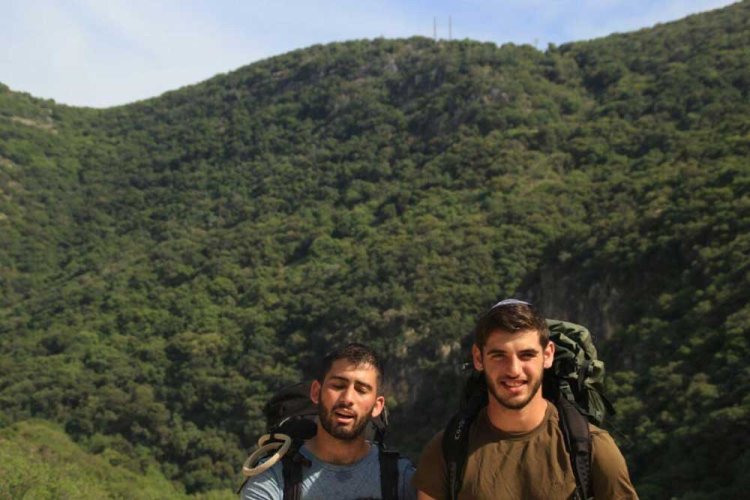 Yochai with his cousin, Itay Moreno z"l
The Heart Seeks Love
Yochai Moreno is a gifted musician who in recent years has devoted himself to songwriting, mentoring at-risk youth, and producing musical projects. “I mainly write about personal stories I’ve lived through and the insights and thoughts that grew out of them,” he explains. “Right now, for example, I’m releasing a new song about the month of Elul and drawing closer to the Creator. While writing it, I felt the song coming straight from within me, from the depths of the soul. I grew up in a religious home, and as long as I can remember, everything was clear: you observe Shabbat, go to synagogue, put on tefillin. Then, as you grow older, questions arise, and you want to do these things not just because you ‘have to,’ but out of genuine desire and a search for meaning.
“The song ends with the line ‘the heart seeks love,’ because that’s exactly how I feel. Today more than ever, I want to connect to the Creator from a place of meaning and love. From the many responses I receive, it seems there are many others who feel the same way.”
Moreno continues candidly: “The song about Elul is my most exposed song. In it, I say that the Creator is part of me and that I never want to disconnect from Him. I sing about times when I don’t see how God is helping me, when it seems like things are bad, but that feeling is misleading. Today it’s clearer to me than ever that everything the Holy One does is for our good, purely out of His great love.”
Half Serious, Half Laughing
Moreno grew up in a religious home in Telamim. “My life was simple and ordinary until the day we learned of my uncle Emmanuel’s death,” he shares. “I was a young child then. I didn’t understand all the talk about his classified identity and image, nor did I fully grasp his incredible heroism. But because he was such a present figure in my life, I felt a deep sorrow over losing the uncle I would never see again.
“To this day I remember going to Uncle Emmanuel often to help clean the garden. Emmanuel was a very serious person, but also extremely cynical. He would come out of the house, throw out a great joke, and instantly create a joyful atmosphere. Today I know most people knew his serious side, but as a child I repeatedly encountered his light, humorous side. He was genuinely funny and entertaining. I can’t forget the way he would look at me in synagogue, winking back and forth as I tried unsuccessfully to imitate him. At his most recent memorial, all the uncles gathered in a family circle and I shared this memory. His wife, Maya, strongly related and said Emmanuel was ‘half serious, half laughing,’ a side known mainly to those closest to him.”
How did Emmanuel’s death affect you?
“Honestly, I still don’t know how to answer that,” Yochai says. “But today it’s clear to me that I struggle deeply with loss whenever it appears in my life. Bereavement is complex. These experiences stay with you and don’t let go, especially when it’s someone close.”
As mentioned, the next time Yochai faced loss up close was with the death of his cousin Itay Moreno at the beginning of the war. “Itay was like a brother to me, and we were extremely close,” he says with longing. “He was the glue of the family, always connecting everyone, making sure we stayed in touch, visited one another, and shared Shabbat meals and holidays together.
“At the start of the war, like everyone else, I was called up for reserve duty, so I was busy with fighting and didn’t have space to process how Itay’s loss affected me. Today I know I suppressed it. The moment I had my first break, the pain hit me with full force. It felt so natural that I should run into Itay and talk to him, but he wasn’t there. At the same time, thoughts about Emmanuel’s loss resurfaced, and I felt the pain was too great, overwhelming me. During that period I met with a professional therapist who accompanied me. Even today I feel I haven’t fully closed these circles. Each of these losses meets me separately in different moments of life, and both feel fresh, as if they happened recently. It’s hard for me to process.”
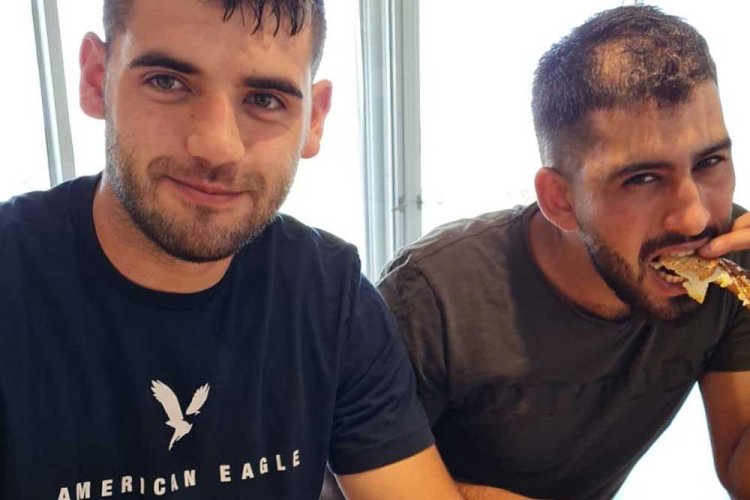 Yochai and his cousin, Itay Moreno z"l
The Healing Power
Do you feel that writing helps you cope?
“Absolutely. That’s why I write constantly,” Moreno replies. “Writing helps me release emotions from my heart and also clarify for myself what I think and feel. I’ve written songs about many life experiences, and they always helped me calm down and reorganize myself emotionally.”
Aren’t you afraid to release such sensitive, personal songs?
“Honestly, I put out my most personal songs, and yes, at first there were real fears. But as Evyatar Banai writes in one of his songs, ‘fear is a gate.’ I feel the same. Fear is inherently good, and once I overcome it, I manage not only to help myself, but also to touch others. Recently, quite a few people told me, ‘Your song met me at a very specific point,’ and shared that it helped them gain perspective and insight. Knowing I reached people’s hearts is deeply moving.”
What was the first song you wrote?
“It was the song about my uncle Emmanuel. I released it exactly eleven years after he fell. I actually wrote it as a child but kept it in a drawer. Years later, when I began working in music and recording, I was debating with my producer which song to release first, and I felt a strong pull to release that one. On Memorial Day in 2021, my first song came out, accompanied by a lot of fear and hesitation, but also great anticipation. Two weeks later came Memorial Day, and the song was played quite a bit. The responses from family members were incredibly moving.
“Later came the song about Itay, which I wrote together with Avia, Emmanuel’s daughter. We dedicated it to Gal, Itay’s wife, who told us that when Itay was in the army and they missed each other, they would both look at the moon. That image appears in the song, which is called ‘When I Miss You.’ The song reveals a lot of pain and longing. It’s very emotional, and it also commemorates and brings to life who Itay was for his family and friends.”
Would you recommend songwriting as a form of healing for others?
“Absolutely,” Moreno says. “I also work with teenagers, guiding them in writing and producing songs, and every time I see how writing alone strengthens them and gives them power. A child can write a song about their mother or their relationship with her, sing it later in the studio, and even without publishing it or playing it for anyone, already feel that something has healed. There’s immense power in hearing a song produced with instruments, singing words you wrote in your own voice. Music has extraordinary abilities. It is a healing force sent to us from above.”