

Israel News
Trump Pushes 'Board of Peace' Signing in Davos as Allies Waver
With a Board of Peace signing ceremony planned Thursday, governments are questioning who will join, what the charter commits them to, and how far the body will go
- Brian Racer
- | Updated
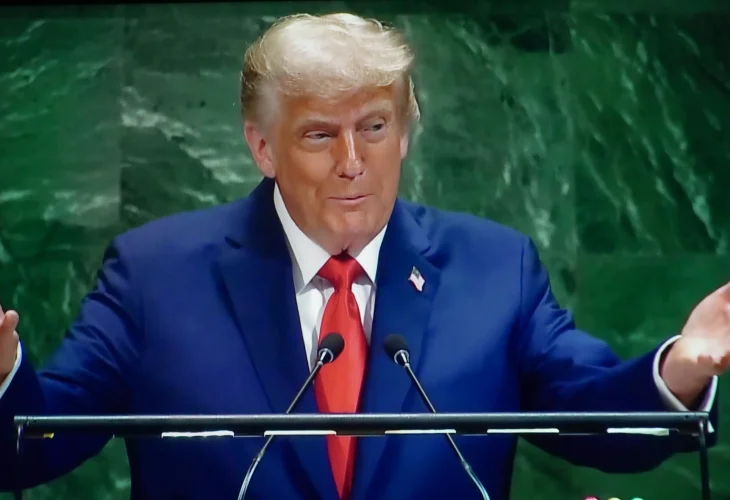 Donald Trump (Shutterstock)
U.S. President Donald Trump is pushing ahead with a signing ceremony this week in Davos to formally launch his proposed “Board of Peace,” even as several U.S. allies signal hesitation or opposition in the days leading up to the event.
The ceremony is scheduled for Thursday morning at 10:30 A.M. on the sidelines of the World Economic Forum, according to invitations circulated. It remains unclear, though, how many heads of state or government will attend or whether the event will yield broad international backing.
The Board of Peace was introduced by Trump as part of the 20-point plan to end the war in Gaza and oversee the territory’s postwar recovery. However, the charter circulated to governments in recent days outlines a much broader role for the new body, contributing to uncertainty over what exactly participating countries would be signing on to.
That unease came into sharper focus after reports emerged that Emmanuel Macron does not plan to join the initiative at this stage. Asked on Monday about Macron’s reported decision, Donald Trump responded, “Well, nobody wants him because he's going to be out of office very soon.” Trump went on to suggest he could use tariffs as leverage, saying he may “put a 200% tariff on his wines and champagnes, and he'll join.” He added that, “He doesn't have to join.”
French officials moved quickly to formalize their position. Foreign Minister Jean-Noel Barrot told lawmakers that France “cannot accept” the charter at this stage, arguing that its scope goes beyond the framework endorsed by the United Nations for postwar Gaza and conflicts with France’s international commitments.
France is not alone. A Canadian government source said Ottawa would not pay to be on the board, referring to a provision in the draft charter that links long term membership to a $1 billion contribution. Polish leaders raised concerns over governance and the inclusion of Russia, with Prime Minister Donald Tusk saying any decision would require parliamentary approval and warning against being “played.” Britain and Germany have confirmed receiving invitations but have not announced decisions, citing the need to review the proposal.
Trump further fueled unease by confirming that Russian President Vladimir Putin has been invited to join the board. Trump said Putin “has been invited,” without indicating whether they intend to accept. The prospect of Russia joining a U.S.-led peace body has drawn quiet concern among several European governments.
Adding to the uncertainty is the question of what the Davos signing would actually entail. While U.S. officials describe the event as a formal launch of the board’s charter, the document does not clearly spell out whether signing constitutes a legally binding commitment, when the board’s authority would take effect, or how its decisions would interact with existing international institutions.The charter makes no explicit reference to Gaza, despite the initiative being introduced as a framework for managing the territory after the war.
The United Nations pushed back on Monday, rejecting the idea that the new body could replace existing international mechanisms. A spokesperson for the president of the UN General Assembly said there is “one universal, multilateral organization” responsible for peace and security issues, underscoring why some governments are wary of the board’s direction.
Israel has also not announced where it will ultimately stand. Prime Minister Benjamin Netanyahu confirmed receiving an invitation, but he has criticized the composition of the Gaza Executive Committee that would operate under the Board of Peace. In the Knesset last night, Netanyahu said, “Turkish and Qatari soldiers will not be in the Strip,” and argued that Israel has a “certain dispute” with Washington over the advisory body’s makeup.
Despite the unanswered questions, Trump appears determined to move forward. Whether Thursday’s ceremony clarifies the board’s future or instead highlights the limits of international buy-in may depend less on what is signed than on who ultimately shows up.

