

Israel News
Donors Freeze Gaza Reconstruction as Hamas Refuses to Disarm
U.S.-led rebuilding plan remains stalled as donors cite security risks, past failures, and the absence of clear demilitarization steps
- Brian Racer
- | Updated
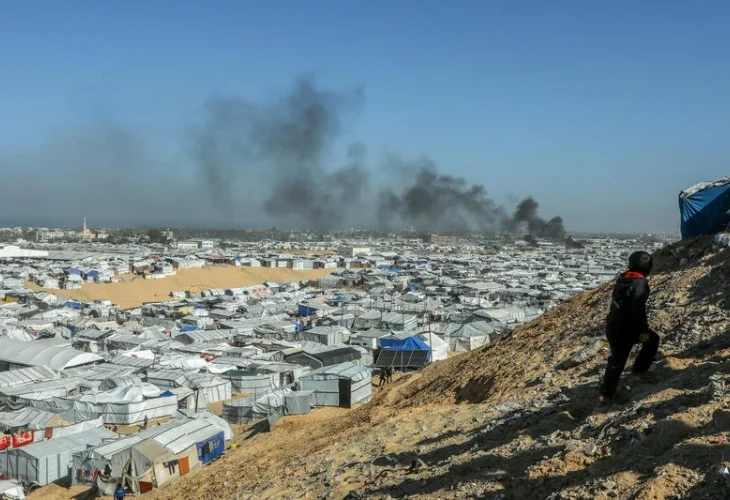 Gaza (Flash90)
International donors are withholding funding for Gaza’s reconstruction as efforts to push Hamas to disarm have stalled, raising fears that fighting could resume, sources told Reuters. As a result, the U.S.-led reconstruction plan remains frozen, with donors saying they will not finance rebuilding without clear progress toward demilitarization, warning that renewed war would erase any progress and investment.
Under President Trump’s plan, Hamas disarmament is a core condition for ending the war, with Israel expected to withdraw its forces in line with the terror group laying down its weapons. Gaza’s reconstruction would be overseen by a U.S.-chaired “Board of Peace,” but officials involved in the planning have acknowledged that no major funding commitments have been secured.
Two sources with direct knowledge of the Board’s planning said countries remain reluctant to commit funds under current conditions. “Countries want to see the funding will go for reconstruction within demilitarized places, and not to throw the money into another war zone,” one of the sources said. “If we pass that obstacle, then funding will not be an issue.”
Although the reopening of the Rafah border crossing with Egypt this week was seen by U.S. officials as a step toward stabilizing the situation, sources close to Hamas said the group has not begun talks on disarmament, a prerequisite for moving ahead with rebuilding Gaza’s destroyed cities.
A senior European diplomat said that no European or Western country has yet committed funds, citing fiscal constraints and growing domestic opposition to foreign aid. “We need some serious private money ... The Europeans are not capable of funding it,” the diplomat said.
Seven Western diplomats told Reuters that the delay is also being driven by disagreements over how reconstruction funds would be managed, with some potential donors pressing for United Nations oversight rather than control by the Board of Peace. Despite earlier indications that a donor conference would be held in Washington, sources said no date has been set.
Wealthy Gulf Arab states, which have played a central role in financing past reconstruction efforts in Gaza, have also expressed hesitation at committing funds without a broader political and security framework. Analysts say Gulf governments are also wary of investing heavily in projects that could be destroyed in renewed fighting or fall under the control of Hamas, and have signaled that large-scale funding would require clear governance arrangements and lasting security guarantees.
Donor caution is shaped in part by past experience. After the 2014 Gaza war, an international donor conference in Cairo pledged about $5.4 billion for reconstruction, with roughly half earmarked for rebuilding Gaza’s infrastructure, but only about $125 million ended up being delivered in the early stages.
Private sector participation, which U.S. officials see as critical to financing Gaza’s recovery, faces major hurdles due to the security situation. Companies operating in active conflict zones face far higher insurance and financing costs, often making large infrastructure projects too risky to pursue.
One source involved in the planning said this has led to calls for “peace area pricing,” meaning that investment costs would depend on how secure a given area is. “Now it doesn't mean that we wait for the full process to be done, but we want to see that it's really happening with full cooperation,” the source said.
The total cost of rebuilding Gaza is estimated at around $100 billion. Jared Kushner has said the vision involves creating a “New Gaza” from scratch, with seafront residential towers, data centers, and industrial parks. The plan does not include compensation for Palestinians whose homes were destroyed, and diplomats said it remains unclear how land rights would be addressed.
Meanwhile, one of the first tasks under discussion is clearing an estimated 68 tonnes of rubble and war debris. The Board of Peace has held talks with several parties about potential rubble-clearing contracts, with tenders eventually expected to be managed by a Palestinian technocratic body overseen by the Board.

