

Magazine
The War Hero Who Traded His Soviet Gold Medal for the Land of Israel
Yerachmiel Plezenshtein survived brutal battles and earned the Soviet Union’s highest medal, only to give it up years later for the chance to reach the Land of Israel.
- Yosef Yabeitz
- | Updated
Many stories tell of people who performed heroic feats in order to reach the Land of Israel. The story of Yerachmiel Plezenshtein is different. He did not become a hero in order to come to the Land. Instead, he gave up the glory of heroism itself for the sake of reaching it.
Yerachmiel Plezenshtein was born in Kharkov in 1923 to a family connected with Chabad. His official education followed the atheistic Soviet curriculum, but at home his parents secretly taught him Jewish studies.
A Young Officer in the Red Army
When Germany invaded the Soviet Union in 1941, Yerachmiel was drafted into the Red Army. By the spring of 1943 he had already risen to the rank of junior lieutenant. He commanded a machine gun platoon and participated in several major battles.
A few months later, the Red Army launched a dangerous landing operation on the Eltigen Peninsula in the Crimea region, an operation many believed had little chance of success. Yerachmiel took part with the soldiers under his command.
On a stormy night the troops crossed the Kerch Strait on rafts toward the landing beach. The Germans detected the rafts early and opened heavy fire from all directions. The violent weather made the crossing even more dangerous, and many rafts sank before reaching shore.
Neither fire nor water broke Yerachmiel Plezenshtein’s determination.
He succeeded in bringing his platoon into the shallow waters near the beach. With remarkable courage they stormed the heavily fortified shore, armed only with grenades and machine guns.
Against all odds they captured a strip of beach about a kilometer deep and defeated the German forces stationed there.
Two Weeks Against the Germans
The platoon held the beachhead for two full weeks while the Germans launched repeated counterattacks in an effort to push them back into the sea. Twelve times the Germans attacked, and twelve times the defenders held their ground.
During those two weeks the soldiers received no reinforcements or supplies from the sea. Isolated and outnumbered, they continued to fight and refused to retreat.
Plezenshtein led by personal example. He fought on the front lines and personally killed dozens of enemy soldiers until he was struck by a bullet in the head and presumed dead.
One of his comrades refused to abandon him and carried him to a casualty station. There it was discovered that he was still alive and could be saved. He was transferred to a military hospital, where he remained for four months until he recovered.
During that time his father received an official notification stating that his son had fallen in battle. Those responsible for reporting casualties assumed that no one could survive such a wound.
Return to the Battlefield
After recovering, Plezenshtein returned to his unit and discovered that only two of the original soldiers who had fought beside him remained alive.
He was promoted to lieutenant and appointed company commander. He continued fighting in additional battles, was wounded again in the leg, and was eventually discharged from the army because of his disability.
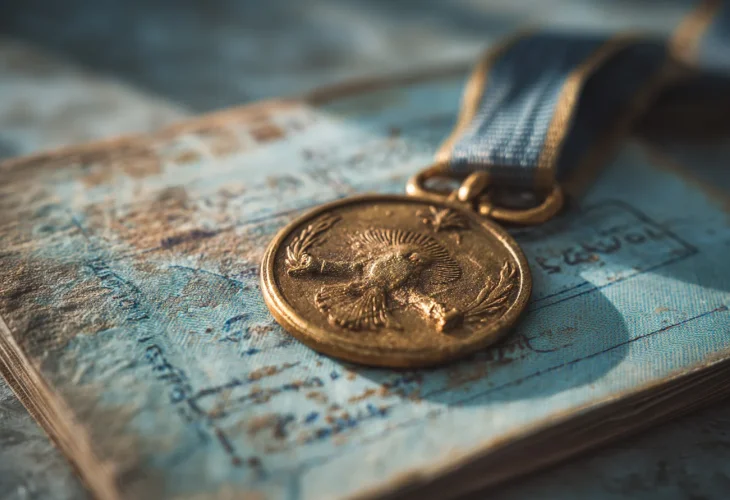
For his extraordinary bravery on the Eltigen Peninsula, Plezenshtein received the Gold Medal of Hero of the Soviet Union, the highest military honor in the country.
A Hidden Jewish Life
After the war Plezenshtein returned to Kharkov and worked as a department manager in a textile factory. Outwardly he was a loyal Soviet citizen and even a member of the Communist Party, but privately he carefully observed the mitzvot of Judaism.
Despite the risks, he remained faithful to his Jewish identity throughout the years of Communist rule.
Choosing the Land of Israel
In 1974 Plezenshtein applied for an aliyah visa in order to immigrate to the Land of Israel and reunite with his father, who had arrived two years earlier. This was the first known case of a Hero of the Soviet Union requesting permission to leave the country.
He was summoned for repeated interrogations and faced intense pressure to withdraw his request, which caused considerable embarrassment to Soviet authorities.
Plezenshtein refused to give in. After international pressure and public protests by friends and family, permission for his immigration was finally granted.
But there was a price.
As a condition for receiving his visa, he was required to return the Hero of the Soviet Union medal he had earned on the battlefield.
Plezenshtein did not hesitate. He willingly surrendered the medal of honor and glory in exchange for the papers that would allow him to come to the Land of Israel. He gladly traded the gold medal for the opportunity to draw closer to Hashem, to his people, and to his land.
Honor Restored
Plezenshtein did not ultimately lose the symbol of his heroism. In 1992, after diplomatic relations between Israel and the Soviet Union were renewed, the medal was returned to him in an official ceremony at the Soviet embassy in Tel Aviv.
Yerachmiel Plezenshtein passed away on Simchat Torah 5767. May his soul be bound in the bond of life.

