

Israel News
Hezbollah Missile Arsenal Slashed to ‘20-30%’ of Prewar Strength
Analyst says group is a “pale shadow” of its former strength severely limiting ability to intervene alongside Iran
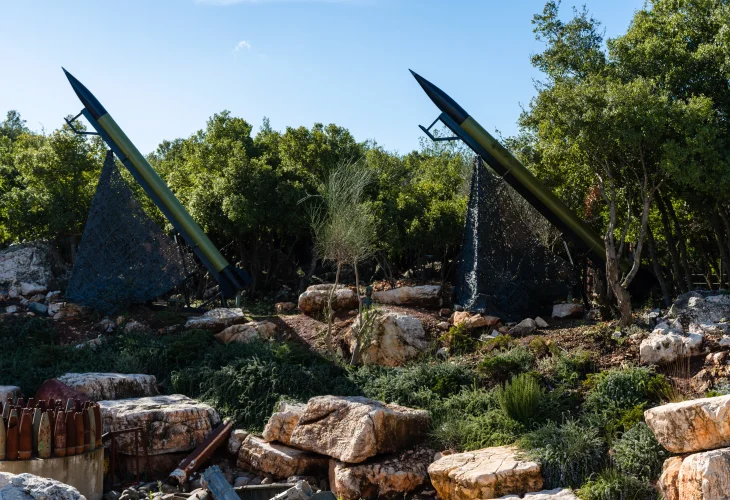 Hezbollah Rockets (Shutterstock)
A new assessment suggests Hezbollah’s missile capabilities have been dramatically reduced since before the war with Israel. Arab affairs analyst Ohad Hemo said on 103fm, a leading Israeli radio station, that “serious people speak about missile capability of between 20 and 30 percent of the capability they had on October 6, 2023,” adding that “the organization is a pale shadow of the Hezbollah we knew under Nasrallah.”
The assessment comes as Hezbollah is increasingly viewed as a potential participant in any wider confrontation between Iran and the United States. According to Hemo, if Iran launches a full campaign, Hezbollah would face direct pressure to join. “If we are talking about a full Iranian campaign, Hezbollah will be required by the Iranian patron to join because this is Judgment Day, the day for which it was born in 1981,” he said.
At the same time, Hemo described significant internal and structural constraints within the Lebanese terror group. “There are Revolutionary Guards people who are in Lebanon, and add to that the fact that Naim Qassem is a kind of Iranian puppet,” he said, portraying the current leadership as closely aligned with Tehran.
External deterrence pressures are also mounting. “The reports from Lebanon in recent days speak about very clear Israeli threats. If Hezbollah joins, the response will be destructive also toward the State of Lebanon. We have heard threats like these before,” Hemo said.
That warning aligns with international reporting. According to Reuters, Israel has conveyed indirect messages to Lebanese officials that it would strike hard if Hezbollah enters a broader U.S.–Iran confrontation, with warnings reportedly including potential damage to civilian infrastructure such as Beirut’s airport. The Associated Press separately reported that Lebanon’s foreign minister has cautioned that the airport and other infrastructure could become targets if escalation spreads.
Beyond military degradation and deterrence messaging, Hemo pointed to growing strain within Hezbollah’s domestic base. “If there is something that worries them, it is the Shiite base in Lebanon. This is the Hezbollah people and also the community for which this organization works. This community is tired, exhausted, and weak. It complains about a catastrophic economic situation. There are tens of thousands of displaced in Beirut. There are many villages in southern Lebanon that nobody lives in,” he said.
Hemo added that resentment toward Iran is also present among some within Hezbollah’s ranks, suggesting frustration over past rounds of conflict and perceived abandonment. Despite the continued presence of Iranian Revolutionary Guard Corps personnel in Lebanon, he argued that the group understands the risks of full-scale escalation.
“It is clear to them that Israel will crush them,” Hemo said.
Questions & Answers
+Who leads Hezbollah today?
+Why is Hezbollah important in a potential Iran–Israel conflict?

