

World News
Iran’s New Supreme Leader Issues First Message, Still Has Not Appeared
Statement read on Iranian state television threatens Hormuz closure, warns Gulf states over U.S. bases, and urges turnout for Quds Day rallies
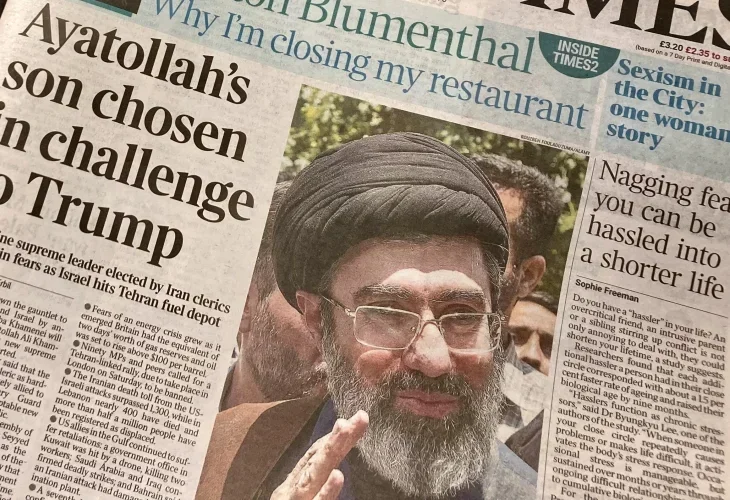 Mojtaba Khamenei (Shutterstock)
Iran’s new Supreme Leader Mojtaba Khamenei issued his first public message Thursday, warning that the Strait of Hormuz must remain closed and threatening continued attacks on U.S. bases in the Gulf. The statement was read by a news anchor on Iranian state television while a photograph of Khamenei was displayed, and the leader himself did not appear.
The written message marks the first communication attributed to Khamenei since he assumed Iran’s top leadership role. It comes amid continuing uncertainty about his condition, with the regime releasing text statements and social media posts but no video or public appearance by the new leader.
In the message, Khamenei framed Iran’s actions as part of what he described as a national defense effort and signaled that Tehran could expand the conflict to additional arenas. “The will of the masses is to continue the effective and regrettable defense,” the statement said, adding that plans had been studied for opening new fronts where Iran’s enemies would be vulnerable.
The statement also emphasized the strategic importance of the Strait of Hormuz, one of the world’s most important oil shipping routes. “The lever of blocking the Strait of Hormuz must definitely continue to be used,” the message said.
Khamenei warned neighboring Gulf states hosting American forces that Iran would continue targeting U.S. bases used to launch attacks against the country. The message urged regional governments to shut down those bases and accused Washington of falsely claiming to bring stability to the region.
The statement also praised members of the Iran-led “axis of resistance,” thanking Hezbollah in Lebanon, the Houthi movement in Yemen, and armed groups in Iraq for supporting Iran and defending what the message described as the oppressed people of Gaza.
Alongside the televised statement, an account associated with Khamenei appeared on the social media platform X, publishing a series of posts echoing the themes of the message. Several of the posts vowed continued retaliation against Iran’s enemies and called on supporters to remain active during the ongoing conflict.
One post declared: “We will not abandon revenge for the blood of our martyrs.” The posts also urged Iranians to take part in demonstrations marking Quds Day, an annual event organized by the Iranian regime expressing opposition to Israel and support for Palestinians. The messages stressed the importance of maintaining a visible public presence and encouraged mass participation in the upcoming rallies.
Despite the release of the written message and social media posts, questions remain about the new Supreme Leader’s condition. British media reports, including the Daily Mail citing a source in Tehran communicating through an exiled dissident in London, claimed Khamenei may be hospitalized in intensive care and possibly in a coma after suffering serious injuries during recent airstrikes, including the possible loss of a leg.
Those claims have not been independently verified. Separately, Iran’s ambassador to Cyprus, Alireza Salarian, said Khamenei had been injured during the strike that killed his father but suggested the wounds were limited to injuries to his limbs.
Iranian authorities have not released recent video or images of Khamenei since his appointment. State media have instead referred to him as a wounded war veteran while continuing to broadcast statements attributed to him.
Questions & Answers
+Who is Mojtaba Khamenei?
+Why is the Strait of Hormuz strategically important?
+What is Quds Day in Iran?

