Amino Acids: Building Our Body for Better Health
Amino acids form proteins that are involved in various processes occurring in our bodies. How do we obtain all the amino acids we need?
(Photo: shutterstock)Amino Acid – Nice to Meet You.
There are 22 different types of amino acids known to us today.
Each amino acid has its special roles.
Amino acids join together in countless different combinations to create.... proteins.
Proteins – a term that is a bit more friendly and familiar.
Proteins are active in building the body's cells, tissues, and organs, which make up who we are. They participate in various processes occurring within us.
Not just within us.
All the cells of all living creatures are built from proteins – humans, animals, plants, fungi, and even bacteria.
Yes, even bacteria – and because it is alive, even though it is very tiny, it too is made of protein.
Some famous proteins include:
- We've all heard of collagen – collagen is a protein that participates in building skin, cartilage, and bone – it's like the glue that holds everything together.
- Insulin – this is a protein that acts as a hormone to regulate blood sugar levels.
- Antibodies are proteins that protect our bodies from foreign invaders; they are part of the immune system that defends us.
- In blood tests, they sometimes check for hemoglobin – a protein that carries oxygen in the blood and delivers it to the cells in our bodies.
- As I mentioned before, my body lacks an enzyme called lactase – a protein responsible for breaking down milk sugar.
And there are many more types of proteins actively functioning in every living body nonstop.
Now we also start to understand how important the quality of proteins in our daily diet is.
How do we determine what makes a protein high-quality?
Let’s return together to the first paragraph of this article;
Amino Acid – Nice to Meet You.
There are 22 different types of amino acids recognized by us today.
Some claim there are 20, while others claim 23. Recent research has definitively established – 22 types!
Rachel Yahalom, in her captivating book "For Health – The Science of Nutrition Through a Biblical Lens" offers a wonderful and moving interpretation that sent shivers down my spine.
Hashem created our world with the combination of 22 letters of the Aleph-Bet.
In the letters of the Hebrew language lie deep secrets; each combination of letters creates a spiritual meaning for the word it forms. Every alteration of a letter completely changes the meaning of the word.
Therefore, light is different from skin, just as touch is different from pleasure.
(For those interested in the topic, I invite you to dive deep into the compelling book by Rabbi the Genius Zamir Cohen, Shlit"a "The Code – Secrets of the Universe and the Name of the Human Hidden in the Hebrew Letters").
Thus, it is only logical that the amino acids, which are the building blocks of every living organism, would also be 22 in number.
Just like in letters, amino acids create countless combinations of different proteins.
Like in words, even if we swap two different types of amino acids or just change the position of a specific amino acid in the molecular space – we get a protein with a completely different meaning.
Some amino acids the body can produce by itself.
Others it cannot produce by itself; it must obtain them from food – and so they are called essential amino acids.
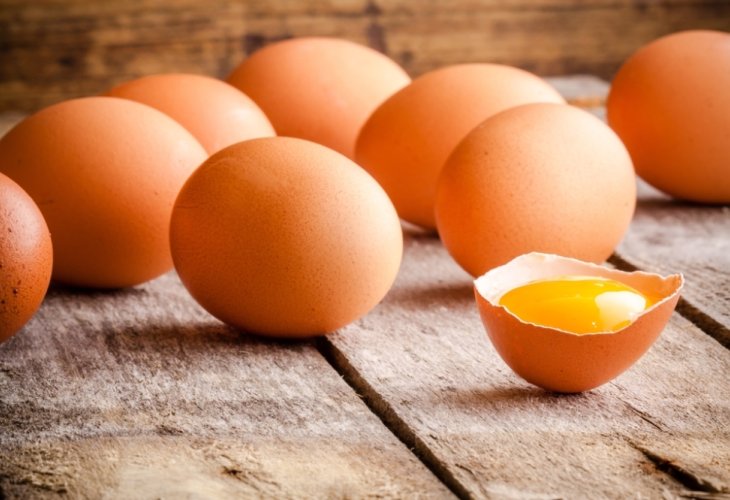
- An egg, for example, contains all the essential amino acids; therefore, an egg is called a complete protein.
- Cereals (wheat, barley, corn, rice, etc.) contain some essential amino acids but not all, which is why cereal is considered an incomplete protein.
- Legumes (peas, beans, chickpeas, lentils, etc.) also have only some of the essential amino acids; hence they too are considered incomplete proteins.
Interestingly, the amino acids missing in cereals are present in legumes and vice versa.
In other words, cereals and legumes complement each other, together creating a complete protein.
(Photo: shutterstock)Now comes the wonderful part!
How brilliant our grandmothers were, who, without knowing too much about essential amino acids, incomplete protein, or complete protein, knew how to create a perfect meal.
- A great example is Majadra.
As is well known, *Majadra* is made of rice (cereal) and lentils (legume) – which join together to create a complete protein!
- Another wonderful example – Couscous Soup (vegetarian, without meat).
*Couscous* itself is made of wheat semolina (cereal) combined with vegetables and.... chickpeas (legume).
- Chulent consists of bulgur (cereal) with beans (legume) (and also meat, of course, although it wasn't always available back in the day).
In our Ashkenazi home, we say chulent, my late father explained to me why:
In Yiddish, a synagogue is *shul*.
*End* means end, conclusion.
So on Shabbat afternoon, when the synagogue ends (*shul-end* or *chulent*), we come home, take off the huge pot that has slowly cooked overnight, and indulge in the hot, steaming dish that fills the entire house with the enticing aroma uniquely characteristic of Shabbat.
Ahhh, how wonderful Shabbat is.
"Hashem told Moshe: I have a good gift in my treasure house, and its name is Shabbat. I want to give it to Israel; go and tell them" (Shabbat 10b).
Before concluding this article, I would like to address the responses from the previous article;
First, I want to thank you all for the reactions and feedback, may you be blessed.
2 reactions especially moved me;
From Yafa and Shoshi, whose sons simply don’t like spreads on bread.
Yafa and Shoshi are not alone; there are many picky eaters out there.
Kudos to them for not giving up and exploring more options and ideas to diversify their children’s diet.
Mothers like them are praised by King Solomon in the Book of Proverbs: "...from afar she brings her bread: and she rises early at night. And she gives food to her household...".
But what moved me even more was that other mothers commented and provided wonderful advice from their experiences.
Blessed are you Jewish women.
A wonderful piece of advice, better than any I could provide, was Shilat’s suggestion: Shilat sat down with her children and planned out the weekly sandwich menu together.
The kids were fully involved in selecting the menu.
This creates a kind of agreement; after all, in the end, it is he who decides what goes on the bread, and hence his responsibility to eat the sandwich.
Another idea is to take your child for quality time at a cafe with strict kosher supervision, and order a couple's breakfast.
Beyond bread, eggs, and salad, cafes commonly serve a variety of spreads.
Thus, sitting down with the child, tasting everything, consulting, and letting the child express their likes and dislikes.
This way, we also create a wonderful childhood memory for the child.
Sometimes there’s no choice but to think outside the box.
For example, *finger foods* – food like a sandwich but not actually a sandwich that can be picked up and eaten without utensils, based on what the child loves.
Yafa’s son loves *ptitim*. You can make *ptitim*, mix it with fried onions, canned corn, and an egg, and bake it as patties in the oven. Then instead of a sandwich, send *ptitim* patties to school.
He also likes corn schnitzel, so you could prepare potato and corn muffins for school or make whole wheat borekas filled with potatoes or even pizza borekas (with pizza sauce, cheese, and olives).
What’s great about these ideas is that you can make a large batch every couple of months and freeze it.
Then before school, choose something and thaw it at room temperature.
Yafa and Shoshi – try it out and let me know how it turned out.
I’m sure we would all love to know.
For anyone who accessed the article through the app (and not directly from the website), due to a specific issue, the recipes and explanations for the chickpeas, various tahini spreads, and peanut butter were cut off – this is wonderful and important information, it’s worth going back to the article, this time directly through the website and not through the app.
With Hashem’s help, in my next article, I will provide some examples of a healthy and nutritious lunch.
If you have ideas for good and healthy lunch meals – I would love for you to share them in the comments; you know how much I enjoy learning from each and every one of you.
So until then, wishing you all good health,
Chen Tovi
עברית