

World News
Trump Threatens Iran Power Plant Strikes in 48-Hour Hormuz Ultimatum
Ultimatum follows rapid shifts from rejecting a ceasefire to exploring talks, as Iran warns of retaliation against U.S. infrastructure
- Brian Racer
- | Updated
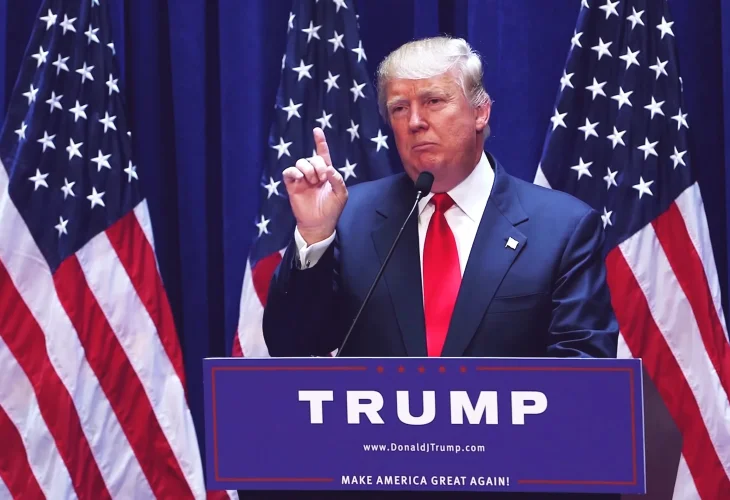 Donald Trump (Shutterstock)
U.S. President Donald Trump threatened late Saturday to strike Iran’s power plants if Tehran does not reopen the Strait of Hormuz within 48 hours, marking a sharp escalation after a series of shifting statements over the past day and a half.
“If Iran doesn’t FULLY OPEN, WITHOUT THREAT, the Strait of Hormuz, within 48 HOURS from this exact point in time, the United States of America will hit and obliterate their various POWER PLANTS, STARTING WITH THE BIGGEST ONE FIRST!” Trump wrote on Truth Social.
Iran responded within hours, warning that any strike on its energy infrastructure would trigger retaliation against U.S. and regional assets. “If Iran’s fuel and energy infrastructure is attacked by the enemy, all energy, information technology, and desalination infrastructure belonging to the United States and the regime in the region will be targeted,” a spokesperson for the Khatam al-Anbiya Central Headquarters said, according to Iranian media.
The exchange came after a rapid sequence of public statements from Trump over roughly 36 hours that signaled sharply different directions for the war. On Friday, Trump told reporters, “I don’t want to do a ceasefire.” Later that day, he said the United States was “getting very close to meeting our objectives” and was considering “winding down” military operations.
At the same time, U.S. officials were quietly exploring a diplomatic track. According to Axios, advisers including Steve Witkoff and Jared Kushner have been discussing potential channels for talks with Iran, including possible mediators and representatives on the Iranian side. The discussions have not developed into formal negotiations, but indicate that a diplomatic option is being considered alongside continued military pressure.
The shifting public messaging contrasted with statements from the U.S. military. U.S. Central Command said shortly before Trump’s ultimatum that Iranian capabilities to threaten shipping in and around the Strait of Hormuz had been “degraded” following recent strikes on missile and surveillance infrastructure. The Pentagon and State Department did not immediately provide additional public detail supporting Trump’s threat to target power plants.
The stakes around the strait remain high as disruptions continue to impact global energy markets. Brent crude settled above $110 per barrel on Friday, reflecting sustained pressure as attacks on vessels and reported mine activity have disrupted maritime traffic.
Other countries have begun weighing responses tied to the situation on the ground. Japan’s Foreign Minister Toshimitsu Motegi said Tokyo could consider deploying its military for minesweeping operations in the strait if a ceasefire is reached and naval mines remain a threat. “If there were to be a complete ceasefire, hypothetically speaking, then things like minesweeping could come up,” he said.
Iran, for its part, has signaled it may allow limited passage under certain conditions. Iranian Foreign Minister Abbas Araqchi said Tehran had discussed with Japan the possibility of allowing Japanese-related vessels through the waterway, even as broader restrictions remain in place for countries it considers adversaries.
Trump’s latest ultimatum adds another turn to a sequence of statements that have ranged from rejecting a ceasefire to signaling a possible wind-down, while U.S. officials explore talks and military operations continue. No clear end-state for the conflict has been publicly defined, as Washington’s approach appears to combine escalating pressure with the possibility of a negotiated outcome.
Questions & Answers
+Why is the Strait of Hormuz important to global energy markets?

