

World News
Who Is Actually Running Iran’s War Right Now?
Conflicting reports on Mojtaba Khamenei’s condition and absence raise growing questions in over who is directing Iran’s military actions
- Brian Racer
- | Updated
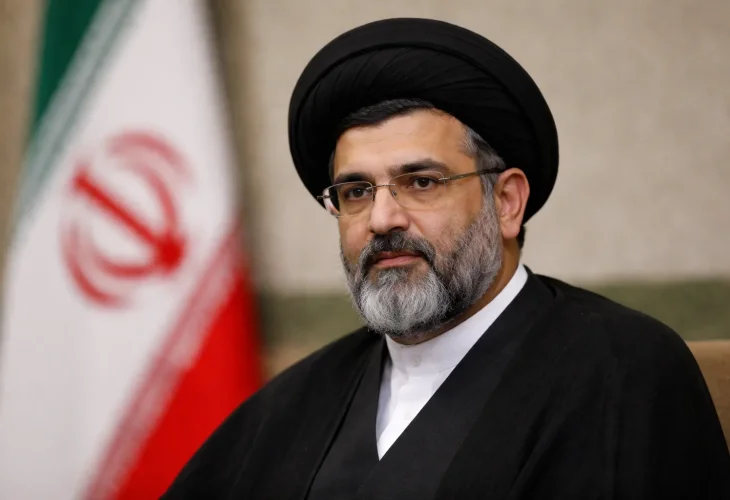
Mojtaba Khamenei, appointed Iran’s supreme leader following the death of his father, has not appeared publicly since taking office, as conflicting reports about his condition raise questions over who is directing Iran’s war effort.
The uncertainty surrounding his status is no longer just an internal matter. U.S. and Israeli officials are increasingly unsure who holds decision-making authority in Tehran at a time of escalating regional conflict, with implications for both military escalation and potential communication channels.
Reporting on Khamenei’s condition remains sharply divided. According to the Washington Post, Western officials assess that he was seriously wounded in the strikes that killed his father in late February and has since been isolated and unresponsive. In contrast, earlier reporting by Reuters, citing Iranian and regional sources, indicated he may have been only lightly injured and remains alive, though his current ability to function remains unclear.
What is consistent across nearly all coverage is his complete absence from public view. Since being formally appointed on March 9, Khamenei has not delivered a speech, appeared in verified video, or issued any direct recorded message. Even major national moments passed without his presence, and statements attributed to him have appeared only in written form.
The lack of visibility has extended into diplomatic channels. According to a Western assessment cited by the Washington Post, attempts to engage Tehran have encountered an unusual barrier. “There is no one to talk to on the other side,” the assessment stated, reflecting growing concern that there is no clearly accessible authority capable of making or communicating decisions.
In the absence of a visible leader, attention has shifted to who may actually be directing Iran’s actions. One leading assessment points to the Islamic Revolutionary Guard Corps, which played a central role in the political process that elevated Khamenei and continues to drive military operations. Officials and analysts increasingly assess that the Guards may be shaping or executing strategy independently, or at minimum exercising dominant influence behind the scenes.
At the same time, formal authority remains tied to Khamenei himself. Military actions and statements continue to be issued in his name, creating a structure in which a nominal leader exists on paper even as his actual role remains uncertain. This has led to a third possibility raised in Western and Israeli assessments: that command may be fragmented, with multiple actors operating in parallel rather than under a single, clearly functioning chain of command.
Some analysts also point to the emergence of a more informal arrangement, in which senior figures across the security and political system coordinate decisions collectively, without a single visible leader. Even in this scenario, actions continue to be carried out under Khamenei’s name, preserving the appearance of centralized authority.
That uncertainty is unfolding alongside continued Iranian military activity, including missile launches and regional escalation, reinforcing the central question rather than resolving it. Orders continue to be carried out, but the identity of the decision-maker behind them remains unclear.
For now, there is no confirmed answer. Mojtaba Khamenei’s condition, visibility, and operational role all remain in dispute, leaving Iran engaged in an active conflict without a clearly identifiable public leader. The ambiguity itself has become a defining feature of the current phase of the war.

