

World News
FBI: Michigan Synagogue Attack Was Hezbollah-Inspired Terror
FBI details suspect’s Hezbollah-linked radicalization, extensive weapons buildup, and pre-attack planning in Michigan synagogue assault
- Brian Racer
- | Updated
 Screenshot/X
The FBI said Monday that the March 12 truck-ramming and shooting attack at a synagogue in West Bloomfield, Michigan, was a Hezbollah-inspired act of terrorism targeting the Jewish community.
“Based on the evidence gathered to date, we assess this attack to be a Hezbollah-inspired act of terrorism purposely targeting the Jewish community and the largest Jewish temple in Michigan,” said Jennifer Runyan, the FBI special agent in charge for Detroit.
Investigators said the attacker, identified as 41-year-old Ayman Mohamad Ghazali, carried out extensive preparations in the days leading up to the assault. According to the FBI, he researched Jewish religious, cultural, and educational institutions in the Detroit area and searched for phrases such as “largest gathering of Israelis in Michigan,” “Israelis near me,” “Orthodox synagogues,” and “what time is lunch at Temple Israel.”
Authorities said Ghazali also acquired weapons and materials for the attack, including an AR-style rifle, magazines, and hundreds of rounds of ammunition, and practiced at a shooting range. He purchased more than $2,200 worth of fireworks and obtained containers that he filled with gasoline.
Investigators said he documented his intent in messages and online activity, including creating a Facebook album titled “Vengeance” the day before the attack. In a video sent shortly before the attack, Ghazali said he intended to “kill as many of them as I possibly can,” according to officials.
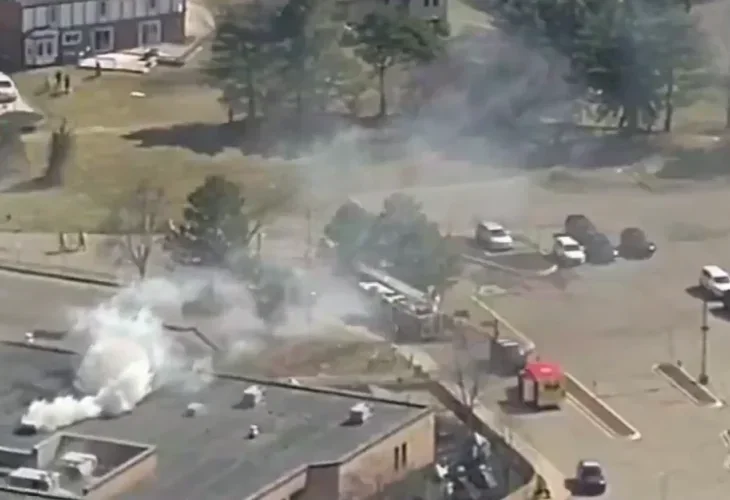
Authorities said Ghazali arrived at Temple Israel and remained in the parking lot for hours before driving a pickup truck into the building. The vehicle, which contained fireworks and gasoline, became lodged inside and caught fire. He then opened fire and exchanged gunfire with security personnel before dying of a self-inflicted gunshot.
A security guard was injured in the attack, and several law enforcement officers were treated for smoke inhalation. Approximately 140 to 150 children and staff members were inside the building at the time, but no one else was physically harmed.
At the same press conference, U.S. Attorney Jerome Gorgon said Ghazali had “acted under Hezbollah’s direction and control,” describing the attack as part of a broader pattern of terrorist incitement.
“Terrorist propaganda is designed to activate the so called lone wolf to act on behalf of the terrorist organization, and it makes no legal difference if the current leader of Hezbollah himself, Naim Qassem, called this man and told him to attack Temple Israel, or whether he simply heeded Hezbollah’s call to kill Jews,” Gorgon said.
Officials said Ghazali had been consuming pro-Hezbollah content before the attack and that investigators found videos, images, and messages reflecting support for the group’s ideology.
The suspect’s family background also drew attention during the investigation. Several of his relatives, including a brother identified in reports as a Hezbollah commander, were killed in an Israeli airstrike in Lebanon on March 5. Authorities said, however, that Ghazali’s exposure to Hezbollah content preceded those deaths.
The FBI said there is no indication at this stage that other individuals were involved in the attack. Ghazali was not previously known to law enforcement and was not listed on a federal terror watchlist.
Reacting to the findings, Nikki Haley said the attack reflected a broader threat posed by Iran-backed groups.
“Groups like Hezbollah actively encourage lone-wolf attacks, framing violence as a religious duty and convincing individuals they are carrying out God’s will. This wasn’t just about antisemitism—it was an attack on Americans, on children, and on a place of worship in our own country. We can’t ignore reality, and we should take the Iranian regime at its word when it says “death to America.””
The case is expected to heighten concerns among U.S. officials and Jewish communities about the risk of attacks inspired or influenced by Hezbollah and similar organizations, particularly as investigators continue to assess the scope of the threat.

