

Israel News
Netanyahu Announces Lebanon Talks as Pressure Mounts Over Strikes
Announcement follows NBC report of Trump urging restraint and growing international warnings that Israeli strikes could derail Iran ceasefire negotiations
- Brian Racer
- | Updated
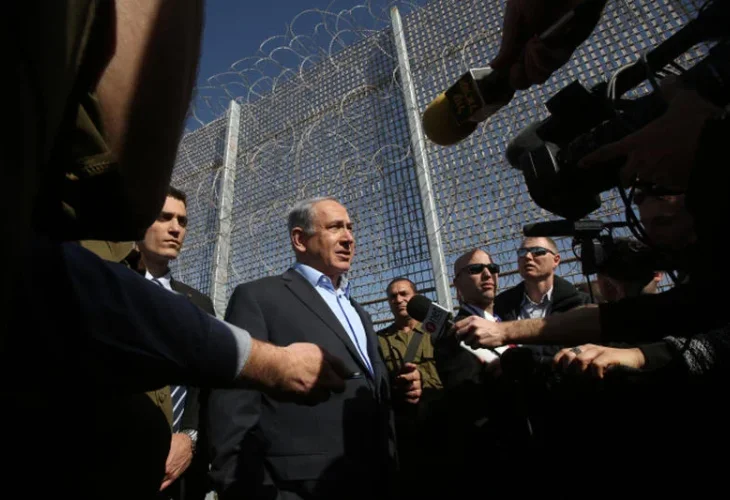 Benjamin Netanyahu (Marc Israel Sellem/POOL)
Prime Minister Benjamin Netanyahu said Thursday evening that Israel will begin direct negotiations with Lebanon “as soon as possible,” focusing on disarming Hezbollah and establishing peaceful relations between the two countries.
The announcement came as pressure mounted from the United States and a widening group of international actors, even as Israel continued a large-scale military campaign in Lebanon and disputes deepened over whether the US-Iran ceasefire applies to the Hezbollah front.
According to NBC News, US President Donald Trump asked Netanyahu in a phone call to scale back Israeli strikes on Lebanon to prevent the fragile ceasefire with Iran from collapsing. The request came shortly after Netanyahu publicly vowed to continue striking Hezbollah targets. US Vice President JD Vance said Israel had agreed to “check itself” regarding Lebanon in order to support negotiations with Tehran.
Despite those signals, Israel launched its largest bombing campaign in Lebanon since the start of the Iran war, and continued airstrikes on Thursday, albeit at slightly reduced intensity. The IDF said it targeted weapon depots, rocket launchers, and Hezbollah headquarters in southern Lebanon. Earlier, Netanyahu stated that Israel “will continue to strike Hezbollah wherever necessary” following the assassination of a senior Hezbollah aide and additional strikes on the group’s infrastructure.
Defense Minister Israel Katz said the operation delivered a major blow to Hezbollah. “Operation Eternal Darkness was a very powerful blow to Hezbollah, leaving it stunned and confused by the depth of the penetration and the scale of the strike. More than 200 terrorists were eliminated yesterday, bringing the number of those eliminated in this campaign to over 1,400, more than double the number in the Second Lebanon War,” Katz said. He added that Hezbollah is “pleading for a ceasefire, and its Iranian patrons are also applying pressure and issuing threats, out of serious concern that Israel will crush Hezbollah.”
Katz also outlined a new Israeli “security zone” plan in southern Lebanon, including multiple defensive lines extending from the border to the Litani River, alongside continued airstrikes on Hezbollah targets across the country.
International pressure intensified throughout the day. German Chancellor Friedrich Merz warned that “the severity with which Israel is waging war there could cause the peace process as a whole to fail.” Turkish Foreign Minister Hakan Fidan said, “We hope that the ceasefire will be fully implemented on the ground, including in Lebanon,” while Russian Foreign Minister Sergei Lavrov stated that the agreement has a “regional dimension” that must apply there. EU foreign policy chief Kaja Kallas said Israeli actions are putting the ceasefire under “severe strain.”
France, Britain, Italy, Spain, and China also issued statements criticizing Israeli strikes and calling for Lebanon to be included in the ceasefire framework, warning that continued escalation could destabilize the region.
Lebanese Prime Minister Nawaf Salam called on Pakistan, which is mediating between Washington and Tehran, to confirm that Lebanon is covered by the ceasefire, while Iranian officials described Lebanon as an “inseparable part” of the agreement and warned of potential responses. Israel and the United States have rejected that interpretation, maintaining that operations against Hezbollah are not restricted by the truce.
Hezbollah resumed rocket fire toward northern Israel overnight and throughout Thursday, saying the attacks were in response to Israeli strikes it described as violations of the ceasefire. The IDF said approximately 3,000 rockets and projectiles have been launched from areas south of the Litani River since March 2, calling it evidence that the Lebanese army failed to dismantle Hezbollah infrastructure in the area.
The negotiations are expected to begin next week under full American auspices. Lebanon will be represented by Ambassador Nada Mawad, while Israel will be represented by Ambassador Yechiel Leiter.
Netanyahu said negotiations with Lebanon would begin soon, but with fighting ongoing and key disagreements unresolved, it remains unclear whether the diplomatic track will succeed in stabilizing the broader ceasefire.

