

Raising Children
Red Lines in Parenting: How to Set Healthy Boundaries for Children
Why effective education requires clear limits, emotional wisdom, and the flexibility to guide each child according to their unique needs
- Rabbi Dan Tiomkin
- | Updated
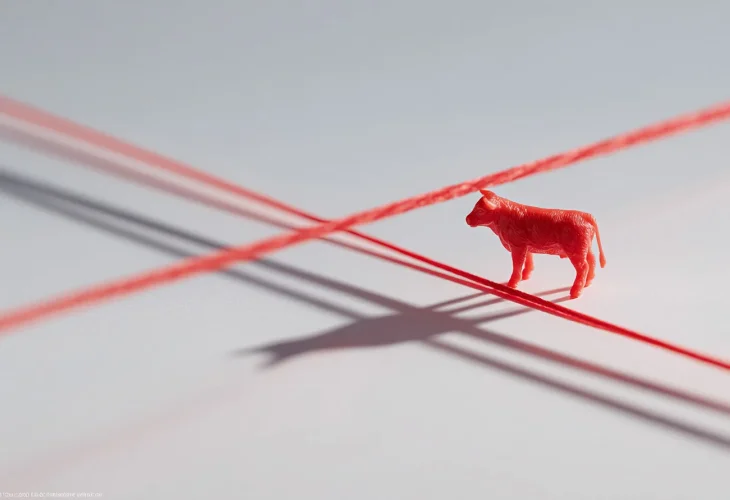
Every healthy home requires clear boundaries.
If we do not limit sweets, children may harm their health. If we do not enforce proper sleep, they will struggle to function. If we do not set a time to return home, they may wander into unsafe environments. As parents, our responsibility is to create a secure framework that allows for growth, and that inevitably includes defining clear “red lines.”
The real question is not whether boundaries are necessary, but where exactly those boundaries should be placed.
The Complexity of Setting Boundaries
Education is not a simple system that follows a fixed manual. There is no complete guidebook that provides precise instructions for every child and every situation.
A boundary, even when well-intentioned, can sometimes backfire. If a child repeatedly finds themselves on the “wrong” side of that line, they may become discouraged, or worse, give up entirely on trying to meet expectations. In such cases, the boundary may cause harm rather than benefit.
For this reason, setting limits requires deep thought, sensitivity, and ongoing reflection. It also requires humility, and prayer, that we merit placing those lines in the right place, while giving children enough encouragement and motivation to choose wisely.
No One-Size-Fits-All Approach
It is impossible to make absolute statements about what is always permitted or always forbidden without understanding the full context.
Each child carries a different story: past experiences, emotional sensitivities, the quality of their relationship with their parents, and their internal sense of what they stand to gain or lose. We must also consider whether a demand is realistic and whether it has any real chance of being accepted.
The goal, ultimately, is to guide children toward making good choices. This is a gradual journey that requires patience, awareness, and careful judgment.
When Values Meet Reality
When dealing with general matters, this complexity is easier to accept, but regarding religious observance, many assume that the rules must be applied in an absolute and inflexible way.
However, reality is often more nuanced.
The Torah itself presents a powerful example in the mitzvah of the Red Heifer. It has the unique property of purifying the impure — yet at the same time, it renders the pure impure.
So what is it? Does it purify or defile?
The answer is, that it depends. In one context, it elevates. In another, it has the opposite effect.
This paradox teaches a profound lesson: even something inherently holy can have different outcomes depending on the situation. The same is true in education. A strong insistence on a particular mitzvah may inspire and uplift — but in certain circumstances, it may provoke resistance, resentment, or emotional distance.
There is perhaps no clearer illustration of how complex education truly is. It demands not only commitment to values, but also wisdom, discernment, and sensitivity.
Responsibility, Caution, and Purpose
This leads to a humbling realization, that offering guidance on raising struggling youth to a broad and diverse audience is an almost impossible task.
Advice that may help in one situation can potentially cause harm in another. The balance between “pushing away with the left hand” and “drawing close with the right” is delicate and constantly shifting.
This awareness naturally brings hesitation. How can one take responsibility for advice that might be misunderstood or misapplied?
Great Torah figures, including Rabbi Uri Zohar of blessed memory and others, did not take this question lightly. In a generation where the outside world is more accessible, more intrusive, and more tempting than ever — both physically and spiritually, there is an urgent need to raise awareness.
Parents need practical, grounded guidance. They need direction that speaks at eye level, rooted in Torah values, yet aware of modern challenges.
A Prayer for Guidance
At its core, education is an act of responsibility, but also of faith.
We do our part: we think, we learn, we consult, we set boundaries, and we support. But we also recognize that we need Divine help to succeed.
The hope is that these words, and all efforts in education, will always lead to benefit, growth, and closeness, and never, God forbid, to harm.
Because ultimately, every child is a world, and every boundary must be drawn with wisdom, care, and a sincere desire to guide them toward a life of meaning and goodness.

