

Behind the News
Rubio-Led Israel-Lebanon Talks Will Reveal Scope of Beirut’s Sovereignty
U.S. diplomacy puts Beirut in charge of border security, but Hezbollah and Israeli actions challenge its ability to enforce control
- Brian Racer
- | Updated
 Shutterstock
U.S. Secretary of State Marco Rubio is set to join direct Israeli-Lebanese talks on Tuesday in Washington, where Israeli Ambassador Yechiel Leiter and Lebanese envoy Nada Hamadeh are expected to meet alongside U.S. officials for the first such high-level engagement in decades.
The meeting is being presented as a step toward restoring calm along Israel’s northern border, but it also raises a deeper question: whether Lebanon’s government can function as a sovereign authority when Hezbollah, the Iranian-backed armed group operating inside the country, signals it will not be bound by any agreement. The talks are expected to address border security and long-term stability, yet the central challenge may be whether the Lebanese government can deliver on those commitments at all.
Lebanon is entering the talks as the official representative of the state, with its envoy participating alongside Israeli Ambassador Yechiel Leiter. Lebanese officials have framed the discussions as part of an independent national effort to reach a ceasefire and assert state authority, emphasizing that the track is separate from Iran’s broader regional involvement. By taking part in the talks, Lebanon is positioning itself as responsible for outcomes on the ground.
That role, however, carries a built-in challenge. Lebanon’s political system includes both a formal government and military, and Hezbollah, which operates as a powerful independent armed force and political faction backed by Iran. While Lebanese officials have repeatedly pledged to assert state control over weapons and territory, they have not been able to enforce those commitments in practice, with Hezbollah continuing to operate outside full government authority, particularly in the south where much of the fighting has taken place.
By holding direct talks with the Lebanese government rather than Hezbollah, Washington is treating Beirut as the authority responsible for what happens along the border. A State Department official said the discussions are a direct result of Hezbollah’s actions and are meant to focus on securing Israel’s northern frontier while supporting Lebanon’s effort to regain full control over its territory and political system. In effect, the United States is not just mediating, it is putting responsibility on the Lebanese government to carry out whatever is agreed.
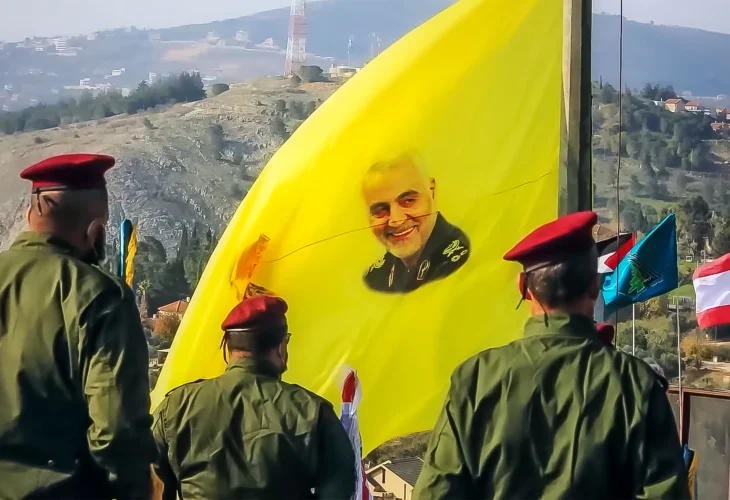
That framework is already being challenged. Hezbollah leaders have opposed the talks and indicated the group would not recognize or follow any outcome reached through them. As the force with a strong presence in southern Lebanon, Hezbollah’s position highlights the gap between the authority Lebanon claims in talks and the control that exists on the ground.
Israel’s actions have reflected a similar assessment. Israeli officials have repeatedly stressed that their conflict is with Hezbollah rather than the Lebanese state, even as Israeli forces have continued operating inside Lebanese territory rather than relying on Lebanese enforcement. The approach suggests a lack of confidence that Lebanon can restrain Hezbollah on its own. Defense Minister Israel Katz said in March that if the Lebanese government could not control its territory and stop Hezbollah fire, “we will take the territory and do it ourselves.” Israel later acted on that warning, launching a limited ground operation in southern Lebanon in mid-March and expanding operations deeper into the south, including the current assault on Bint Jbeil, the last Hezbollah stronghold on the border.
Taken together, the positions of all sides point to a central tension behind Tuesday’s meeting. The United States is engaging Lebanon as the responsible authority for border security, Lebanon is stepping forward as a sovereign state, Hezbollah is rejecting that authority, and Israel is acting independently of it. The talks therefore do not only attempt to shape the situation on the border, they expose the question of who ultimately governs it.
The discussions are expected to focus on long-term security arrangements and the conditions needed to stabilize the northern front following weeks of fighting. But their significance may ultimately depend less on what is agreed in Washington than on whether Lebanon can implement any agreement on the ground. If Beirut cannot translate diplomacy into control, the talks may highlight the limits of state authority in Lebanon rather than resolve them.

