

Torah and Science
Small but Deadly: Inside the World of Venomous Creatures
From deadly jellyfish to venomous sea snails, discover the fascinating creatures carrying nature’s most powerful toxins.
- Hidabroot
- | Updated
When people think of dangerous animals, they often imagine lions, sharks, or other large predators. But some of the deadliest creatures on earth are actually tiny animals carrying powerful toxins capable of causing paralysis or death within minutes.
From snakes and jellyfish to spiders, insects, and even sea snails, the natural world contains astonishingly complex venom systems that continue to fascinate scientists.
Venomous vs. Poisonous: What’s the Difference?
Although the terms are often confused, there is an important distinction between venomous and poisonous animals.
Venomous creatures inject toxins through fangs, stingers, or other specialized organs. The victim is harmed only after the venom enters the body.
Poisonous creatures, however, contain toxins throughout their bodies and become dangerous when touched or eaten.
Scientists measure toxicity using a system called LD50, developed to help compare how dangerous different substances are and assist in creating lifesaving antivenoms.
The Cone Snail: One of the Deadliest Creatures on Earth
One of the most venomous creatures in the world is not a snake or shark, but a small sea snail.
The cone snail injects a deadly toxin called conotoxin through tiny needlelike structures. Its venom can cause immediate paralysis and death.
Another extremely dangerous creature is the inland taipan snake, whose venom is powerful enough in a single bite to kill dozens of people.
The Jellyfish That Can Kill Within Minutes
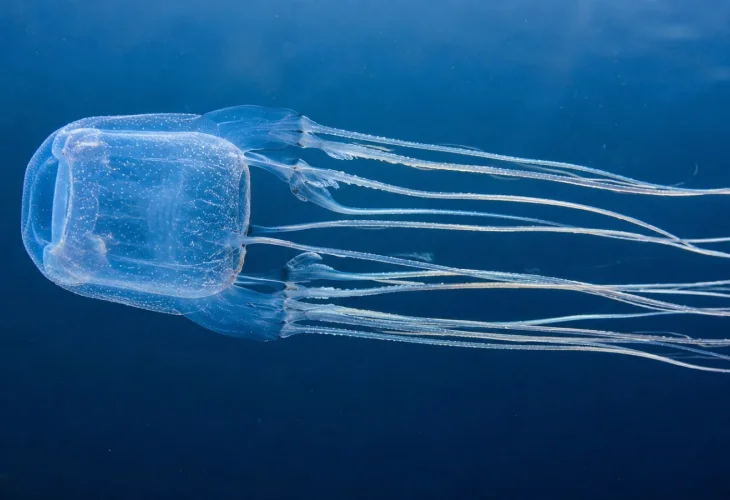
The box jellyfish, found mainly near Australia and parts of Asia, is considered one of the most dangerous marine animals on earth.
Its tentacles contain millions of microscopic venom cells capable of attacking the heart and nervous system. Victims can die within minutes after contact.
Tiny Creatures with Deadly Power
Some of the world’s most dangerous venomous animals are surprisingly small.
The blue ringed octopus, no larger than a golf ball, carries enough venom to kill multiple people.
Australia’s funnel web spider is another highly dangerous species whose venom is especially harmful to humans and primates.
Even insects can pose serious risks. Certain ants, bees, and wasps inject powerful toxins that can trigger deadly reactions in some people.
How Venom Works
Venoms are made from complex combinations of proteins, enzymes, and toxins that attack different systems in the body.
Some toxins damage the nervous system and cause paralysis. Others attack blood cells, muscles, or the heart.
Scientists classify these toxins into categories such as:
- Neurotoxins, which affect the brain and nervous system
- Hemotoxins, which damage blood and organs
- Cardiotoxins, which can stop the heart
Amazing Venom Delivery Systems
Different creatures use remarkably sophisticated methods to deliver venom.
Viper snakes inject venom through hollow fangs connected to venom glands near the head.
Scorpions deliver venom through a stinger located in the tail.
Spiders use hollow fangs, while jellyfish fire microscopic venom cells without even needing direct contact.
Bees and wasps also use very different stinging systems. Honeybees lose their stinger after attacking, while wasps can sting repeatedly without harming themselves.
Venom That Helps Save Lives
Although venom can be deadly, scientists also use it for medicine.
Researchers have developed drugs from venom components to help treat conditions such as high blood pressure, blood clotting disorders, diabetes, and chronic pain.
Even platypus venom is currently being studied for possible medical breakthroughs.
“How Great Are Your Works, Hashem”
The animal kingdom contains dangers, but also extraordinary complexity and wisdom.
From the microscopic venom cells of jellyfish to the intricate fang systems of snakes, creation reflects an astonishing level of design that scientists continue to study and admire.
As the verse says: “How great are Your works, Hashem. You made them all with wisdom.”

