

Raising Children
Stop the Backpack Chaos: 7 Smart Tips for a Tidy Bag and Drawer
Practical and easy-to-follow ideas for organizing school bags, drawers, homework, and supplies
- Orit Grosskot
- | Updated
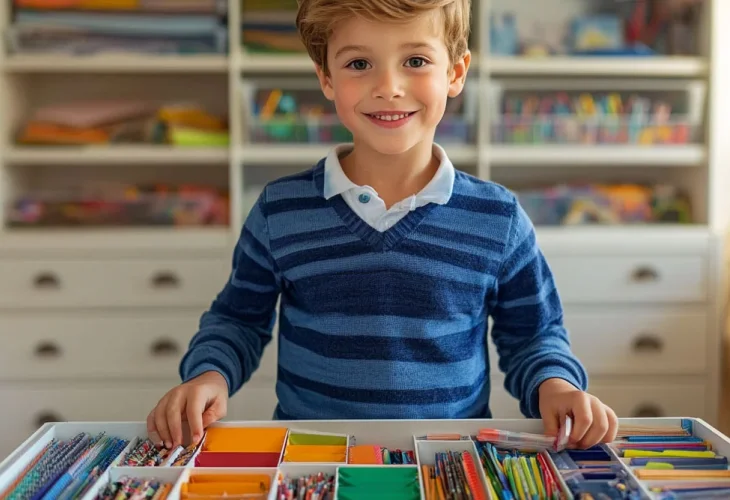
Keeping things neat and organized can be challenging for both adults and children. Schoolbags and desk drawers filled with worksheets, art projects, and old tests tend to turn into giant piles of clutter very quickly.
Many parents find themselves helpless when faced with drawers overflowing with papers or backpacks stuffed with half-eaten sandwiches, broken pens, and forgotten assignments.
There’s no doubt that organized school supplies make life easier and help children study in a more focused and efficient way. As the new school year approaches, we’ve gathered seven practical tips to help parents and children stay organized and turn learning into a more enjoyable experience.
1. Use Trays and Dividers Inside Drawers
Tip: Use organizers and dividers inside desk drawers.
How to do it:
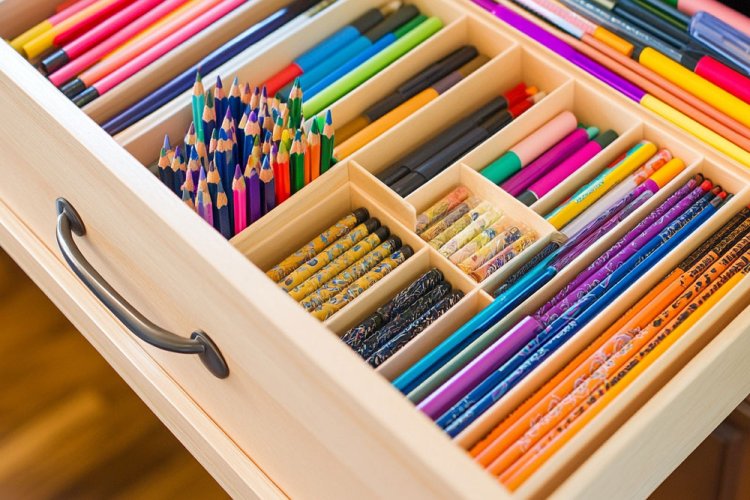
Designate one drawer specifically for tests, worksheets, and art projects. Depending on the drawer size, purchase trays or dividers to separate different types of papers and supplies.
Why it helps:
Drawers are large open spaces that easily become messy. Since everything lies flat together, dividing the space into sections prevents papers from mixing with markers, crayons, erasers, and other supplies.
2. Use Color-Coded Folders
Tip: Assign a different color to each subject.
How to do it:
Buy folders in various colors and label each one according to the subject:
Green for math
Blue for English
And so on
Why it helps:
Colors make it much easier for children to quickly identify the correct materials for each subject. Research shows this can be especially helpful for children with ADHD.

3. Create a Daily Organization Routine
Tip: Organize the backpack every evening and tidy the drawer once a week.
How to do it:
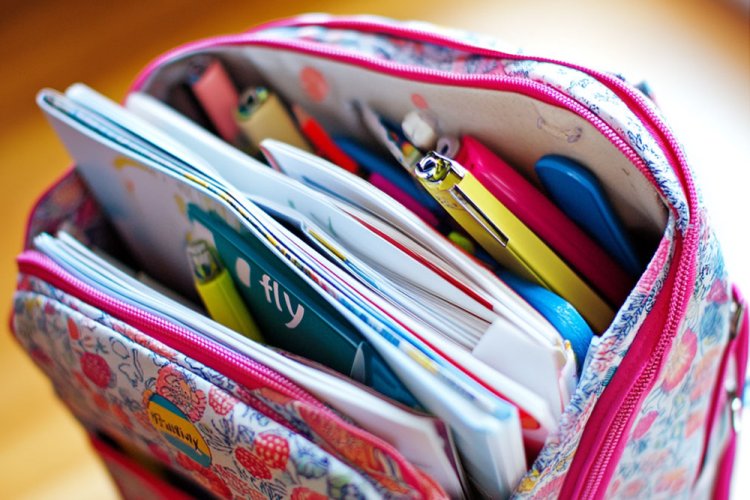
Even when everyone is tired, spend a few minutes each evening checking together that books, notebooks, and papers are in the correct place.
With time and consistency, this becomes a natural habit.
Why it helps:
Every task completed at night saves precious time and stress in the morning, when everything tends to feel rushed and chaotic.
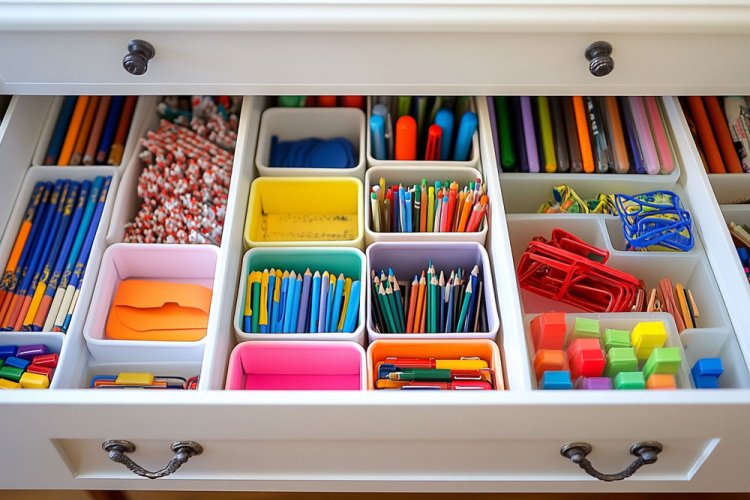
4. Use Small Storage Containers Inside Drawers
Tip: Keep small containers inside the drawer for pencils, markers, and erasers.
How to do it:
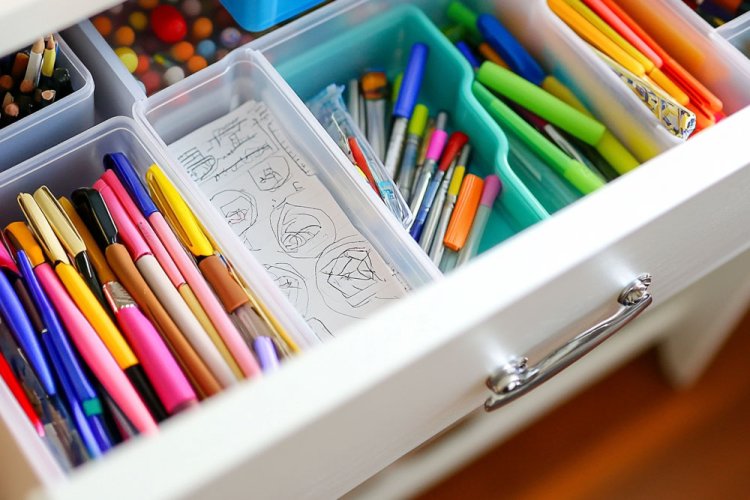
Purchase small containers that fit neatly inside the drawer and organize school supplies into separate sections.
Why it helps:
The drawer stays tidy, and supplies remain easy to access. Once a week, you can quickly check what’s missing and restock items as needed.
5. Encourage the Use of a Planner or Homework Diary
Tip: Teach children to write down all assignments and tasks.
Surprisingly, many children treat planners as optional and try to remember homework by memory alone. Children with ADHD especially tend to avoid writing tasks down.
How to do it:
Encourage children to record all homework, tests, and assignments in their planner every day.
Why it helps:
Children are far less likely to forget assignments and can manage their time more effectively. What gets written down is much more likely to actually get done.

6. Schedule a Weekly Cleanup
Tip: Choose one day each week for a full cleanup and reorganization session.
How to do it:
Pick a regular day to thoroughly organize the backpack and drawer, throw away unnecessary papers, and reorganize supplies.
Why it helps:
This prevents clutter from building up and allows children to start each week with clean, organized materials.
7. Label Everything
Tip: Use name labels on school supplies.
How to do it:
You can use regular stickers or purchase personalized printed labels with the child’s name. Label books, notebooks, pencils, pens, and other supplies.
Why it helps:
Items are less likely to get lost, and children can easily identify what belongs to them.
Keeping things organized may sometimes feel overwhelming, but with the right tools and habits, children can learn how to maintain order in their backpacks, drawers, and school papers. In the long run, this makes studying easier and helps create a calmer, more pleasant environment both at home and in the classroom.

